test
No Supported Files in Gallery
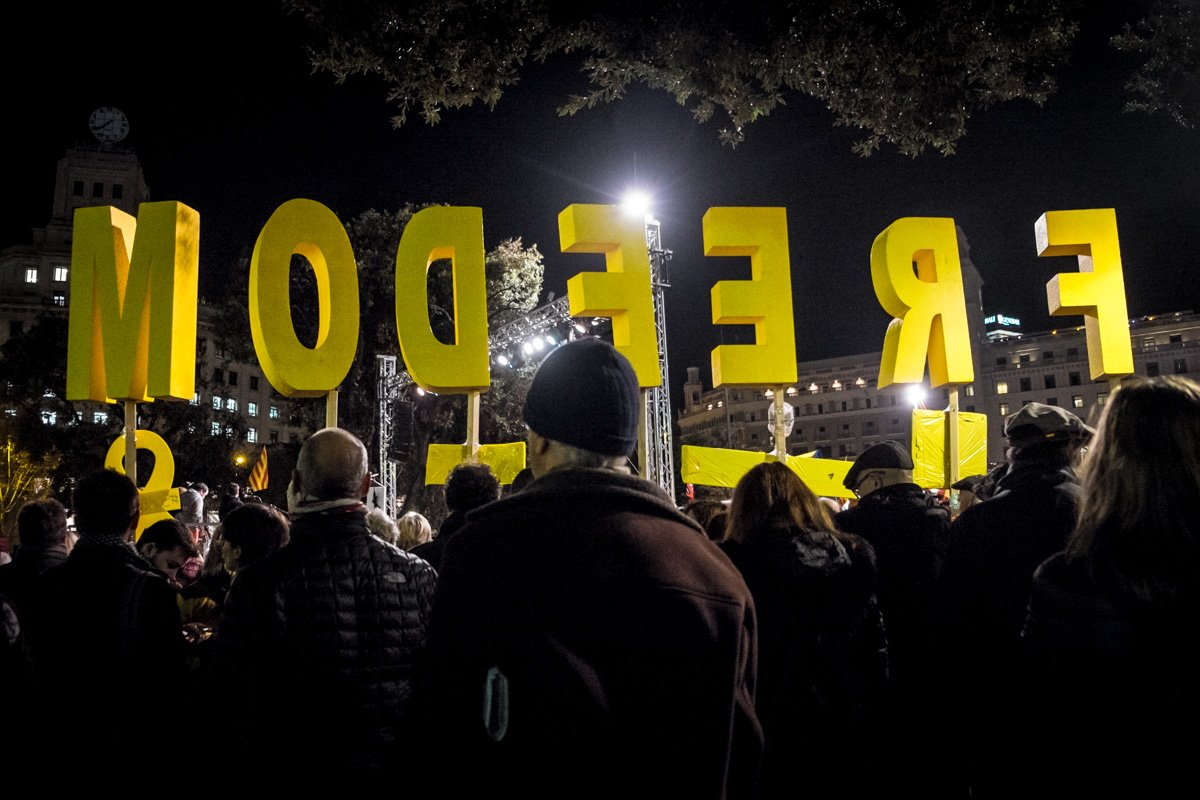
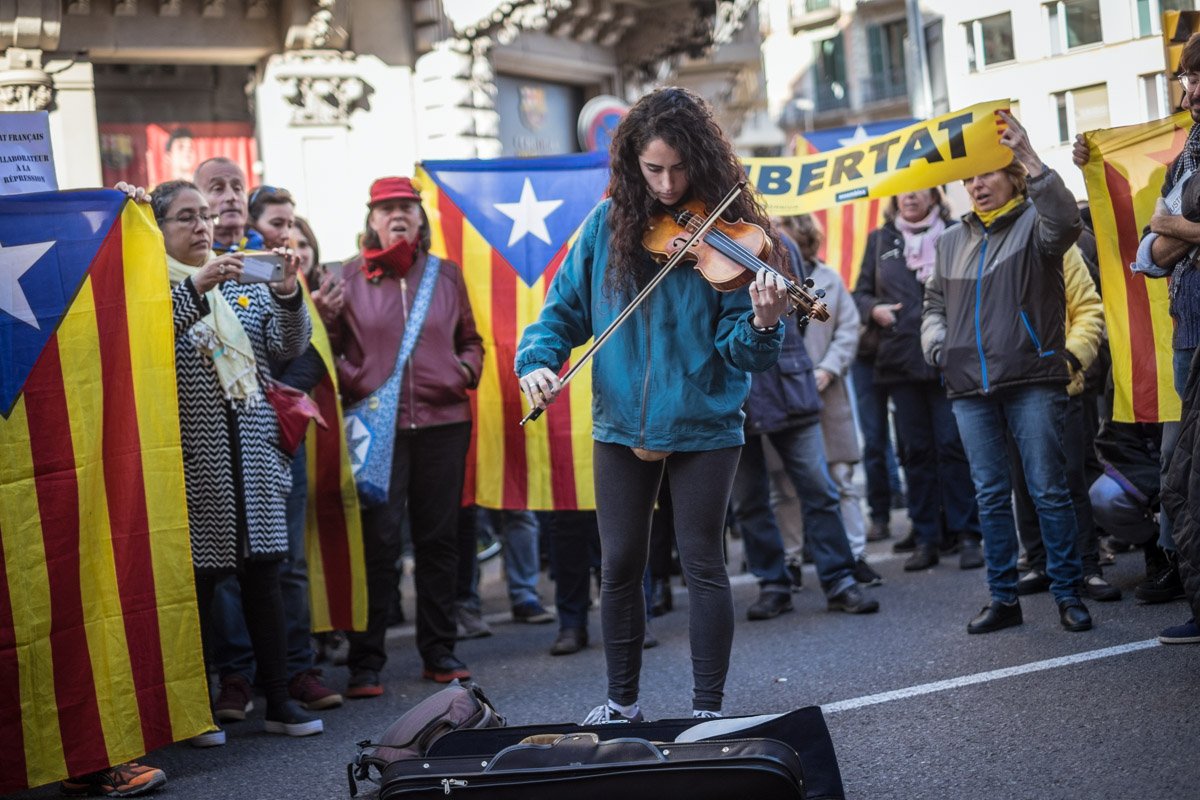
Feb 12th 2019, Barcelona. During a rally convoked to protest against the judicial trial against the Catalan separatists leaders, people hold a sign that reads “FREEDOM”.
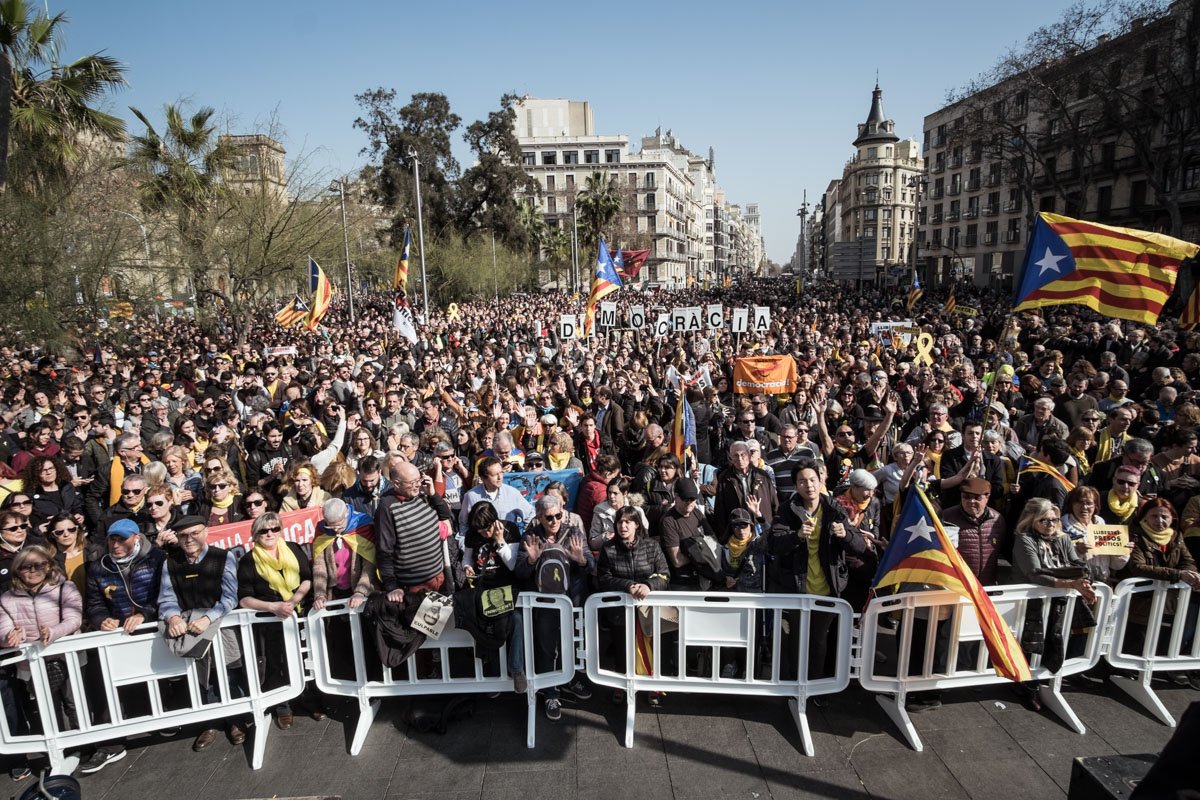
Feb 21st 2019, Barcelona. Protesters in Pl. Universidad during a general strike convoked in protest against the judicial trial against the pro-independence leaders.
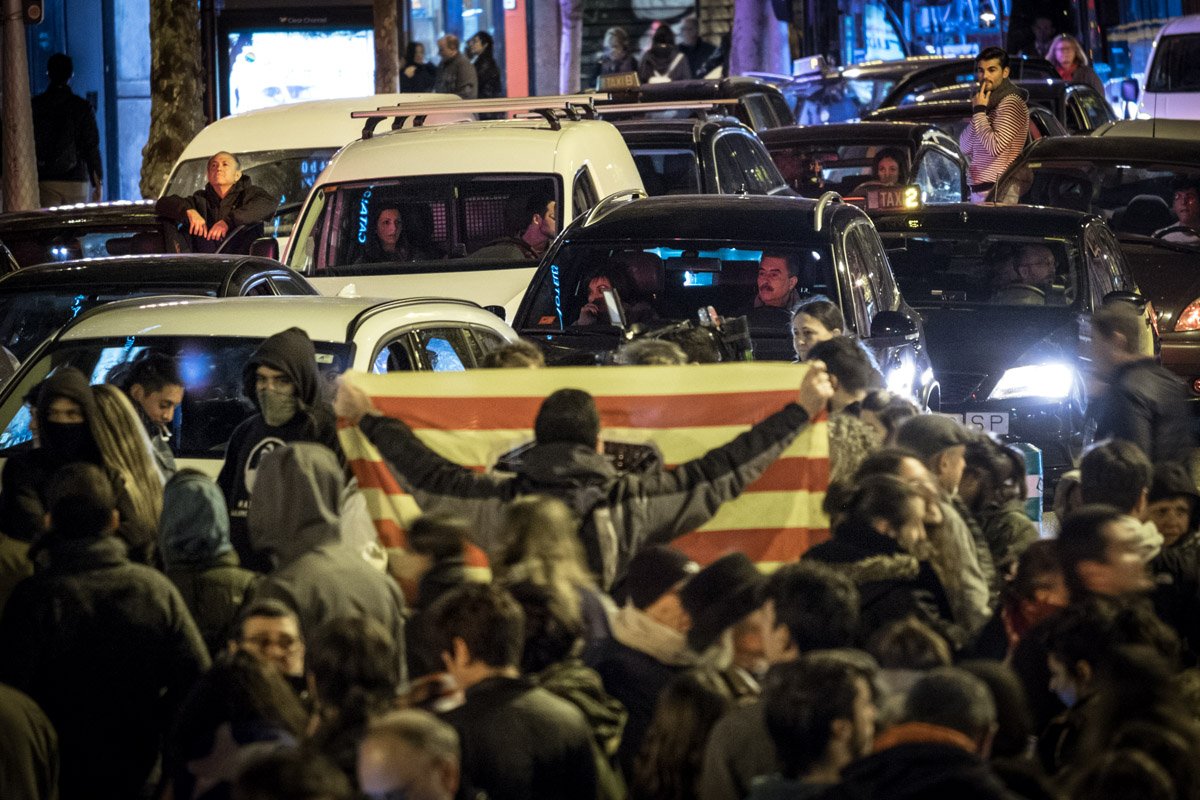
Nov 11th 2019, Barcelona. Road block put in place by pro-independence protesters along one of Barcelona’s main avenues: Avinguda Diagonal.
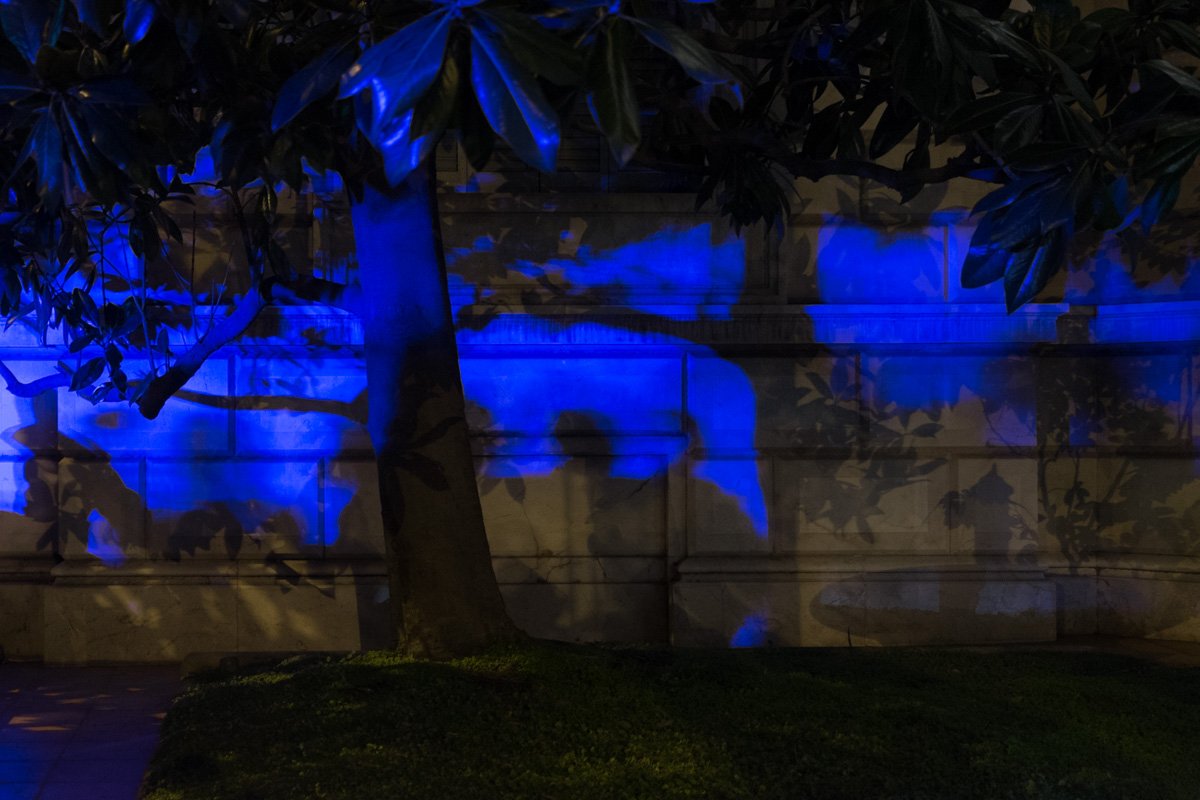
Nov 11th 2019, Barcelona. Blue police lights reflected against a wall during a pro-independence protest in the streets of the Catalan capital city.
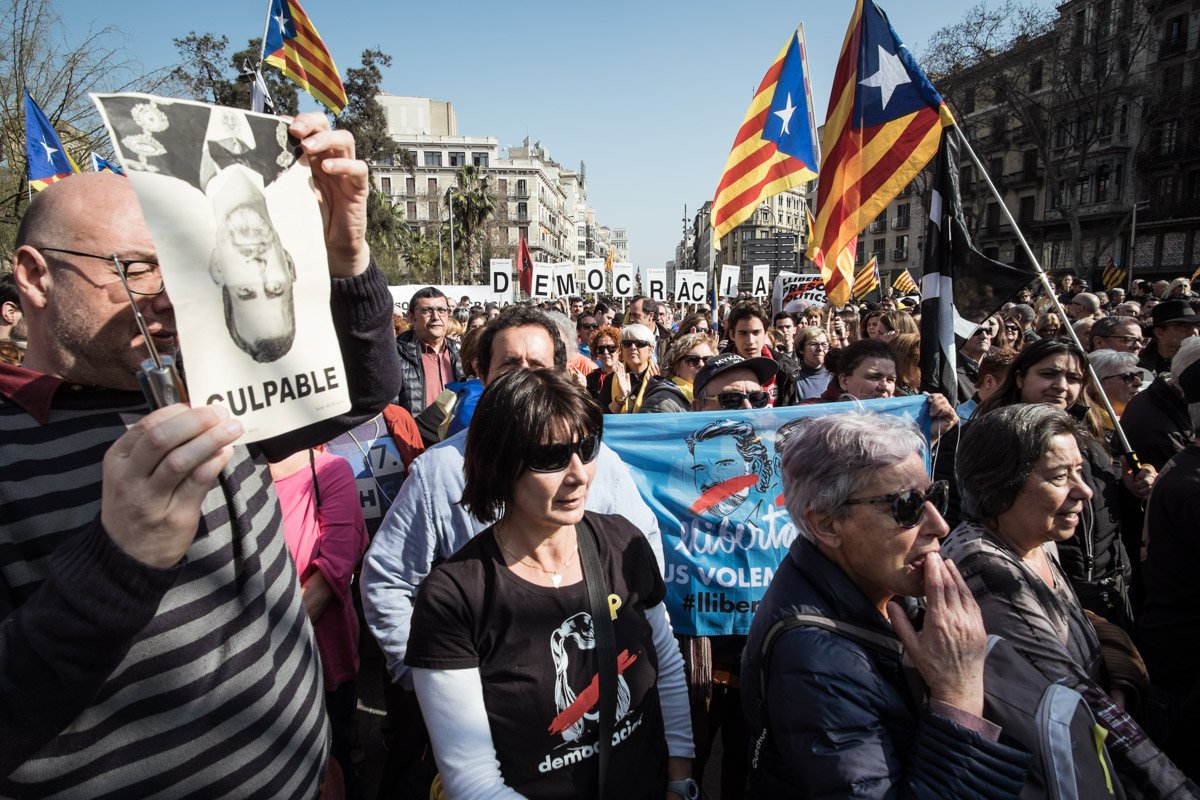
Feb 21st 2019, Barcelona. Protesters in Pl. Universidad during a general strike convoked in protest against the judicial trial against the pro-independence leaders. A photo of the Spanish king is held upside down by a protester; the sign reads “guilty” underneath the king’s photograph.
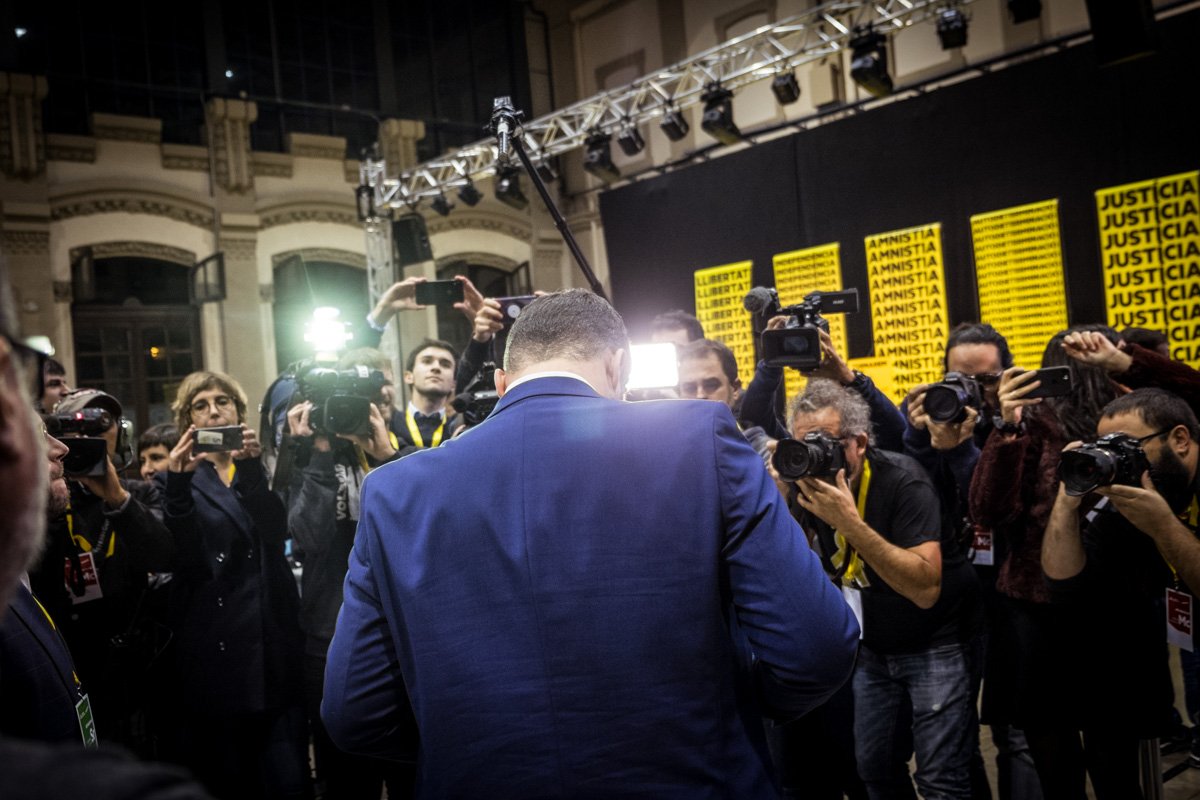
Nov 10th 2019, Barcelona, the night of the parliament election day in Spain. Gabriel Rufián, one of the politicians leaders of the major Catalan pro-independence party, Esquerra Republicana, during the election night event in Barcelona.
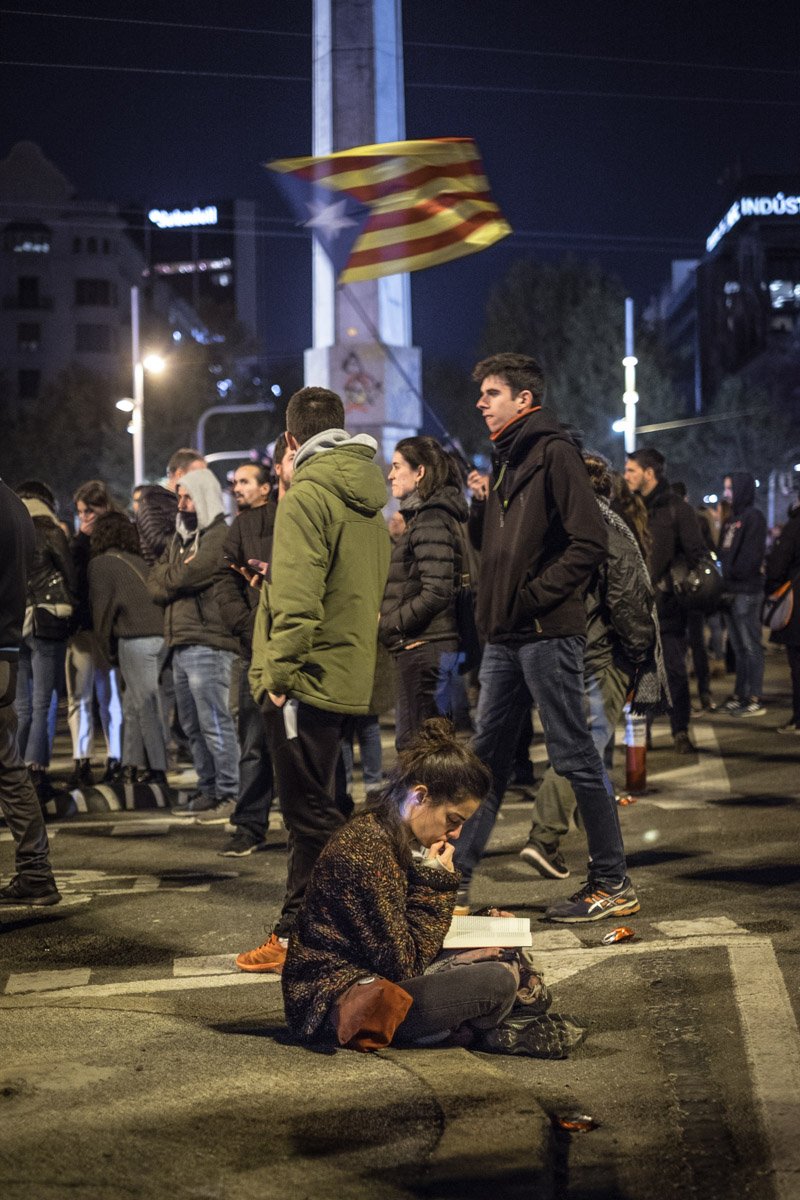
Nov 11th 2019, Barcelona. A girl reads a book during at a road block put in place by pro-independence protesters along one of Barcelona’s main avenues: Avinguda Diagonal.
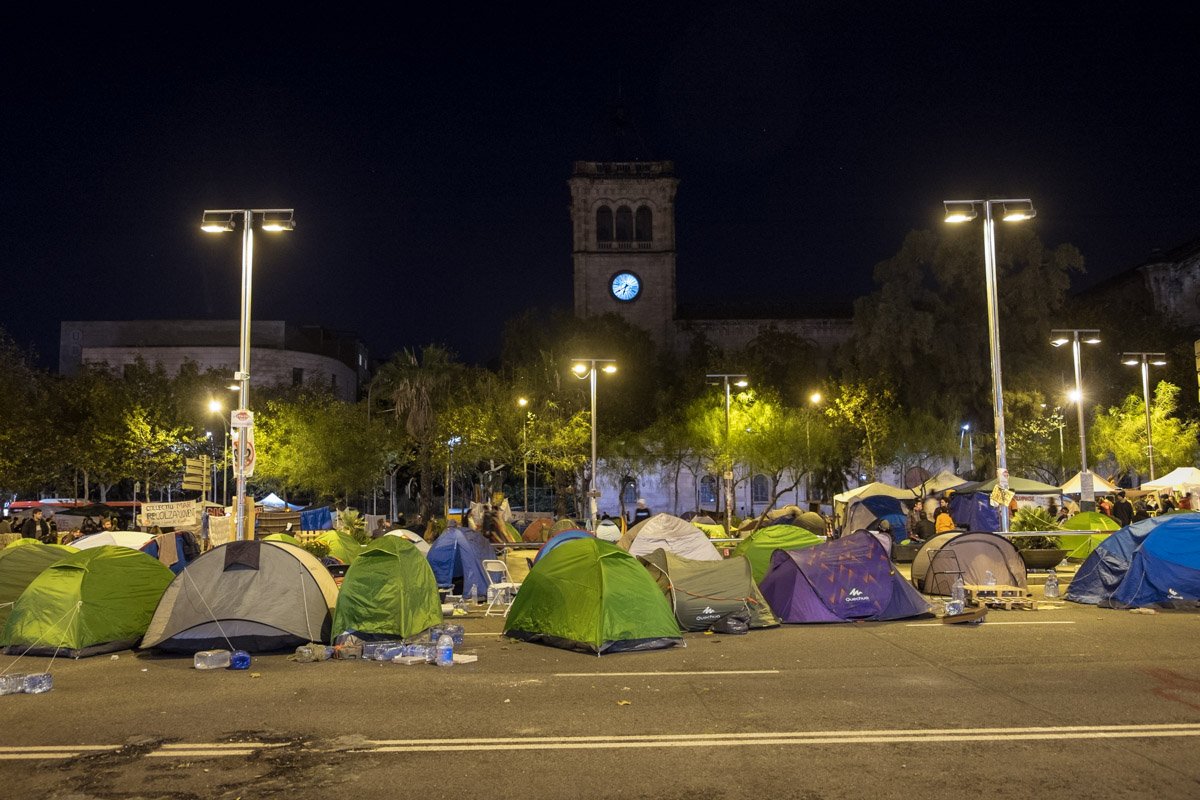
Nov 10th 2019, Barcelona. A pro-independence protest camp site arose spontaneously during a protest in one of Barcelona’s main squares: Plaça Universitat.
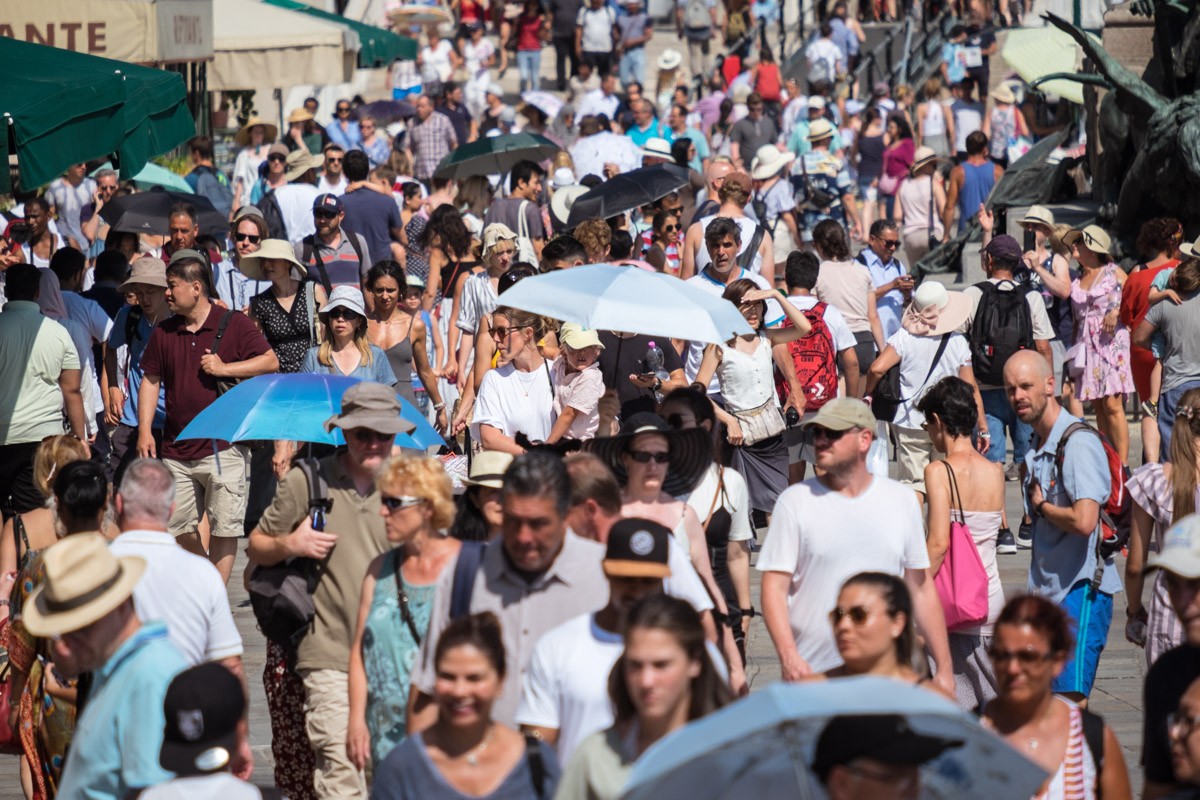
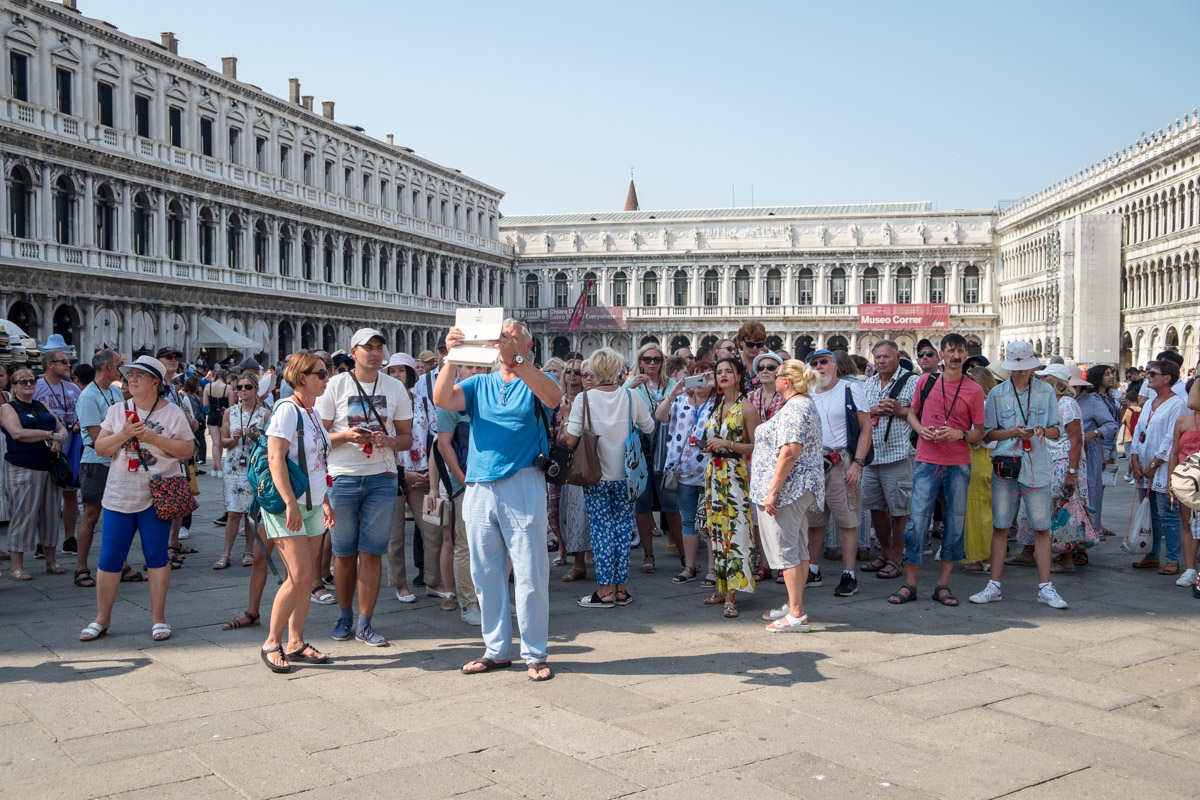
Dense crowd in Venice’s Riva degli Schiavoni, one of the biggest open spaces in the old town.
| Album | #VENICE |
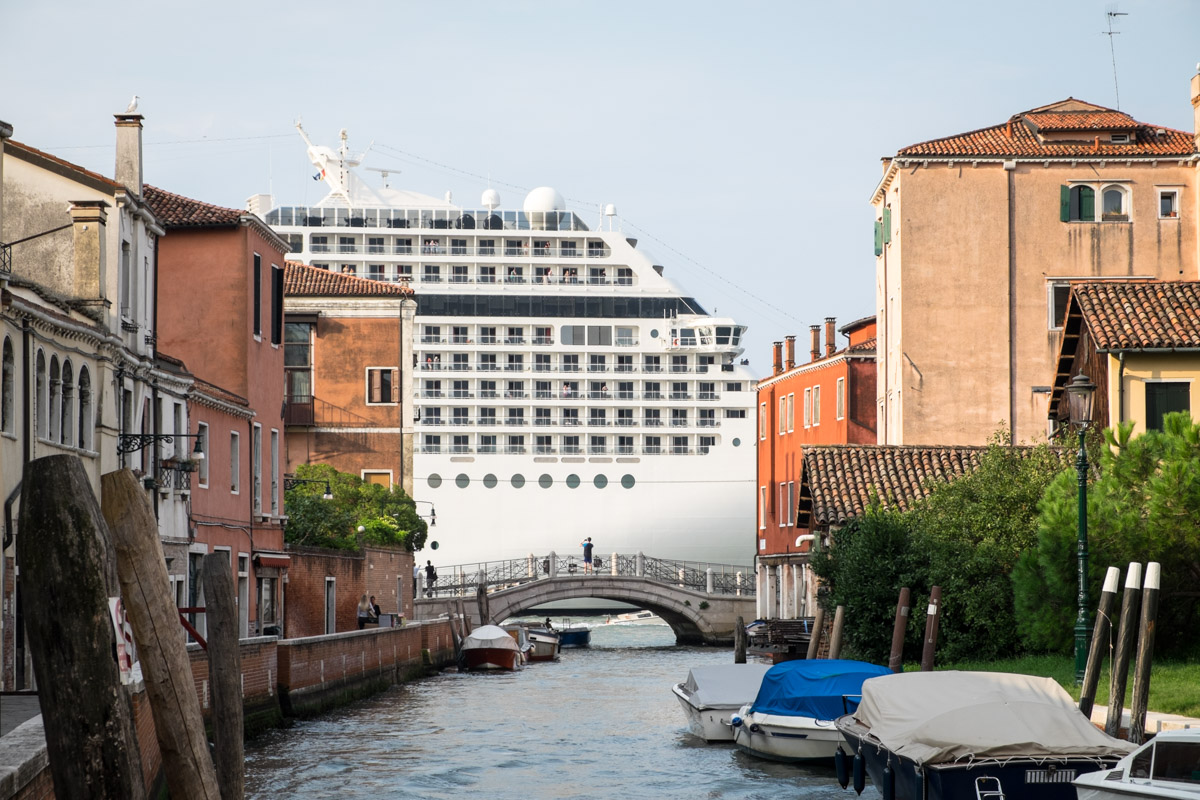
A cruise ship in the Giudecca canal, headed for the port of Venice.
| Album | #VENICE |
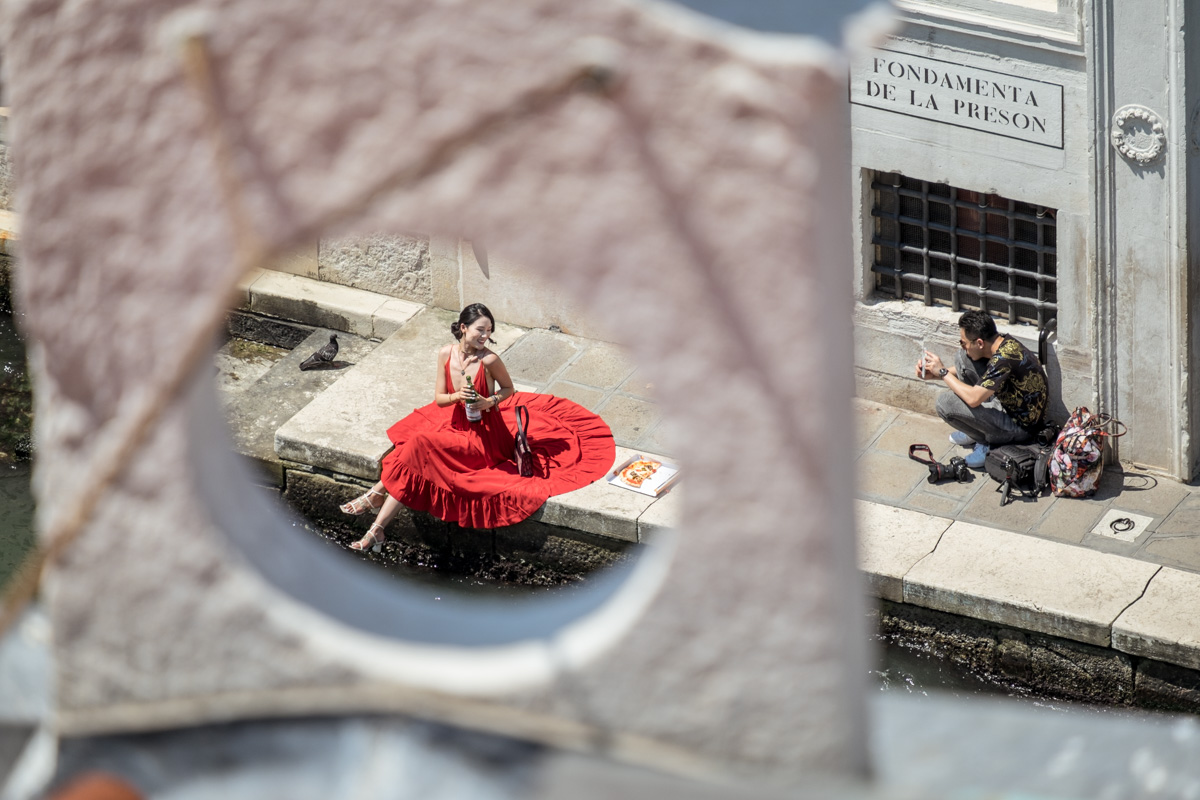
An Asian model during a photo shoot along Venice’s Grand Canal, near Rialto Bridge. The photo set re-enacts a stereotypical “Italian scene”, including a waterside pizza picnic, an Italian water bottle and a designer handbag.
| Album | #VENICE |
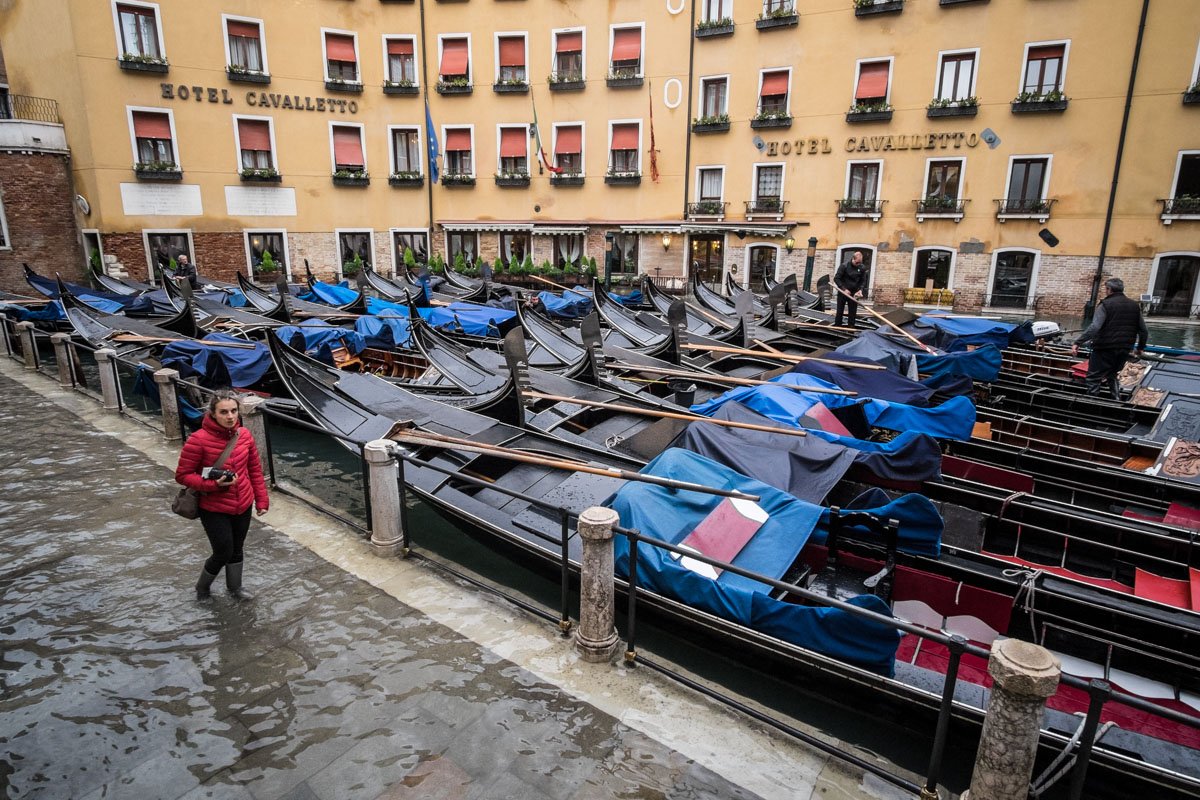
Tourist gondolas lined up in a narrow canal near Venice’s “Ponte dei Sospiri” (Bridge of Sighs).
| Album | #VENICE |
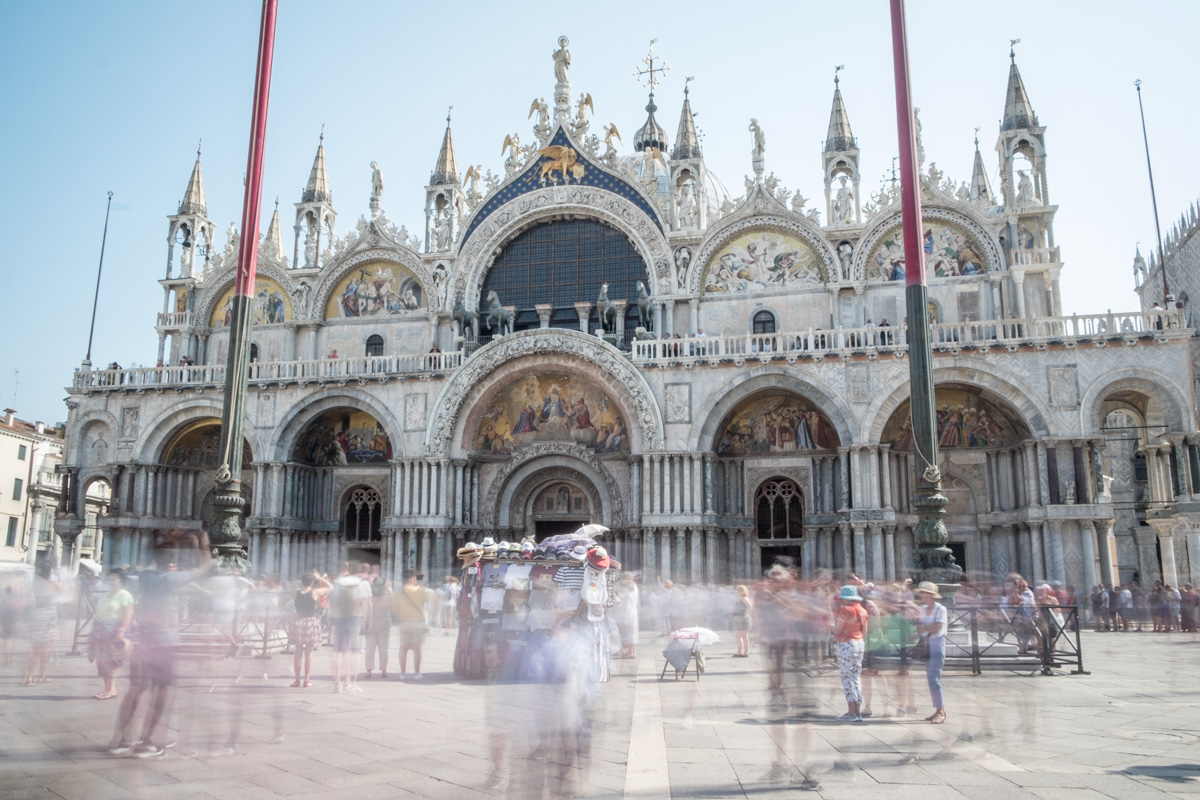
Crowds of tourists and a souvenir stand in front of St Mark’s Basilica, in Venice.
| Album | #VENICE |
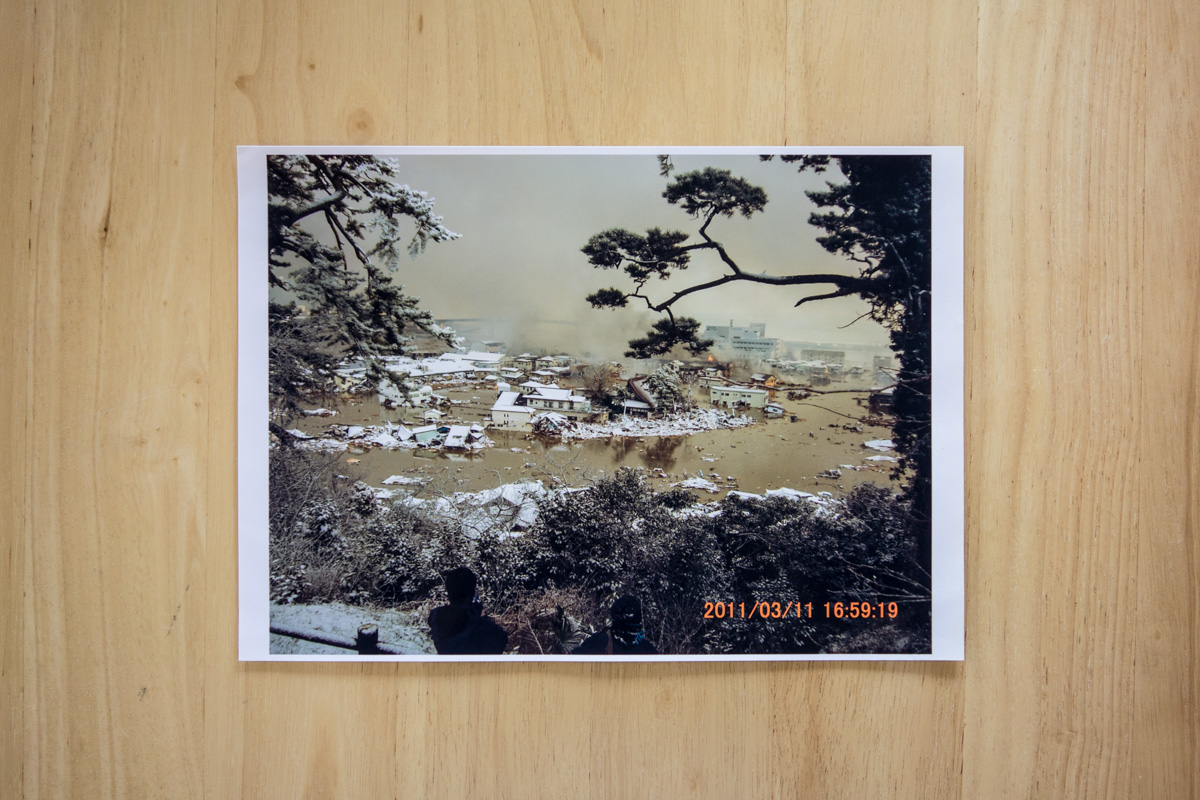
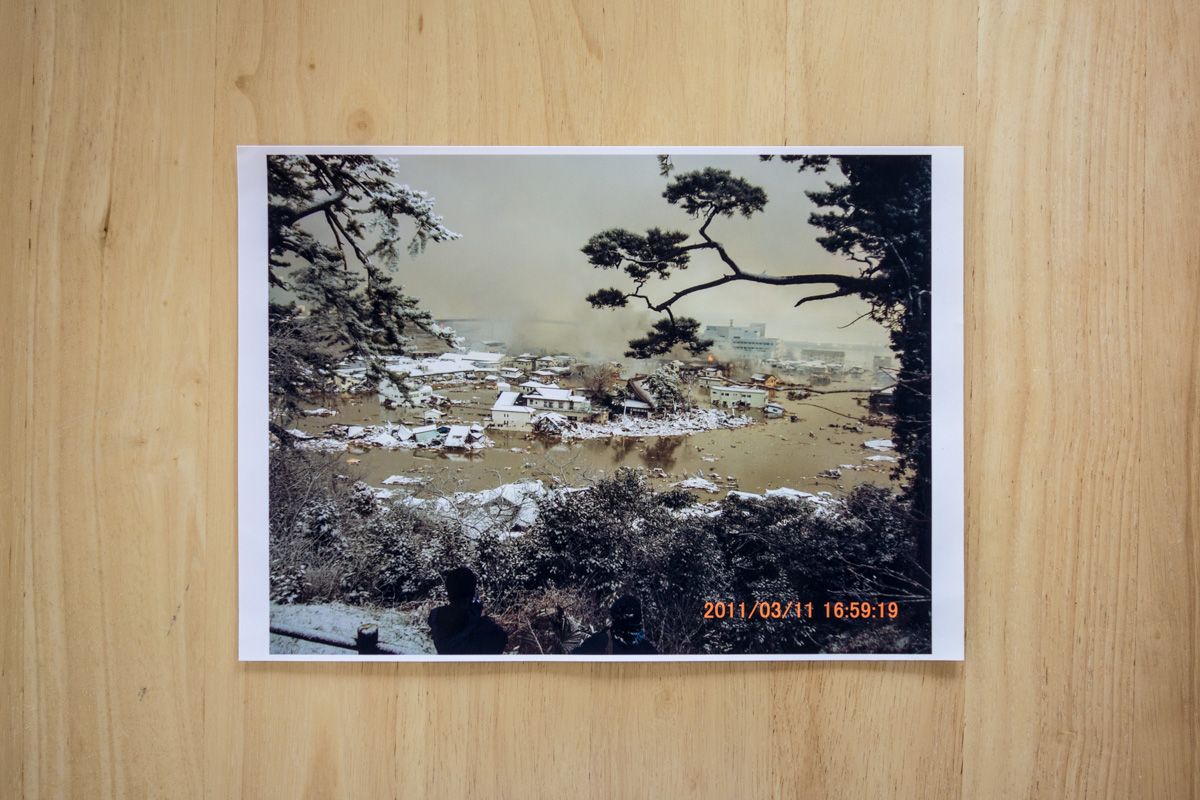
Ishinomaki (Japan), September 11th 2018. A photograph of an archive photo showing the immediate aftermath of the Great East Japan Earthquake and subsequent tsunami in the town of Ishinomaki.
| Album | Rebuilding Tohoku |
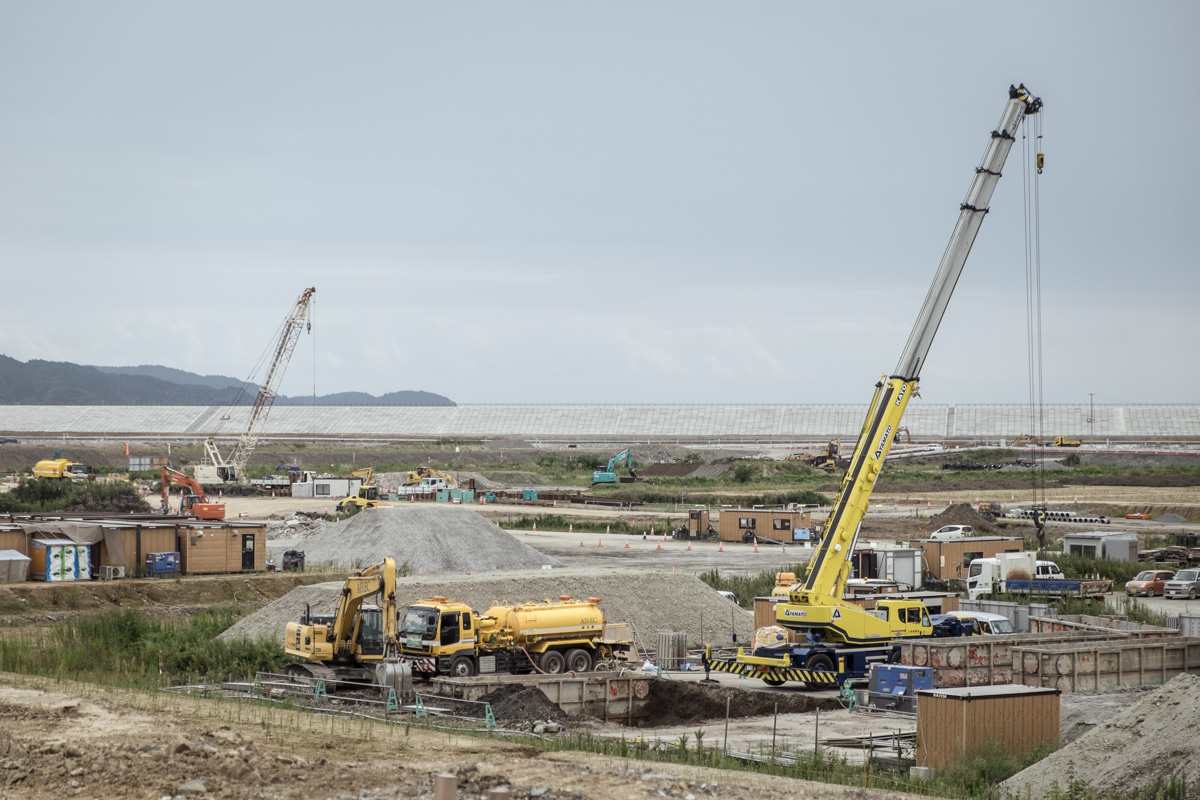
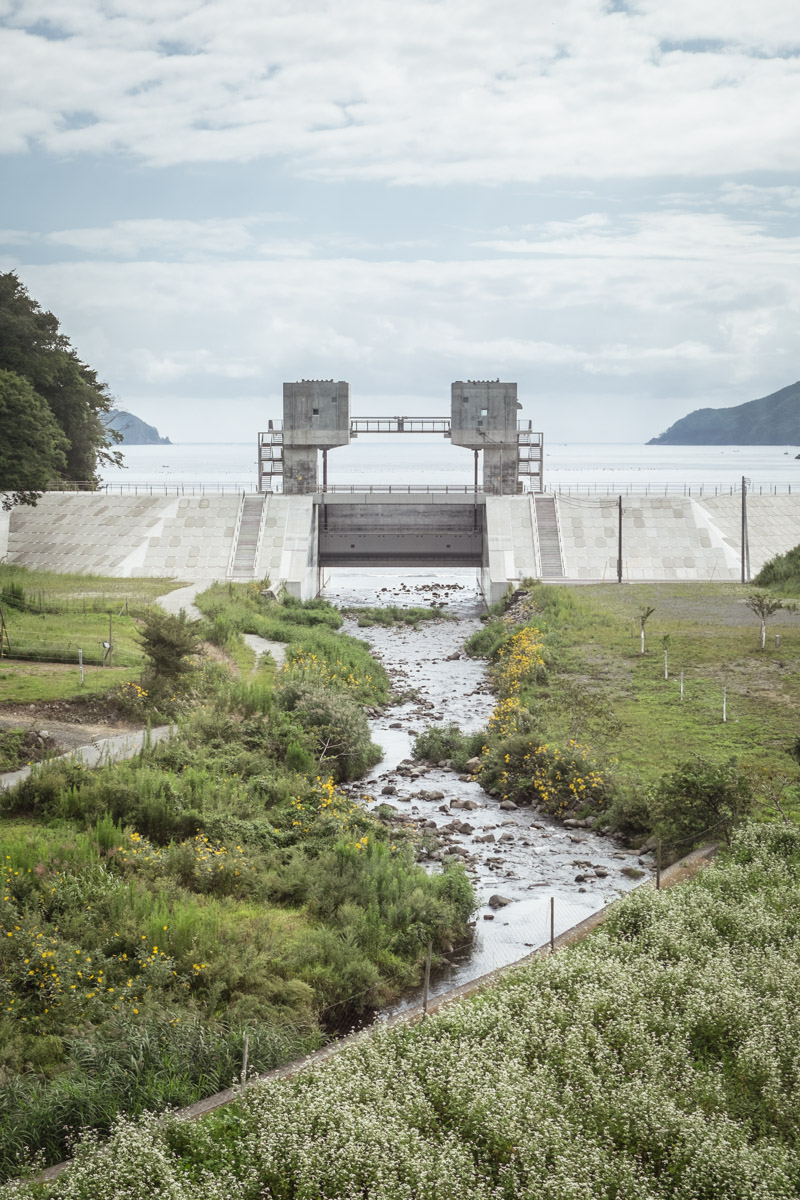
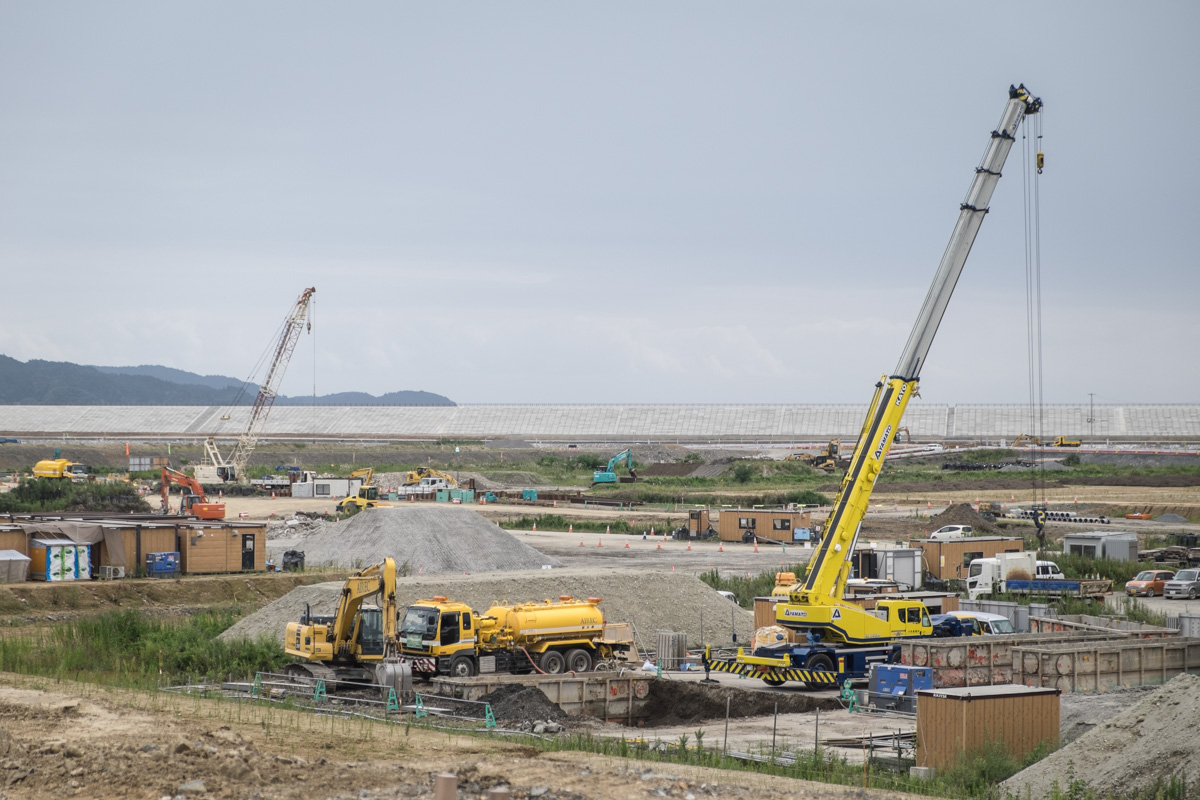
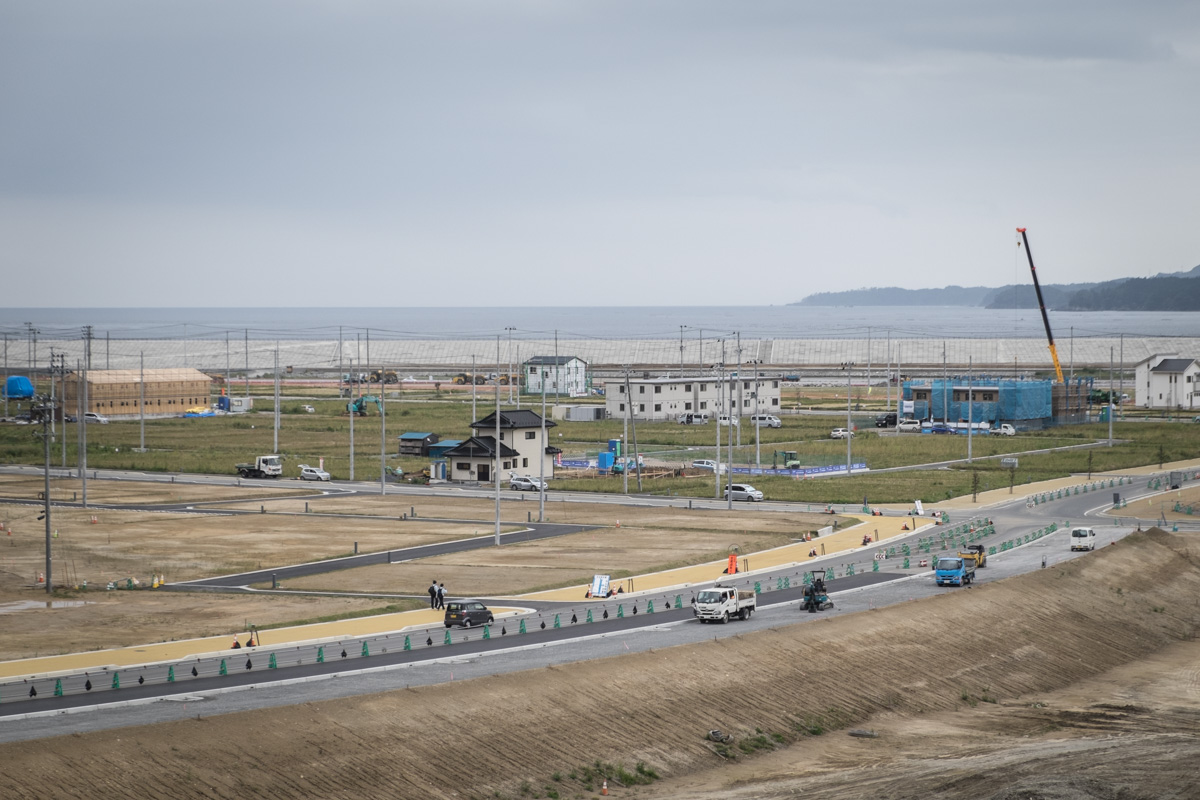
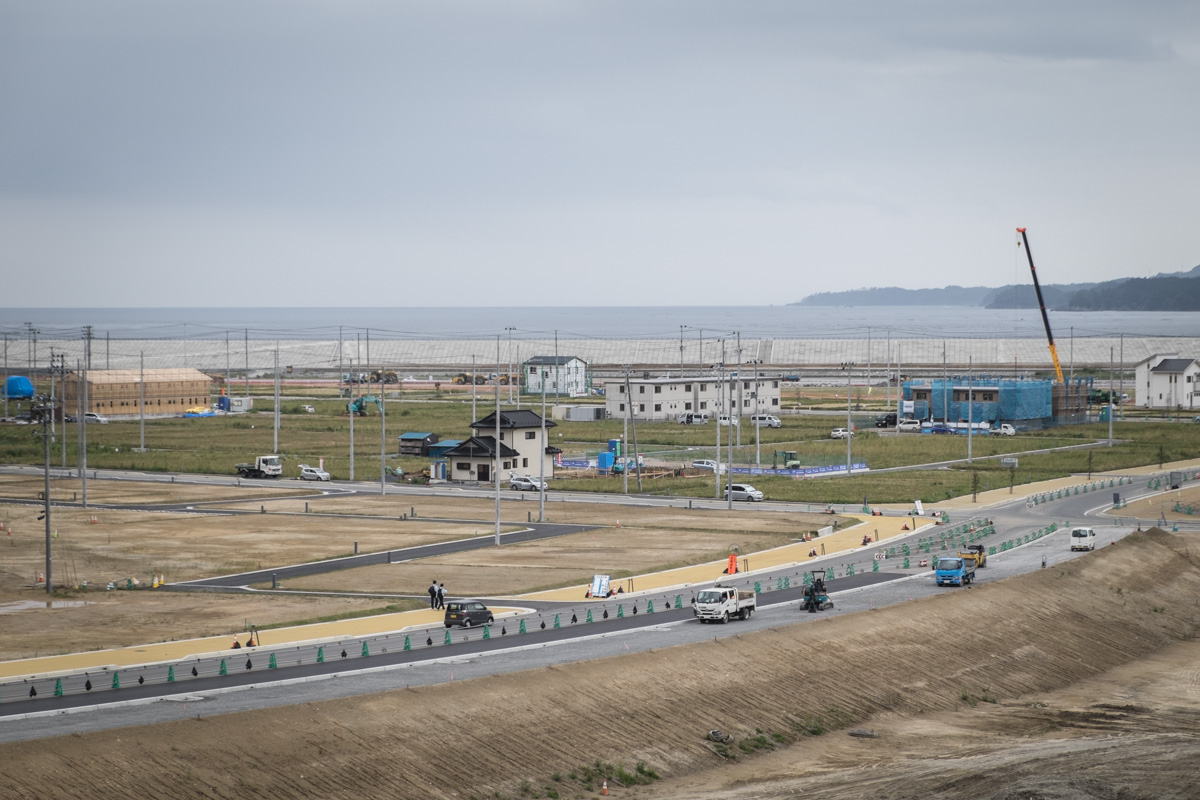
Rikuzentakata, September 13th 2018. Reconstruction works undergoing in the flat land that used to be Rikuzentakata’s city centre before the 2011 earthquake and tsunami. In the background the newly built concrete seawall erected by the Japanese government to protect the area for potential future tsunamis.
| Album | Rebuilding Tohoku |
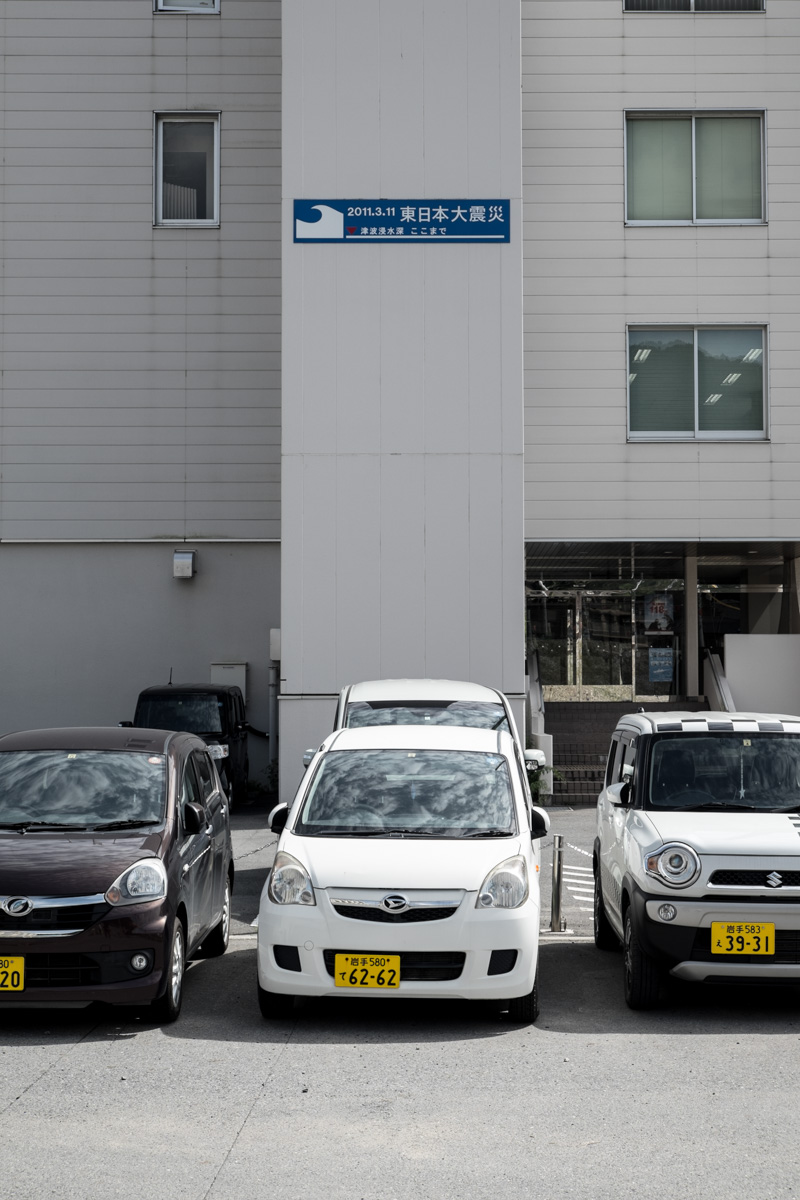
Kamaishi (Japan), September 12th 2018. A sign placed on the wall of a local factory marks the height reached by the tsunami waves in Kamaishi on the 11th march 2011.
| Album | Rebuilding Tohoku |
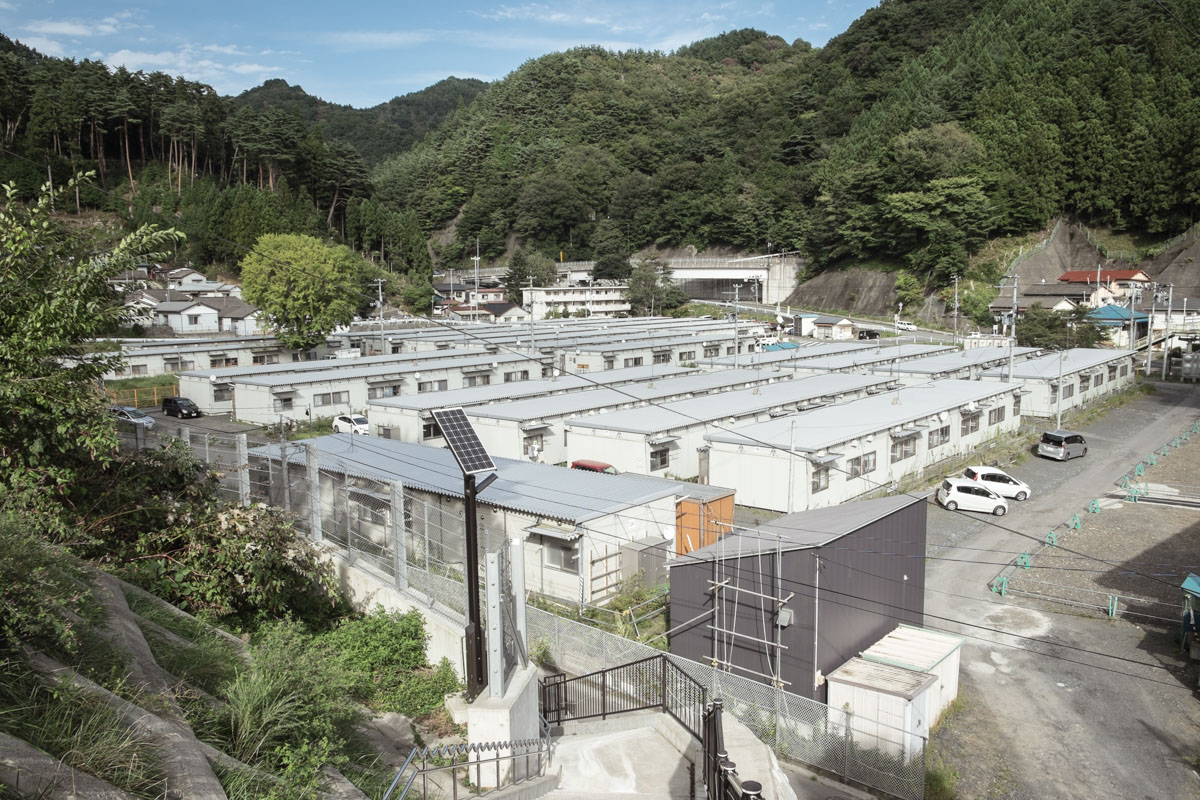
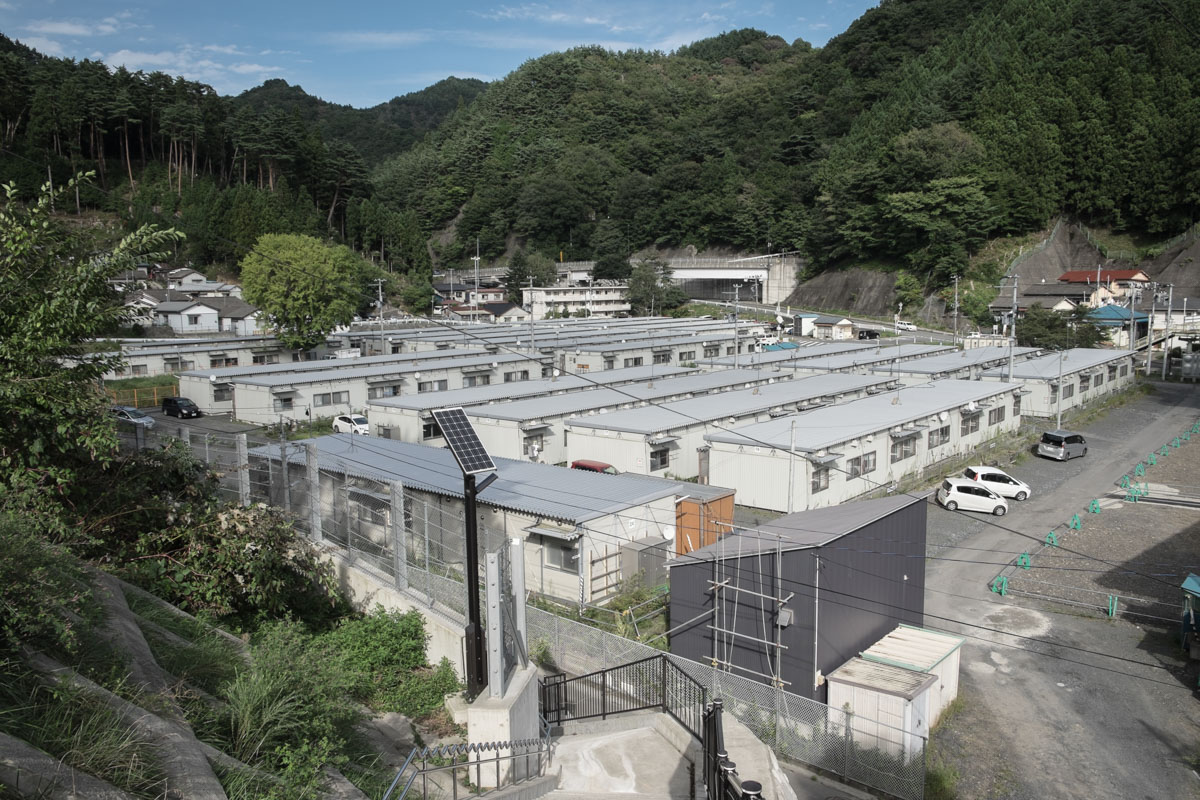
Kamaishi (Japan), Sept 12th 2018. Temporary house where people displaced by the 2011 tsunami are hosted. As of September 2018, more than 7 years after the 2011 earthquake and tsunami, about 30,000 people are still living in temporary shelters.
| Album | Rebuilding Tohoku |
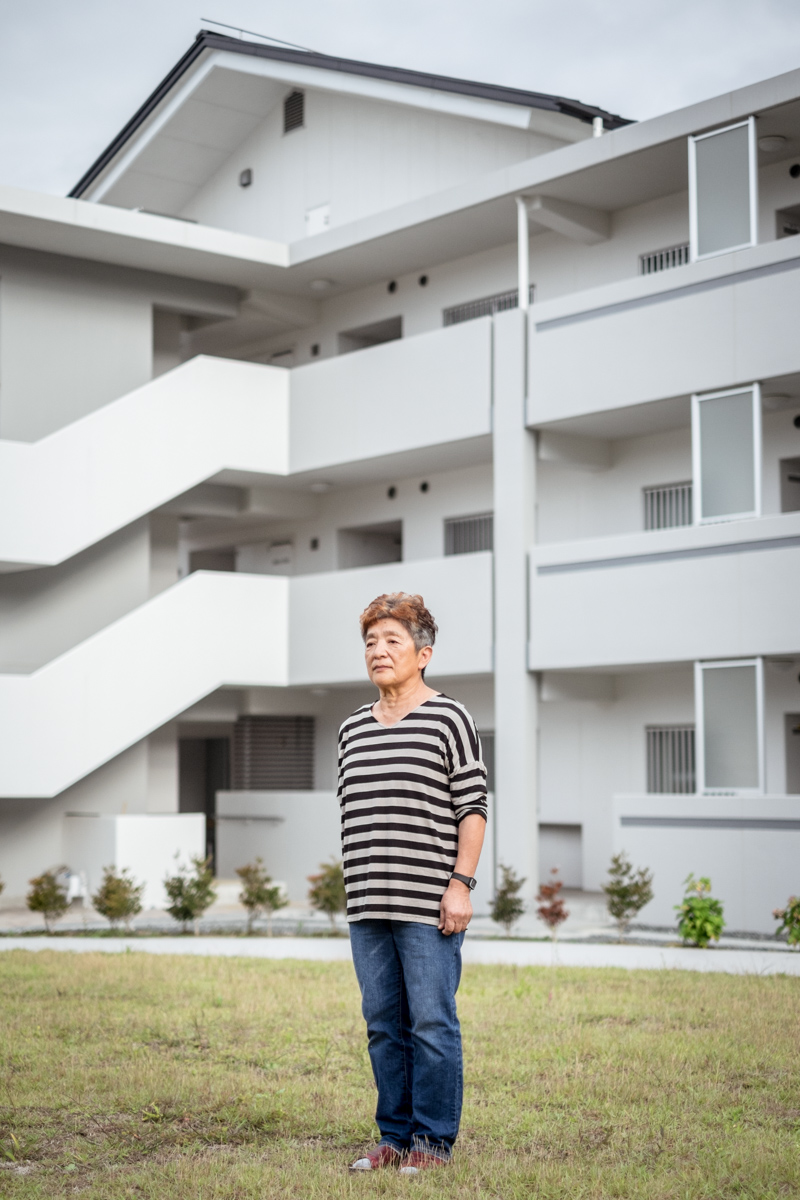
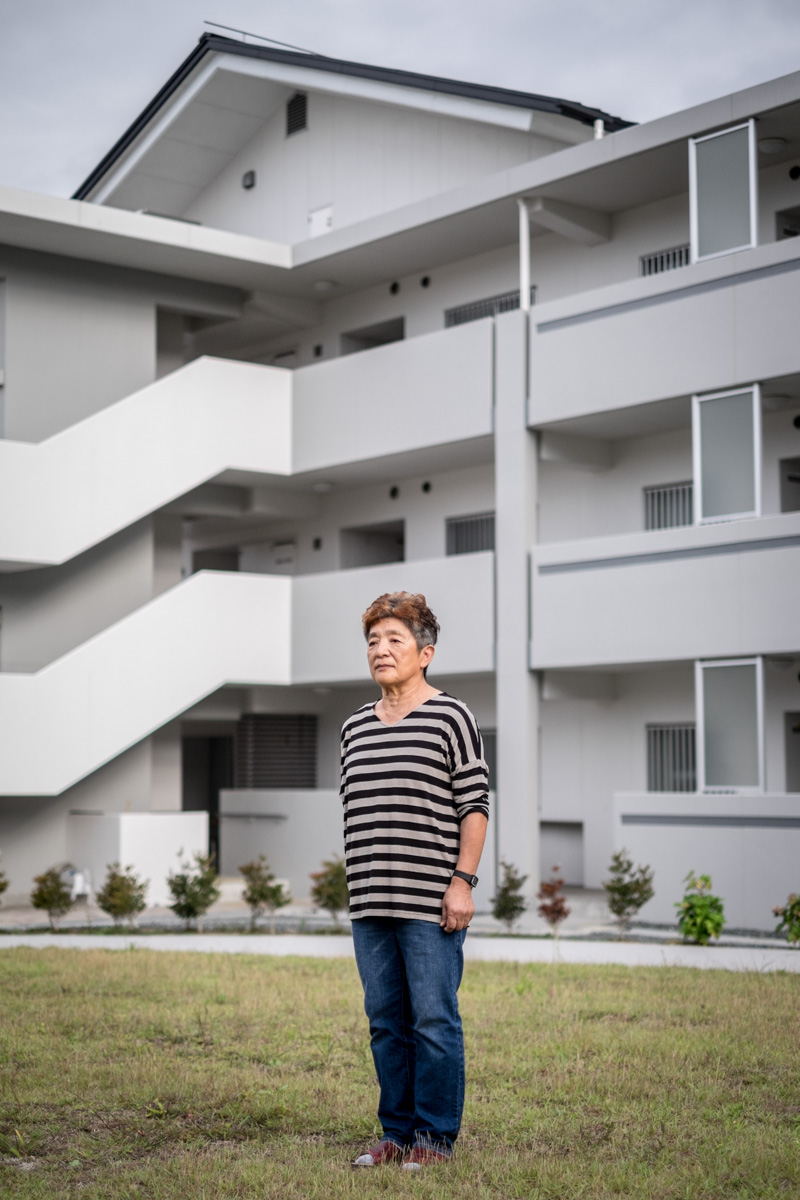
Rikuzentakata (Japan), September 13th 2018. Sato Tomoko (73, from Rikuzentakata) poses for a portrait in front of the condo complex where she resides in Rikuzentakata.
The 2011 tsunami erased Rikuzentakata, destroying 582 out of its 600 houses. With the reconstruction, the familiar 1-storey houses were replaced with condo complex like the one in the photograph. Ms. Tomoko was elected by the residents as representative person for the house complex.
| Album | Rebuilding Tohoku |
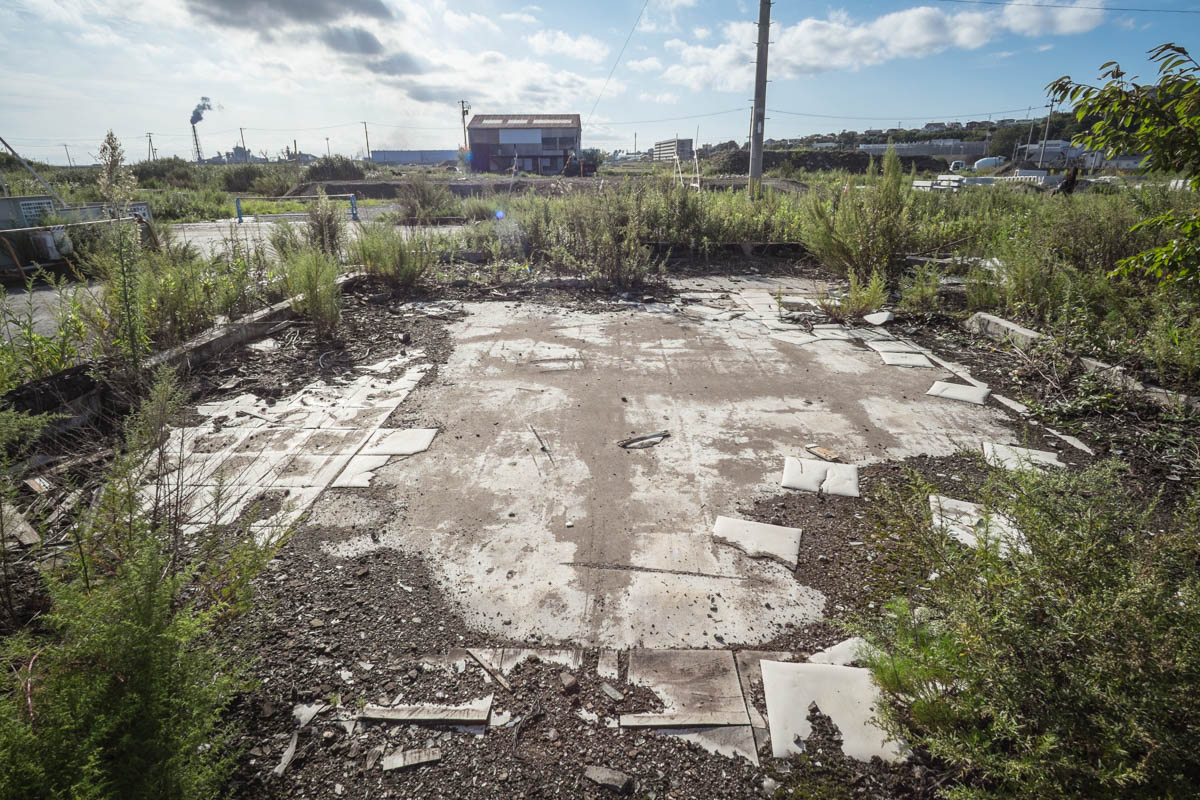
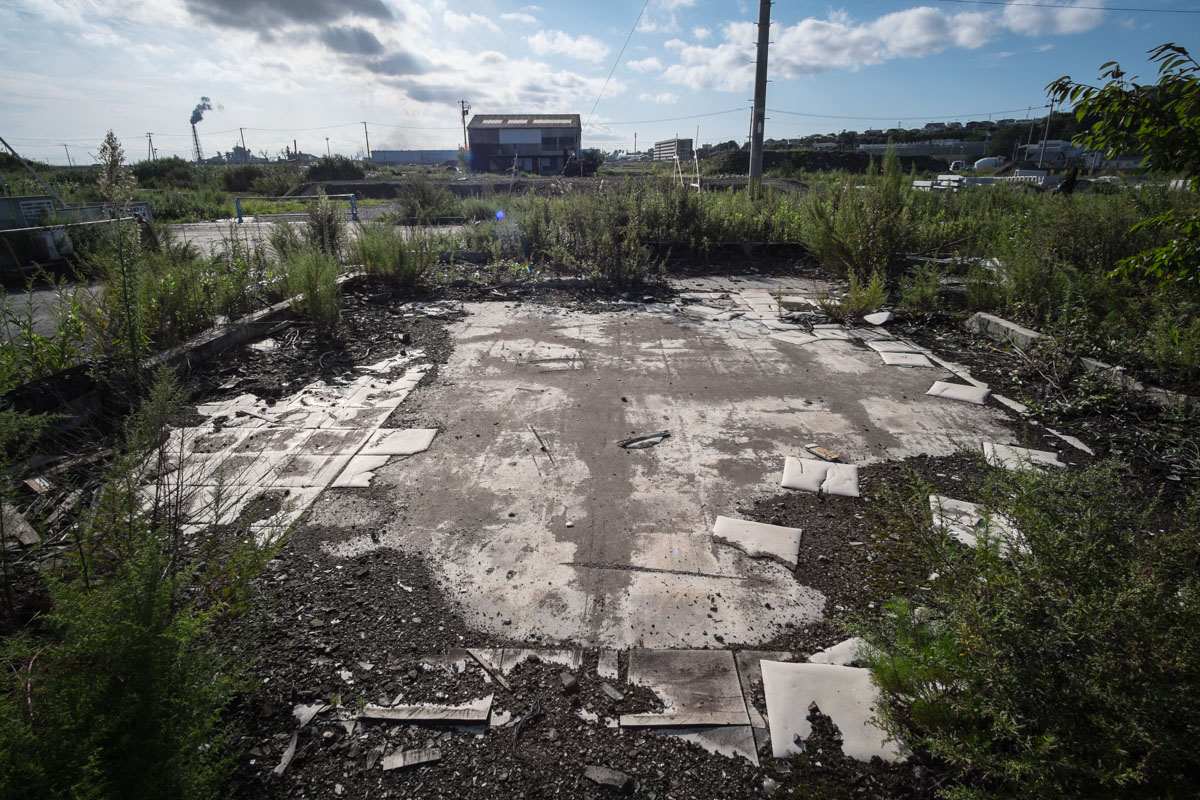
Ishinomaki (Japan), Sept 11th 2018. The remainings of a house erased by the 2011 tsunami.
| Album | Rebuilding Tohoku |
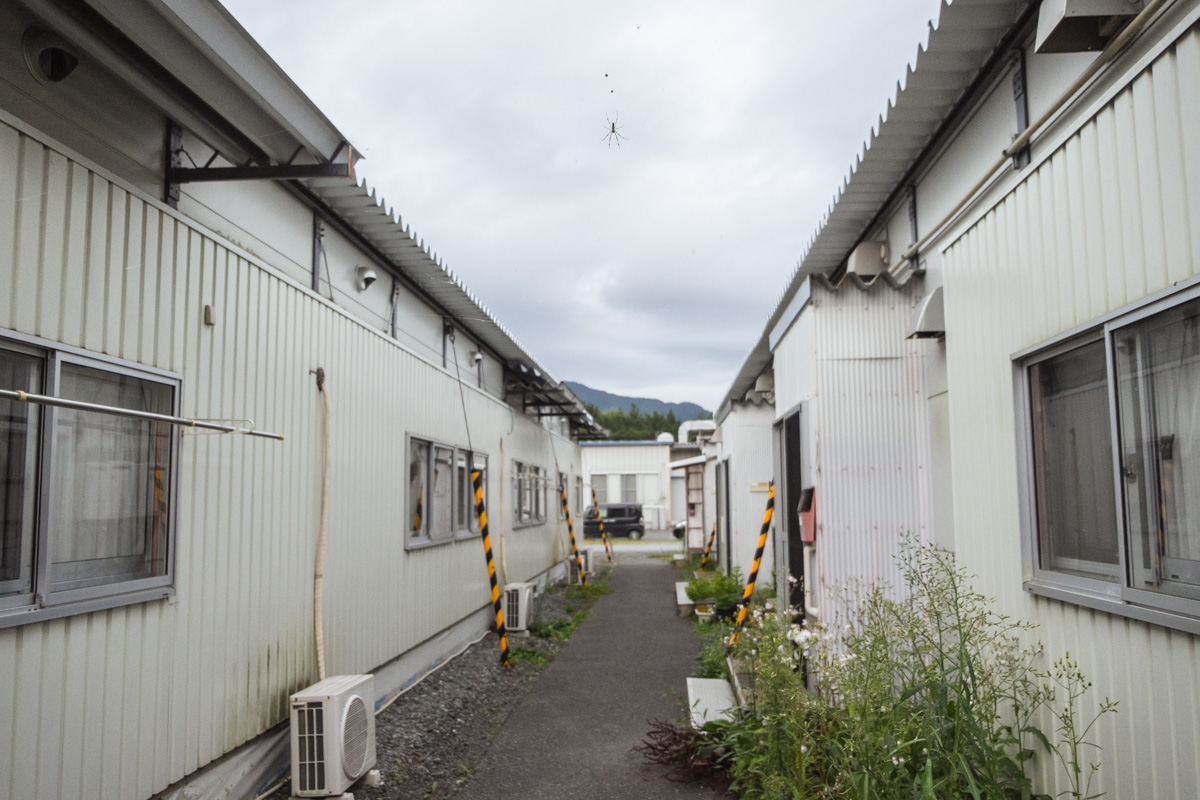
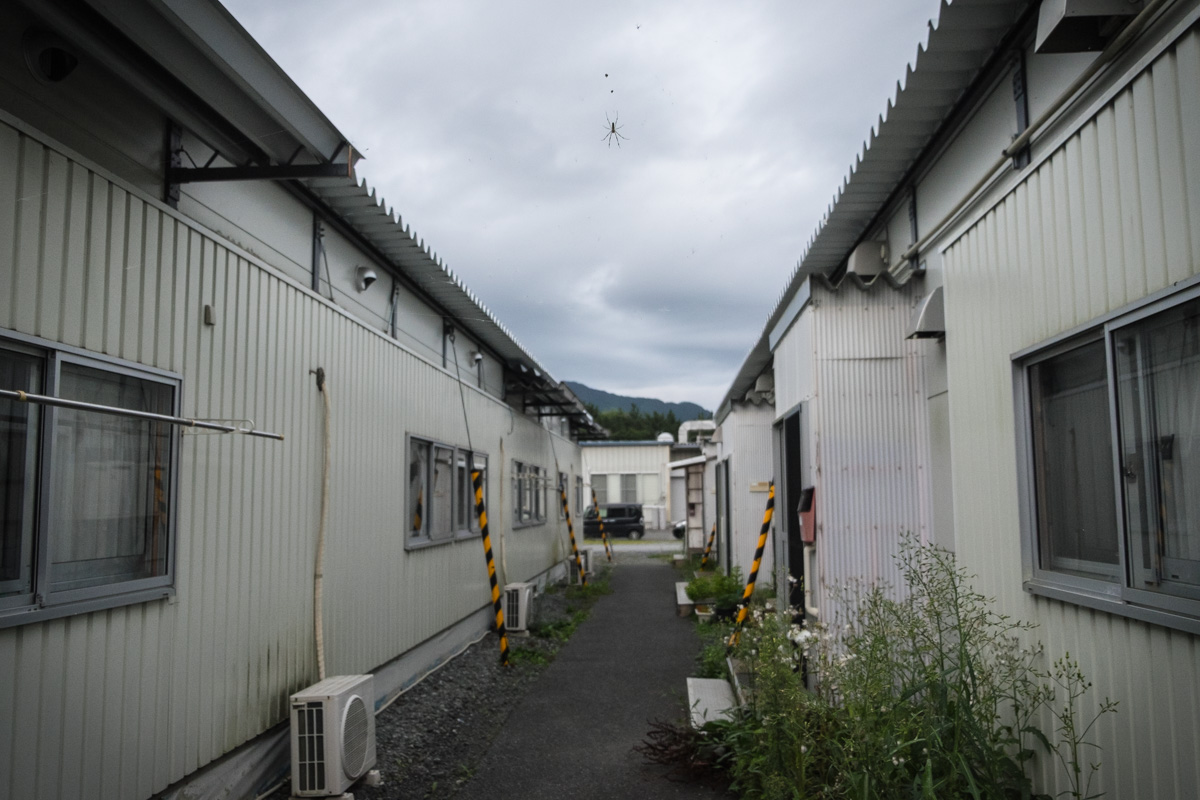
Near Rikuzentakata (Japan), September 11th 2018. A spider on his net hanged between two temporary shelter houses.
As of September 2018, more than 7 years after the 2011 earthquake and tsunami, about 30,000 people are still living in temporary shelters.
| Album | Rebuilding Tohoku |
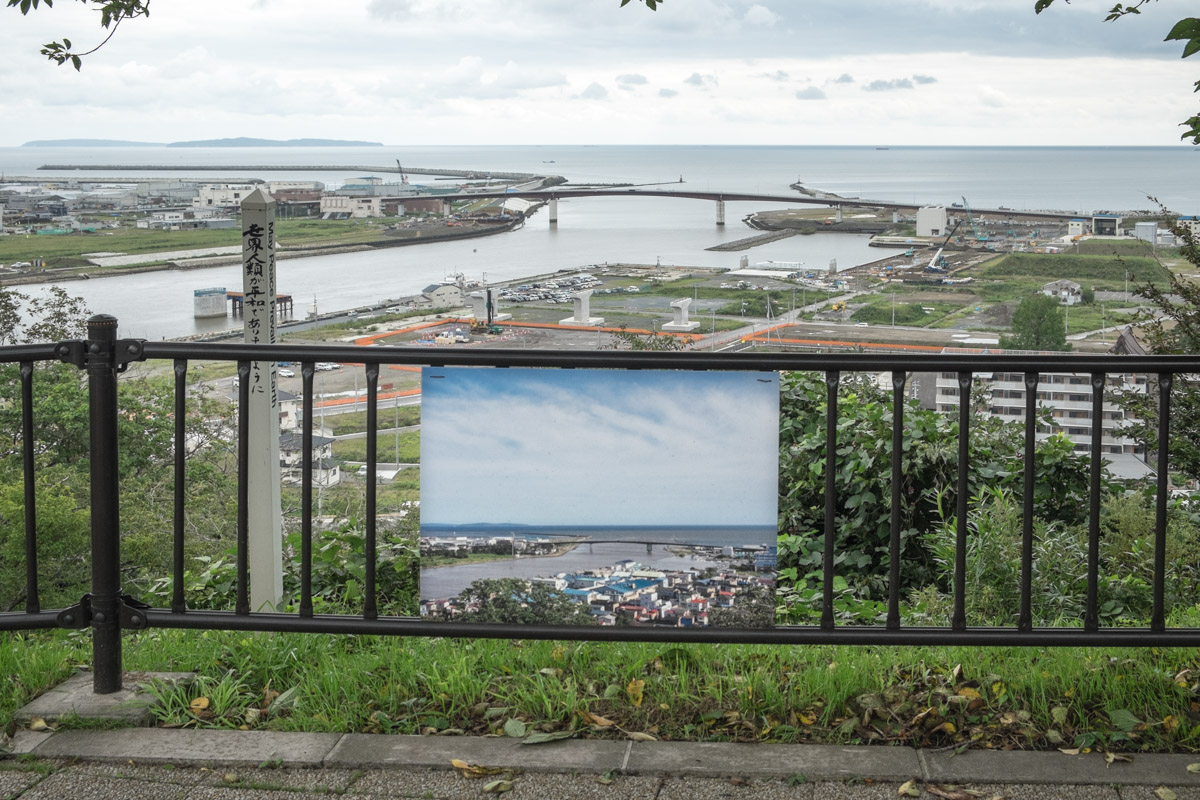
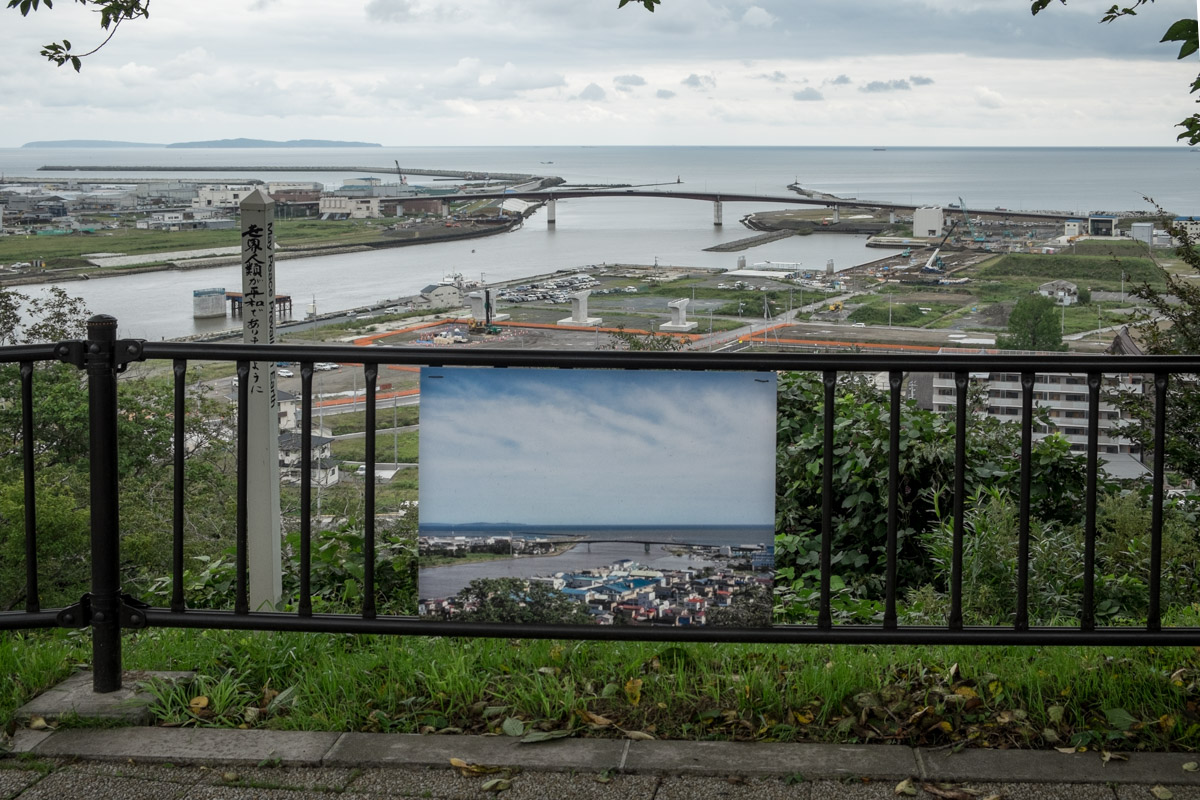
Ishinomaki (Japan), September 11th 2018. An archive photo of the city before the tsunami, and the city nowadays.
| Album | Rebuilding Tohoku |
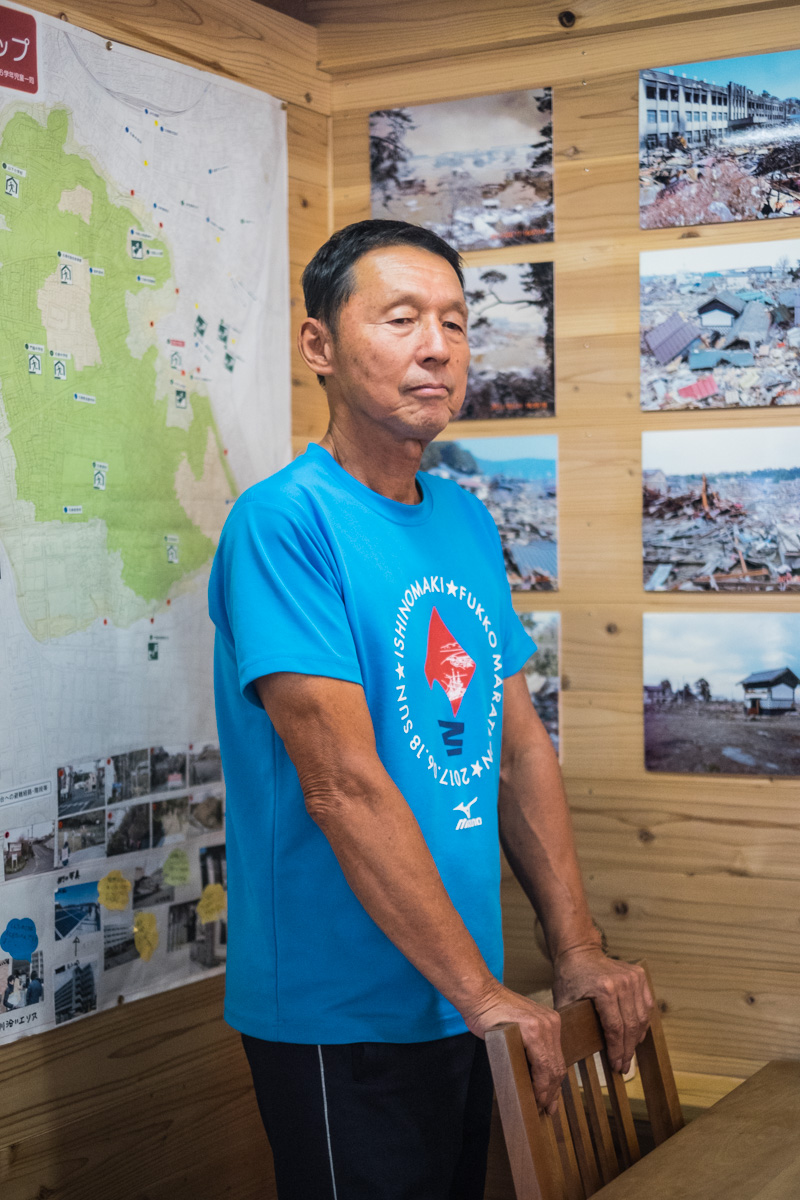
Ishinomaki (Japan), September 11th 2018. Eiichi Honma, a Ishinomaki resident and survivor from the 2011 catastrophe, poses for a portrait. He takes care of a tsunami memorial in town.
| Album | Rebuilding Tohoku |
Rikuzentakata, September 13th 2018. Reconstruction works undergoing in the flat land that used to be Rikuzentakata’s city centre before the 2011 earthquake and tsunami. In the background the newly built concrete seawall erected by the Japanese government to protect the area for potential future tsunamis.
| Album | Rebuilding Tohoku |
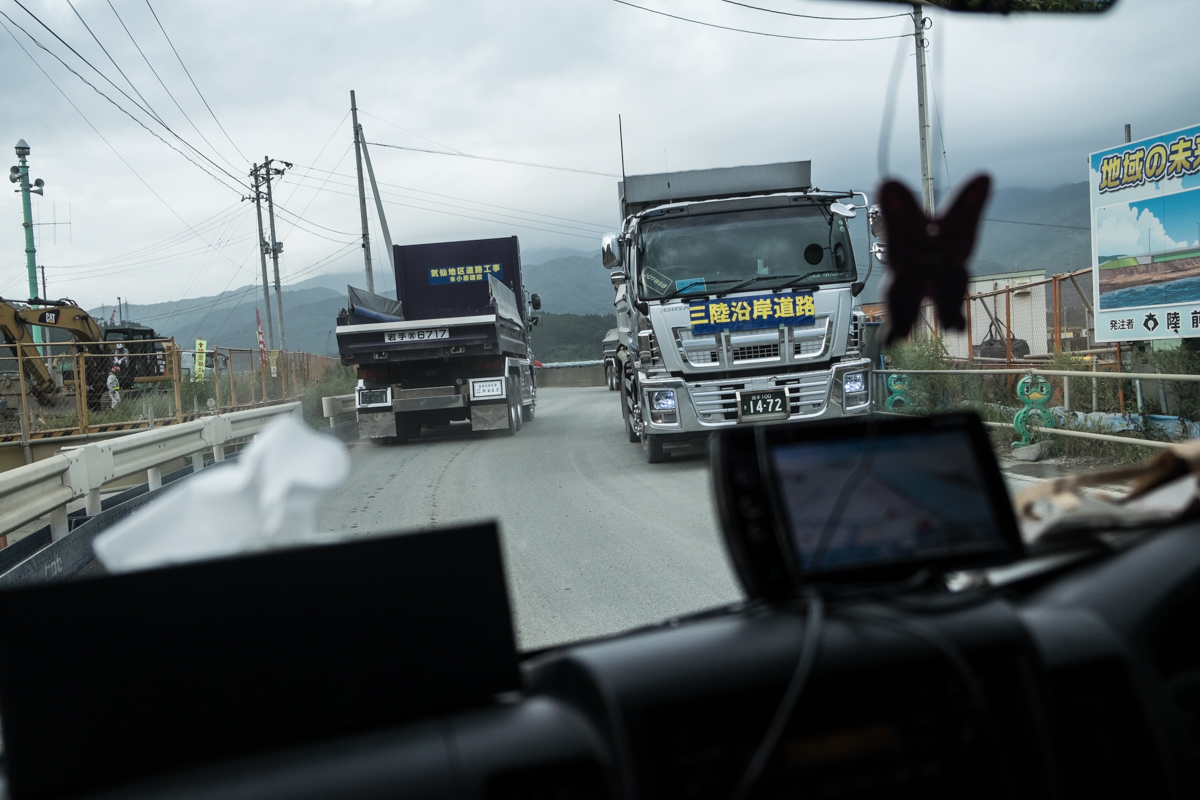
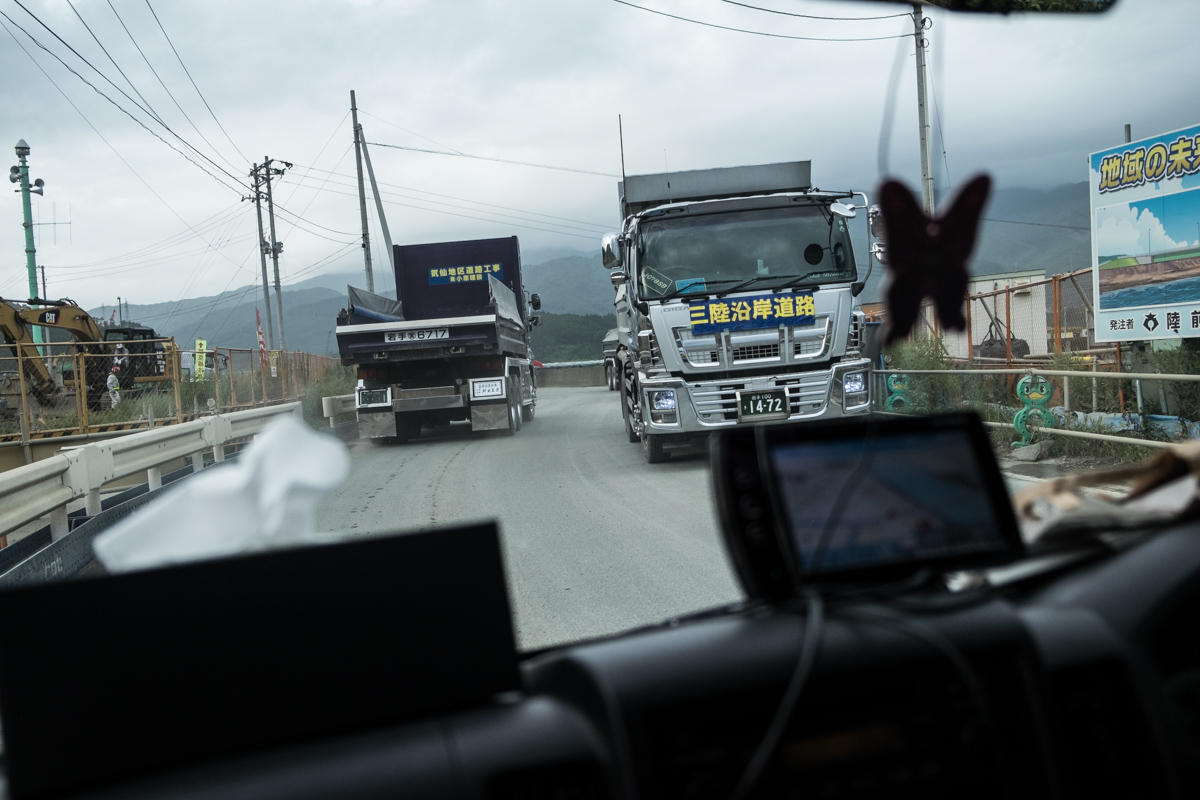
Rikuzentakata (Japan), Sept 13th 2018. Trucks working on the reconstruction undergoing in the flat land that used to be Rikuzentakata’s city centre before the 2011 earthquake and tsunami.
| Album | Rebuilding Tohoku |
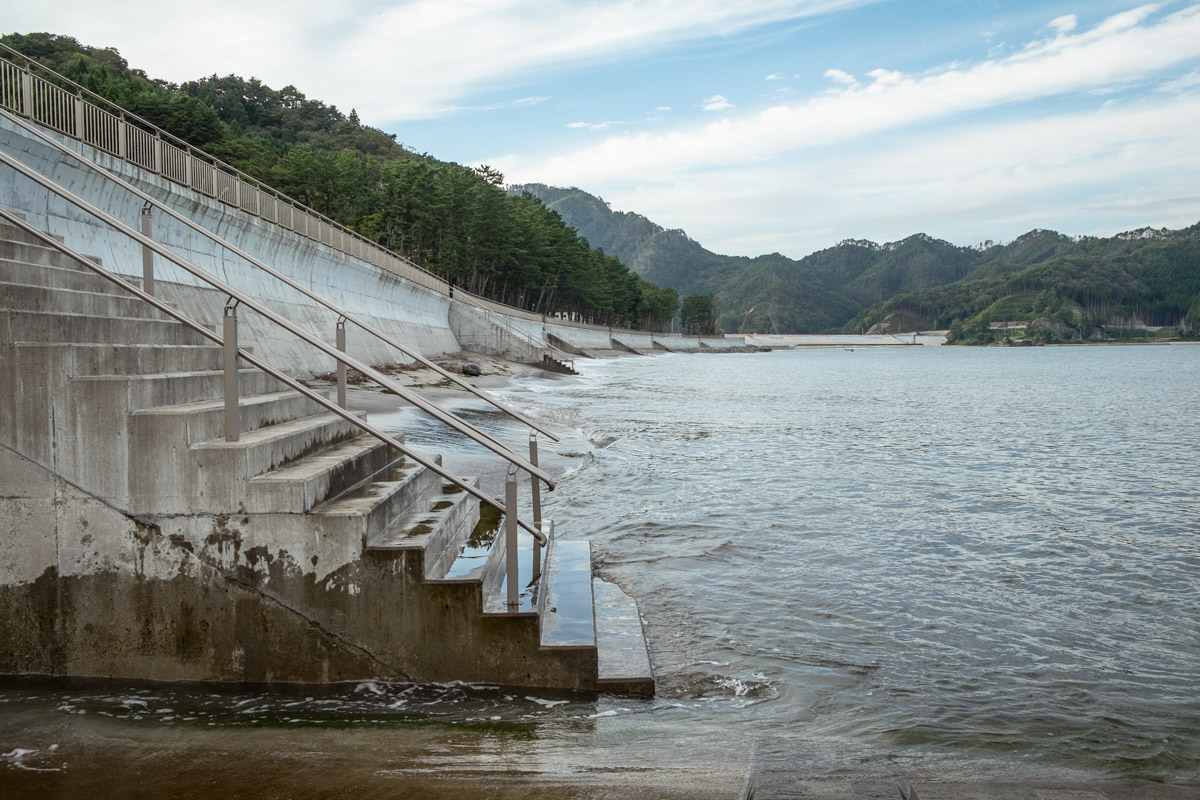
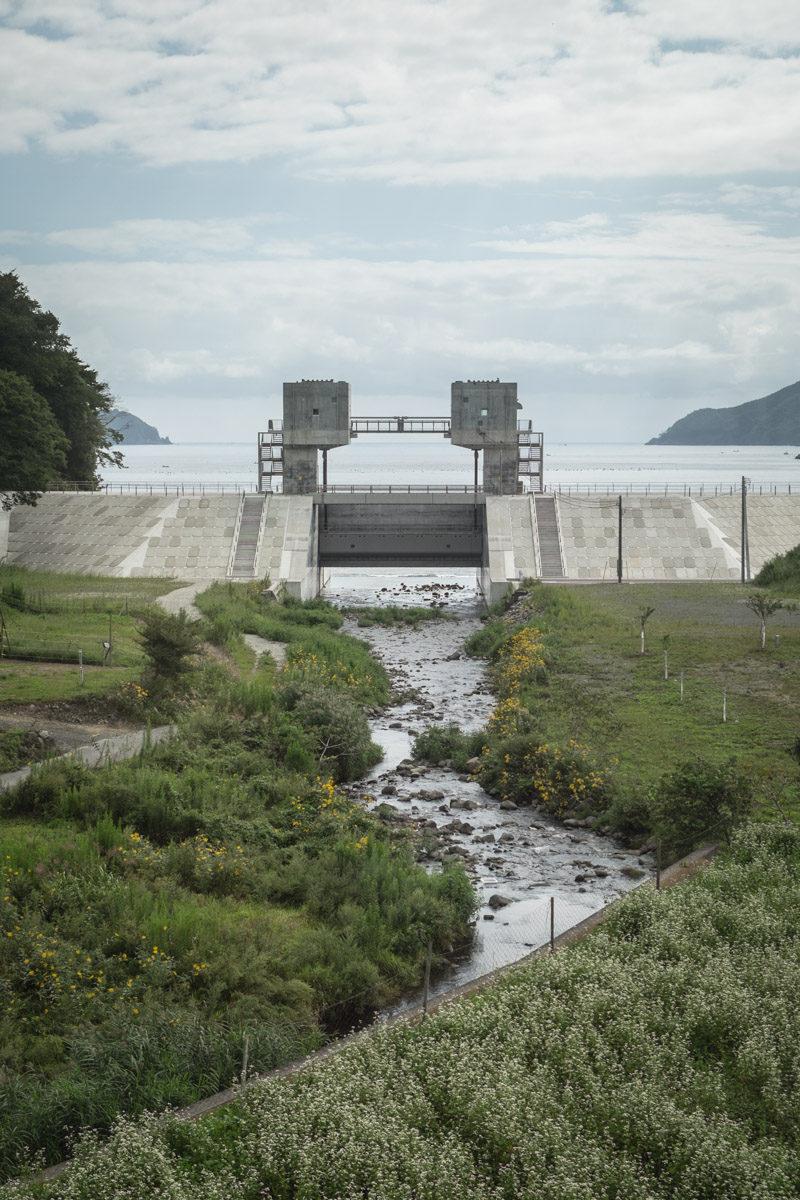
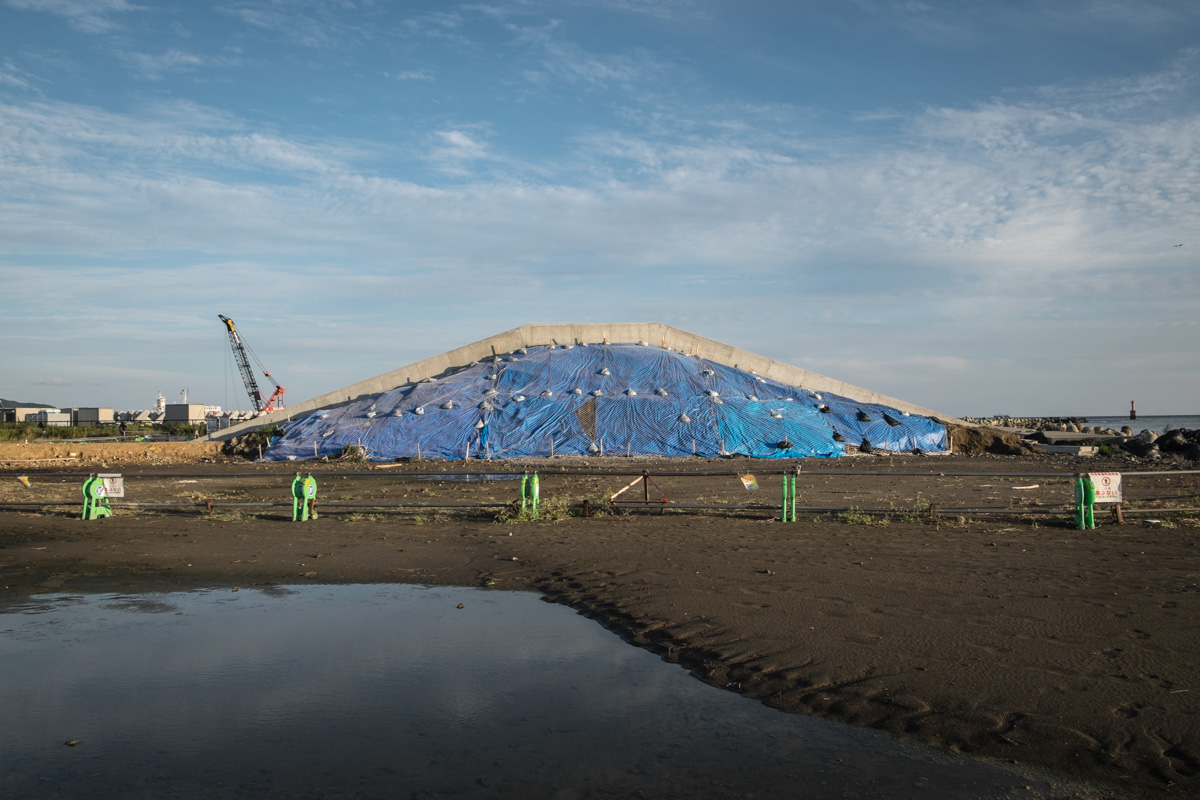
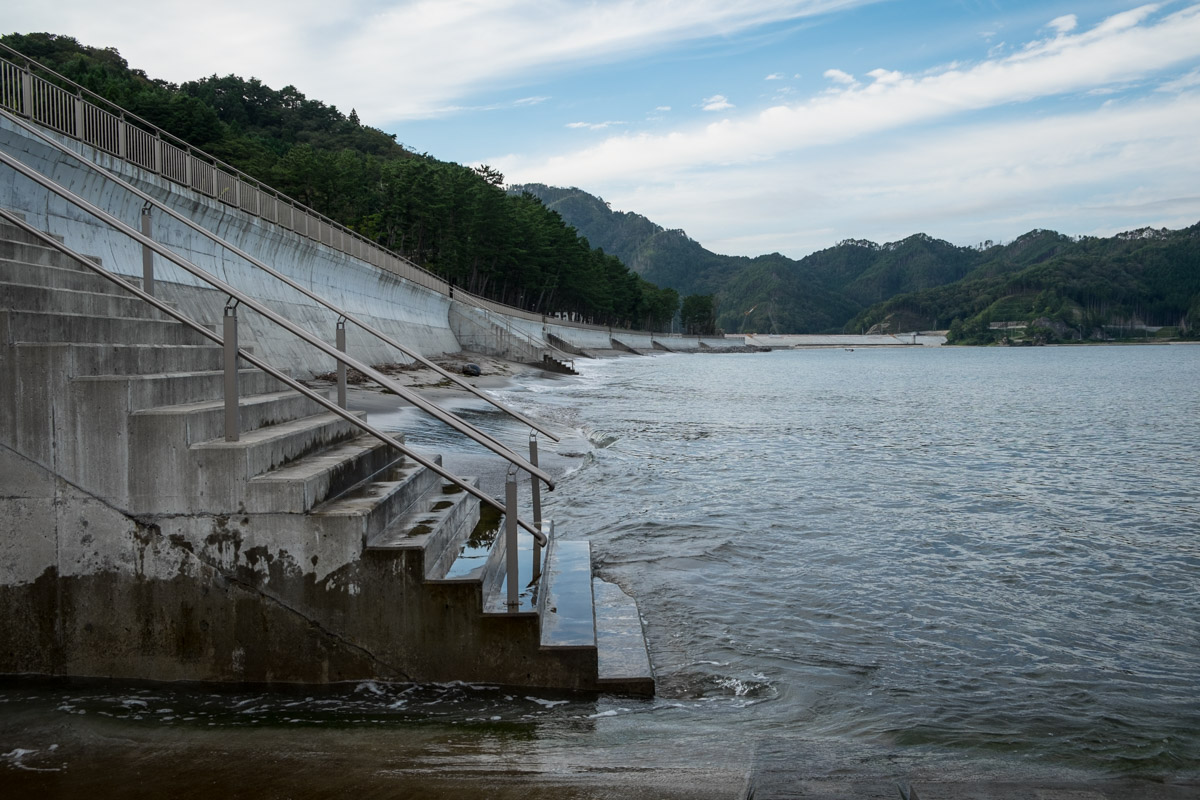
Unosumai (Japan), September 12th 2018. The newly built 12.5 metres high seawall constructed by the Japanese government to protect the area for a potential future Tsunami. Some 395 km of walls have been built along the cost of Tohoku, at a cost of 1.35 trillion yen ($12.74 billion).
| Album | Rebuilding Tohoku |
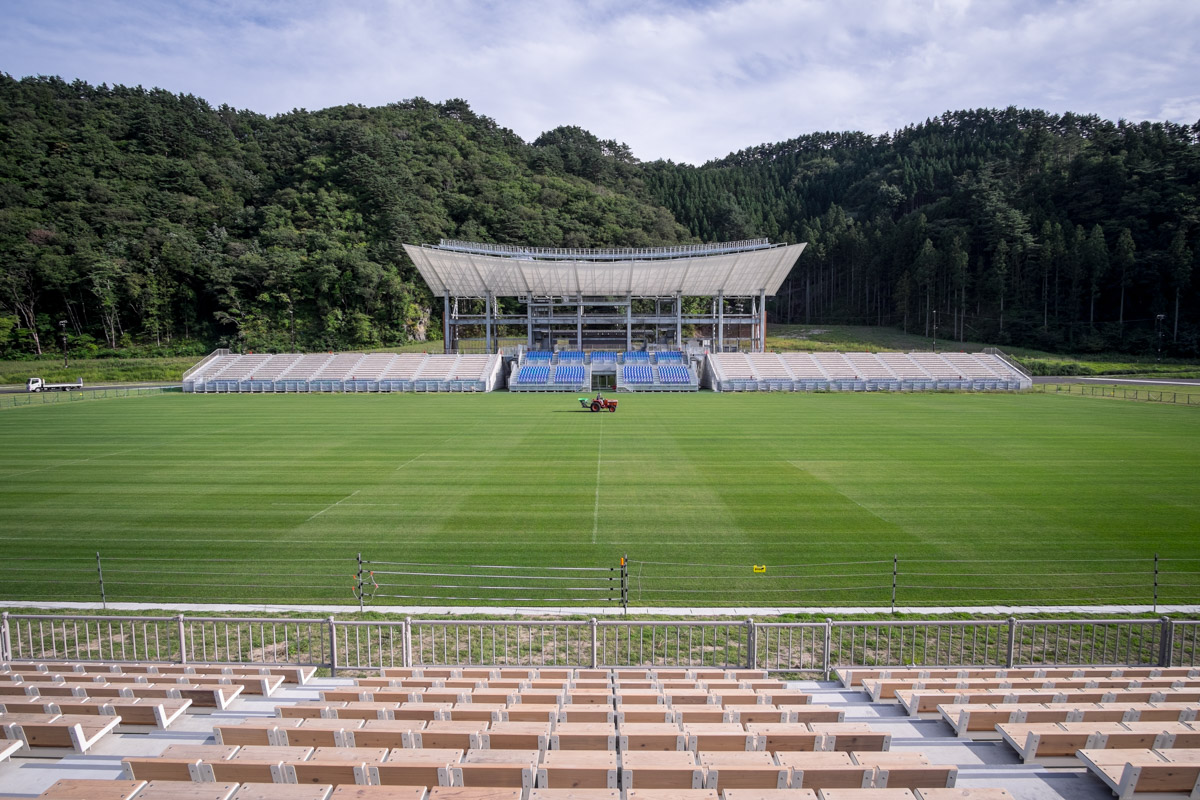
Kamaishi (Japan), September 12th 2018. Maintenance work in the brand new rugby stadium in Kamaishi, the Recovery Memorial Stadium.
Kamaishi was heavily damaged by the 2011 earthquake and tsunami, which killed 1,250 city residents. The stadium was built to host the upcoming 2019 Rugby World Cup. Both the local authorities and central government supported this infrastructure, and pushed to host the Rugby World Cup as a sign of the rebirth of Tohoku.
| Album | Rebuilding Tohoku |
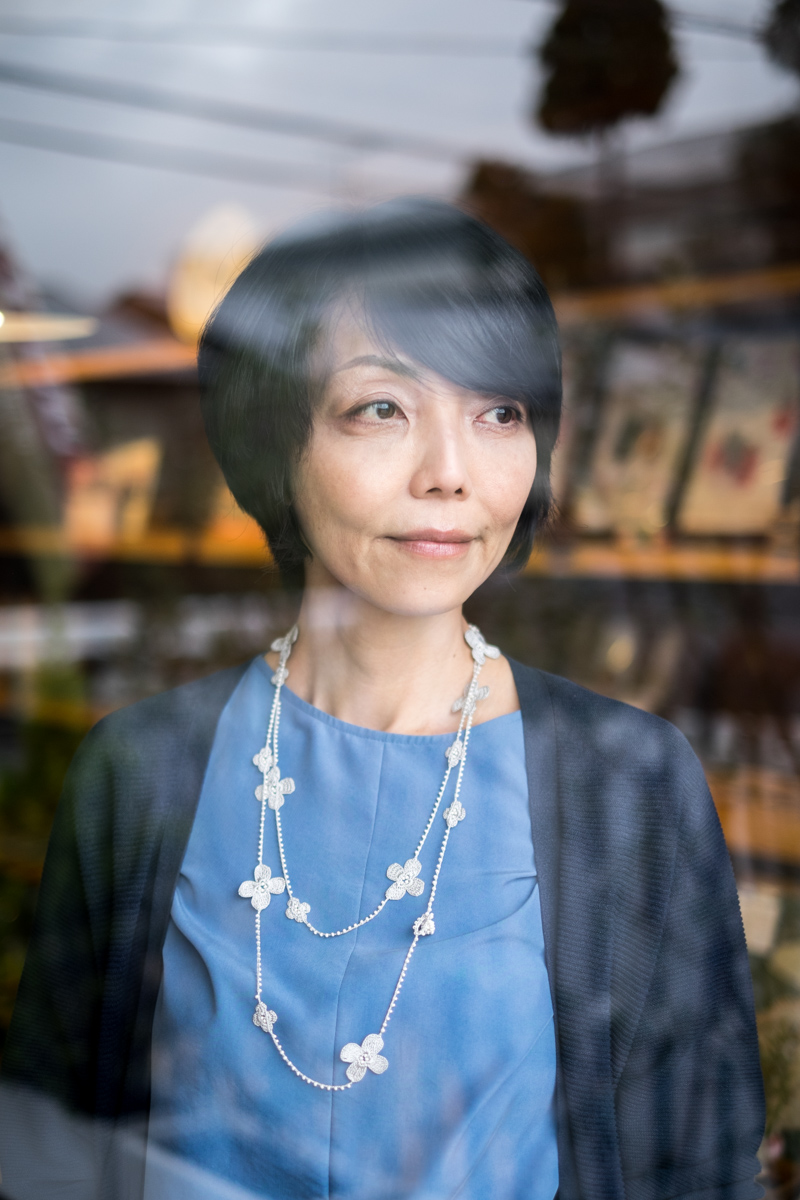
Watari (Japan), September 10th 2018. Megumi Hikichi (50, from Watari) poses for a portrait in the headquarter of Watalis, a project she founded in 2011 after the earthquake and tsunami.
Watari was heavily damaged by the 2011 catastrophe: more then half of the town was flooded and the local economy (based on fishing and agriculture) suffered huge losses. Ms. Hikichi’s project, Watalis, recycles old “kimonos” (typical dresses donated from all over Japan) to create small bags called “fuguro”.
| Album | Rebuilding Tohoku |
Near Sanriku (Japan), September 13th 2018. The newly built 12.5 metres high seawall constructed by the Japanese government to protect the area for a potential future Tsunami. Some 395 km of walls have been built along the cost of Tohoku, at a cost of 1.35 trillion yen ($12.74 billion).
| Album | Rebuilding Tohoku |
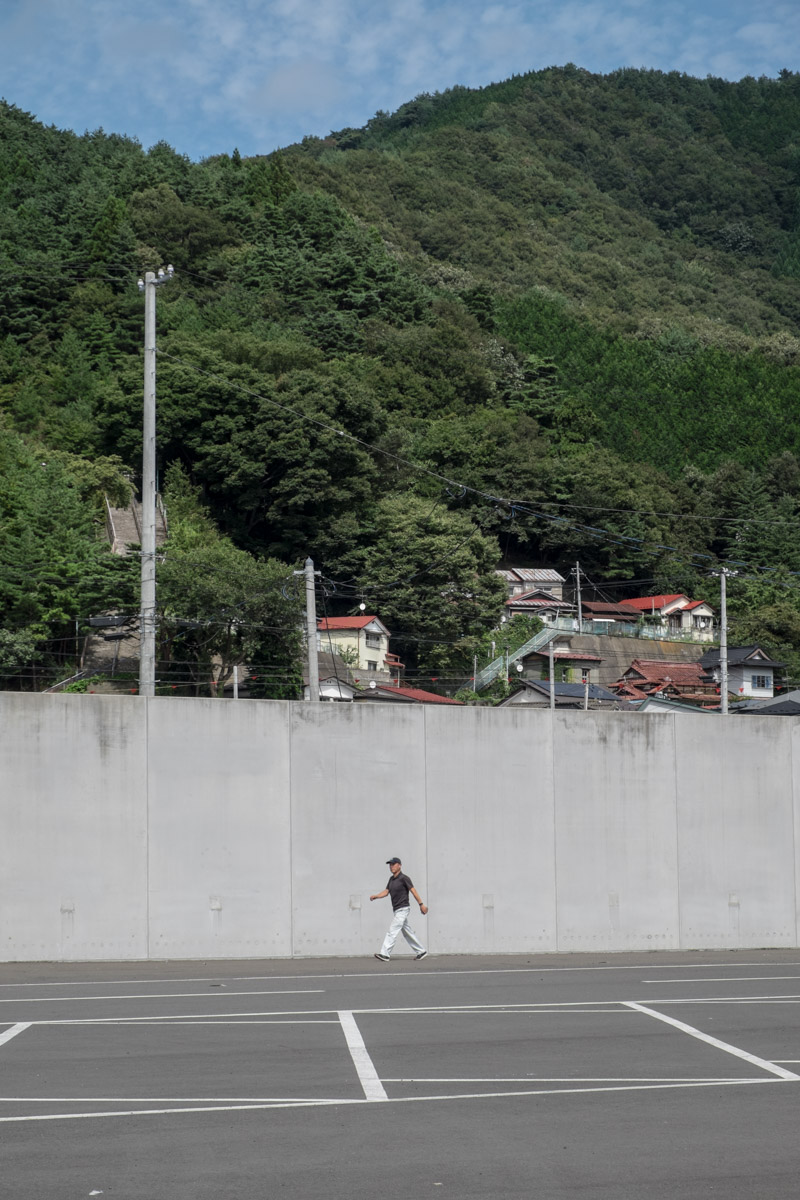
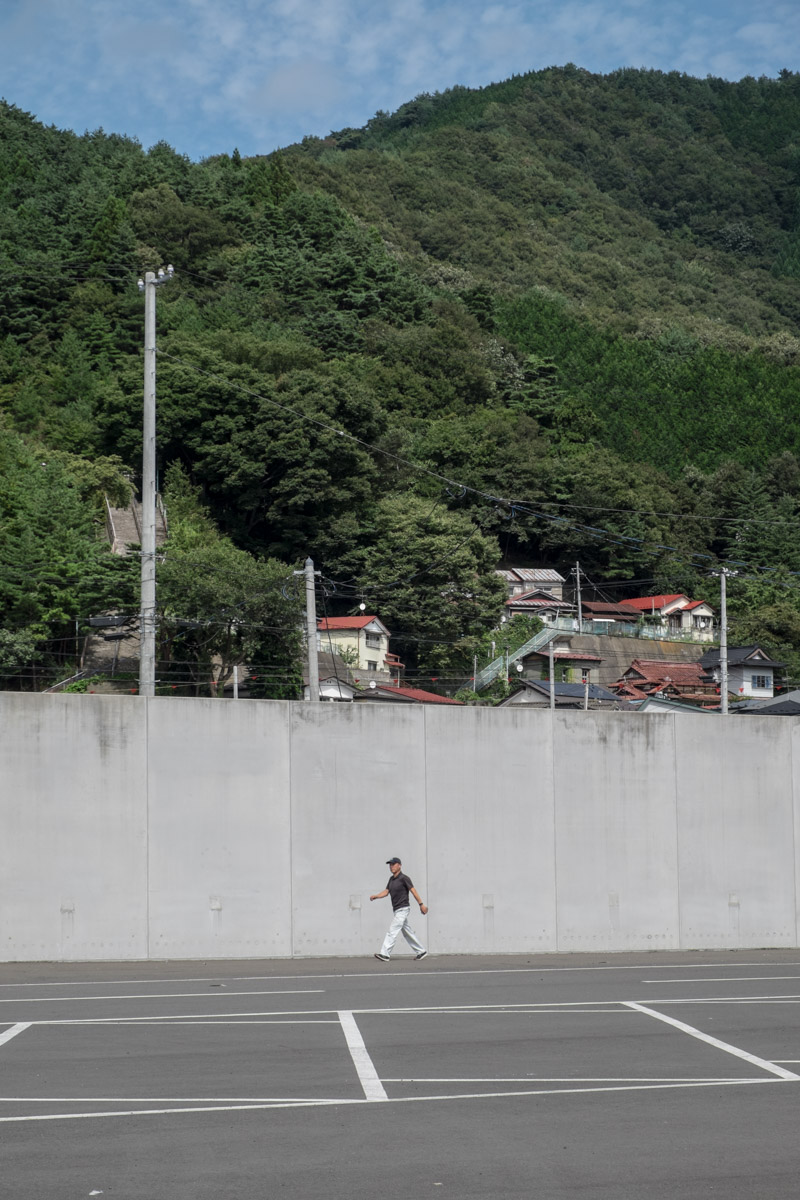
Kamaishi (Japan), Sept 12th 2018. A man walking near the newly built sea wall, erected by the government to protect the city from possible future tsunamis.
| Album | Rebuilding Tohoku |
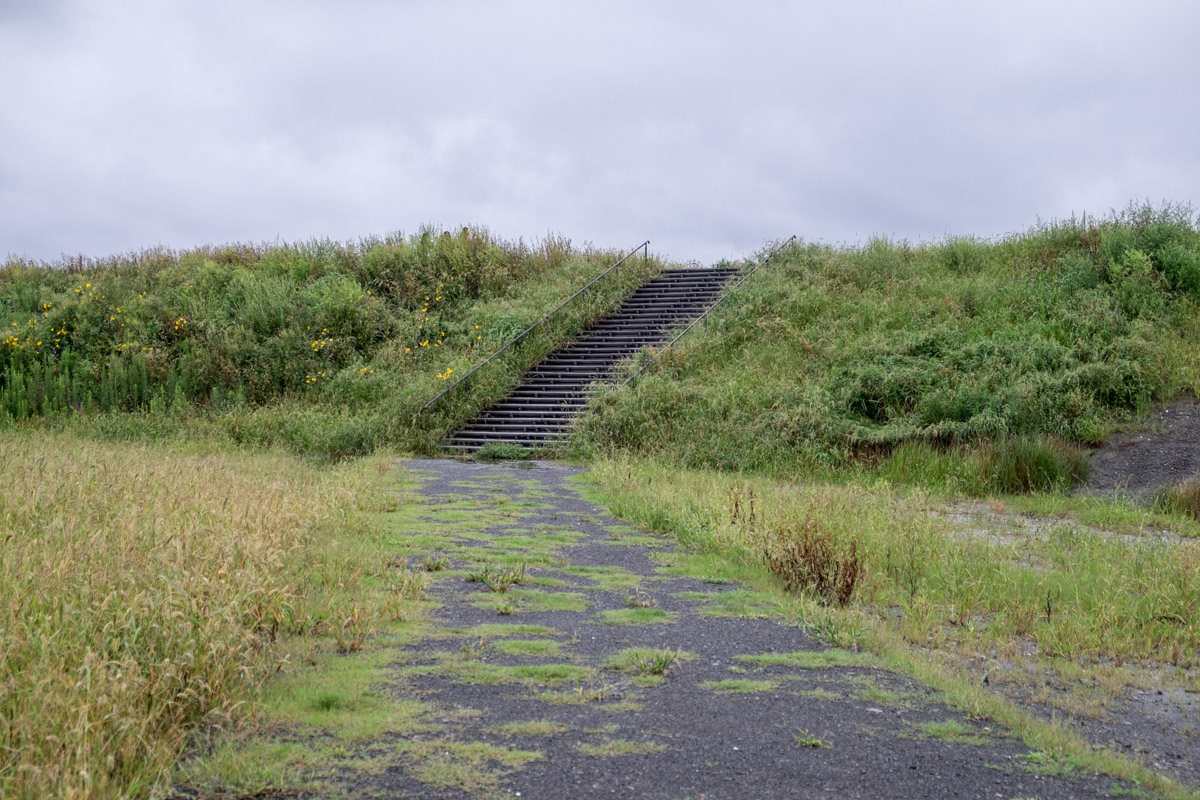
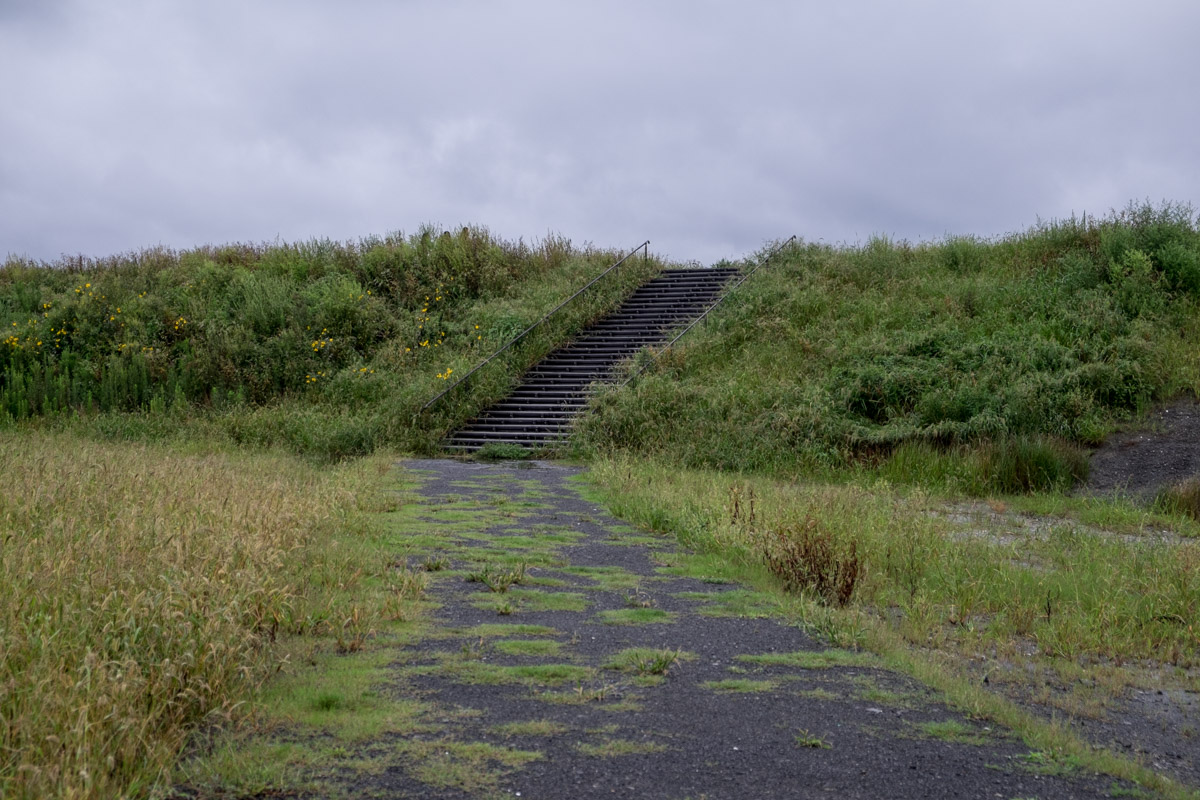
Watari (Japan), Sept 10th 2018. A stair reaching the top of the old anti-tsunami wall protecting the city. It was not enough to defend it from the 2011 tsunami.
| Album | Rebuilding Tohoku |
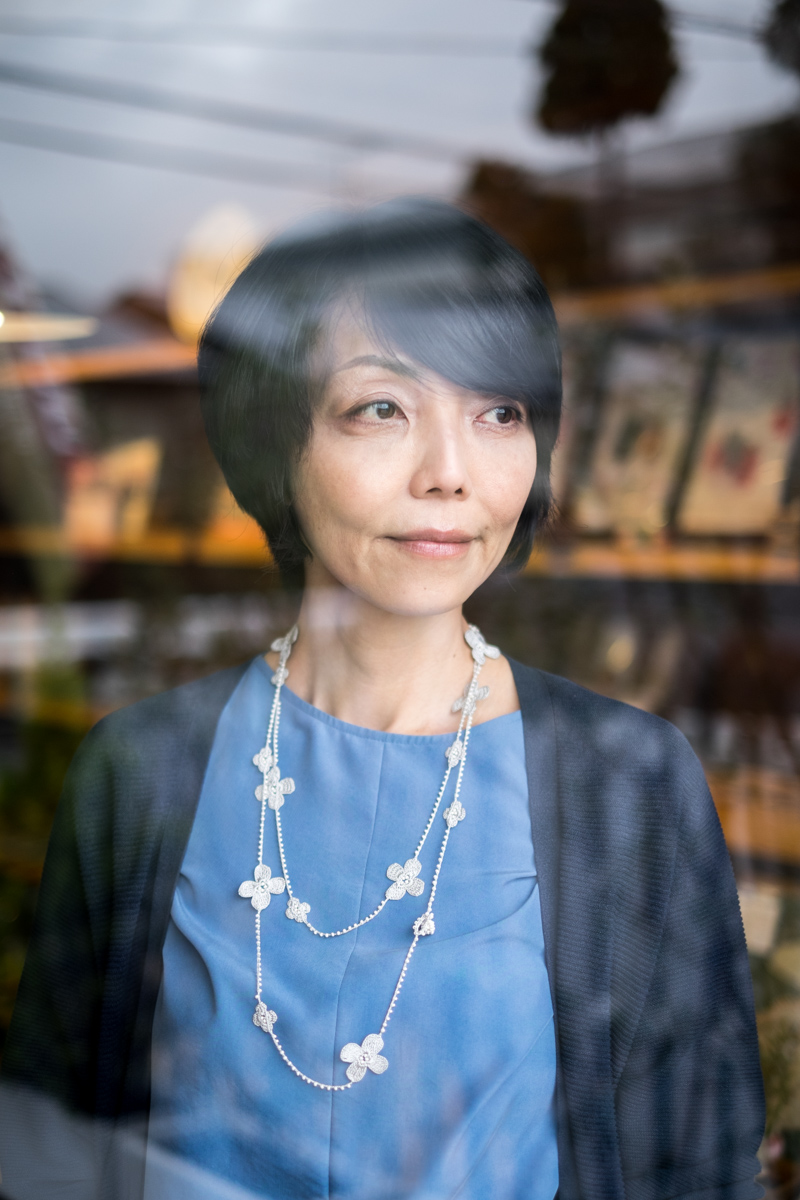
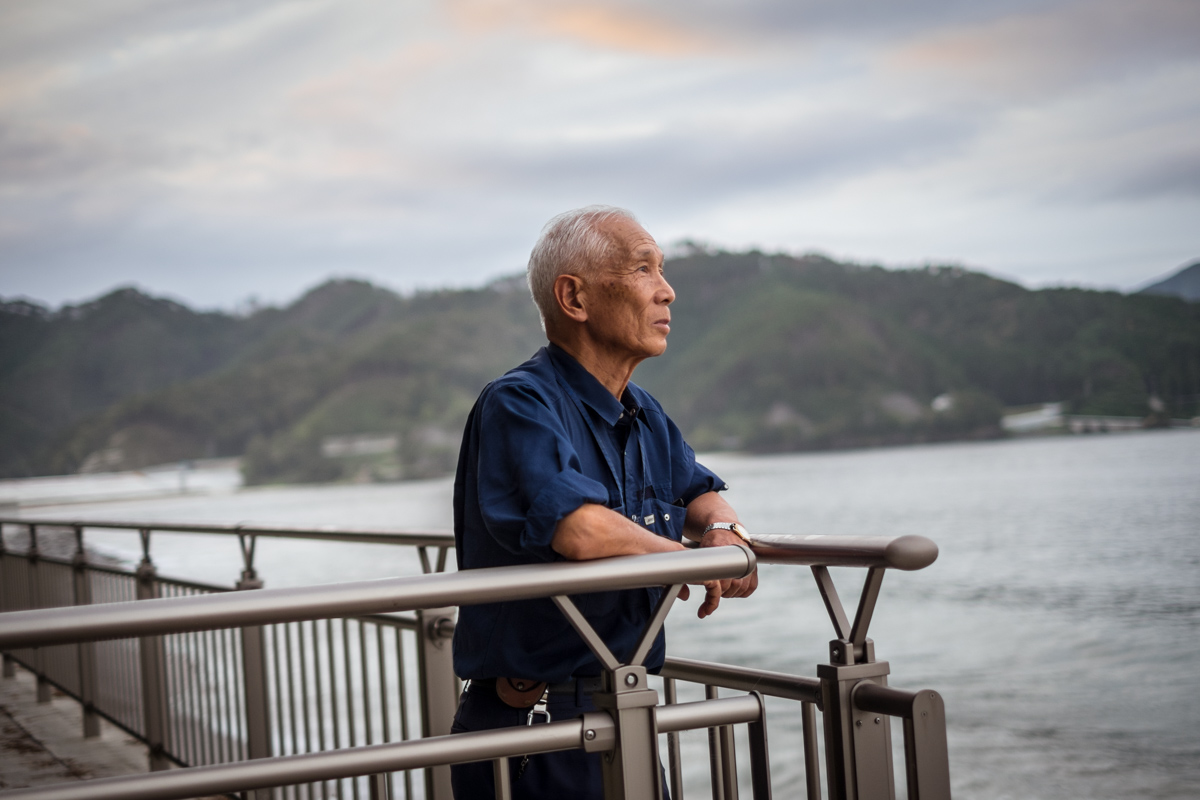
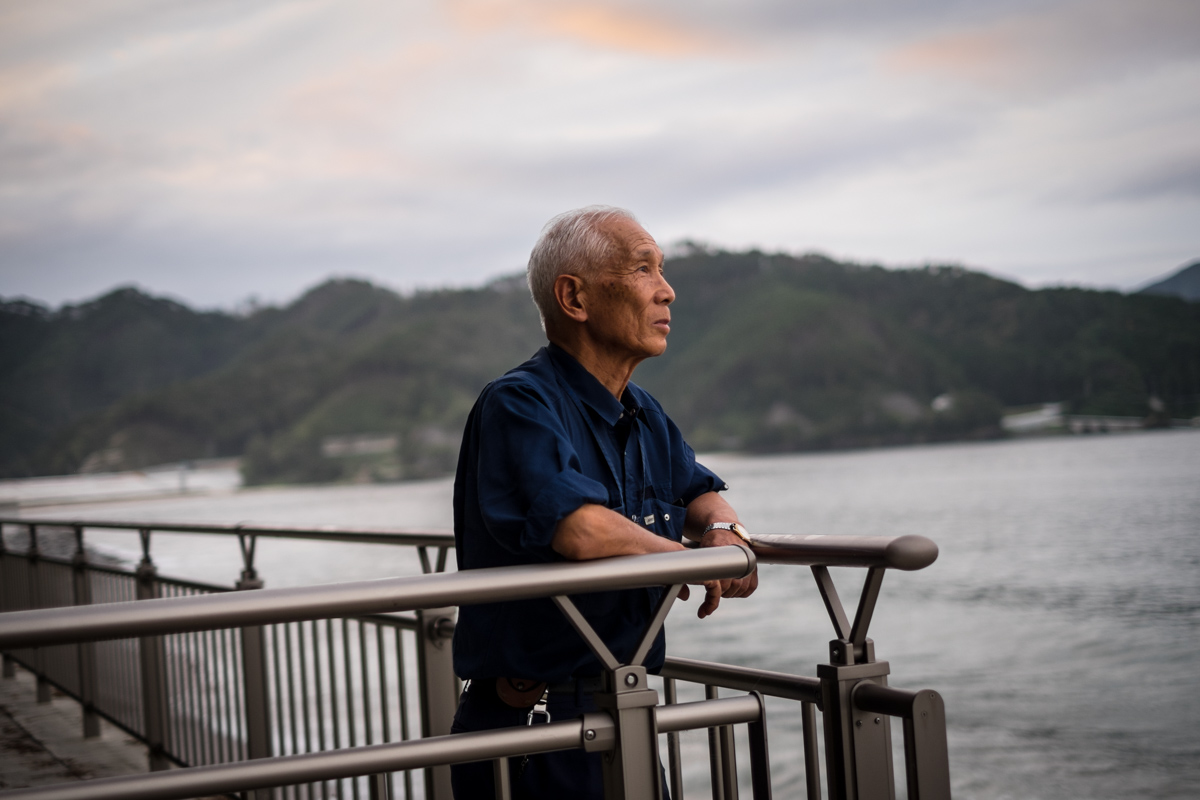
Unosumai (Japan), September 12th 2018. Mr. Ryokawa (77, from Unosumai) poses for a portrait while looking at the ocean in Otsuchi bay.
The 2011 tsunami hit the building where he used to live in Unusumai, and flooded it up to the 2nd floor. His house was at the 3rd floor. He survived by reaching the rooftop and waiting 2 days for the rescuers’ helicopter to come.
| Album | Rebuilding Tohoku |
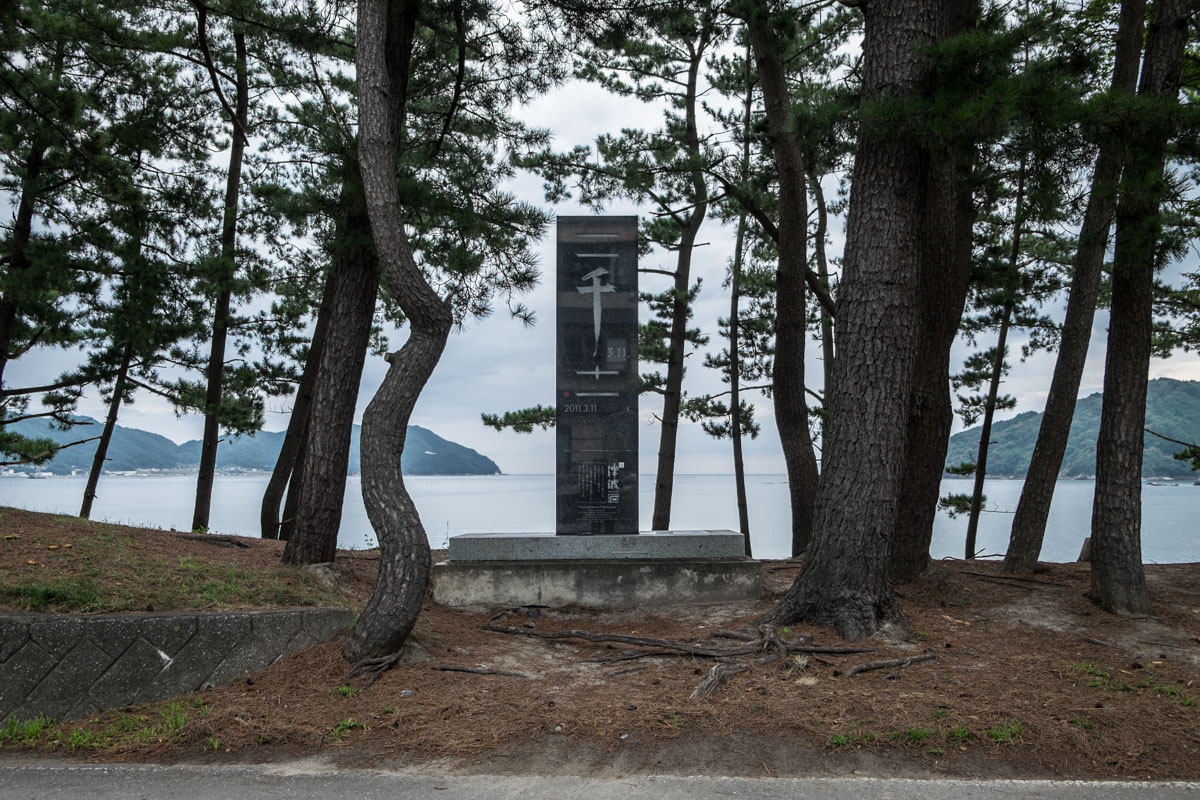
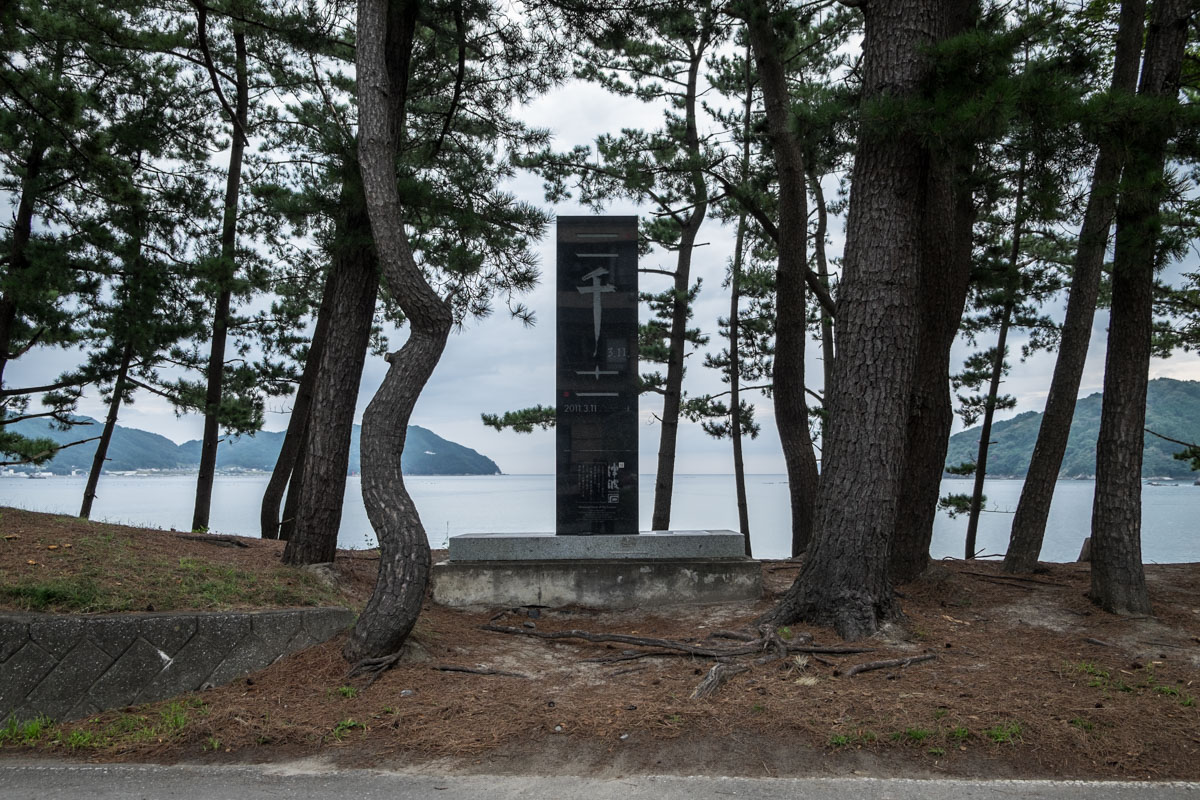
Unosumai (Japan), Sept 13th 2018. A memorial to the victims of the 2011 tsunami.
| Album | Rebuilding Tohoku |
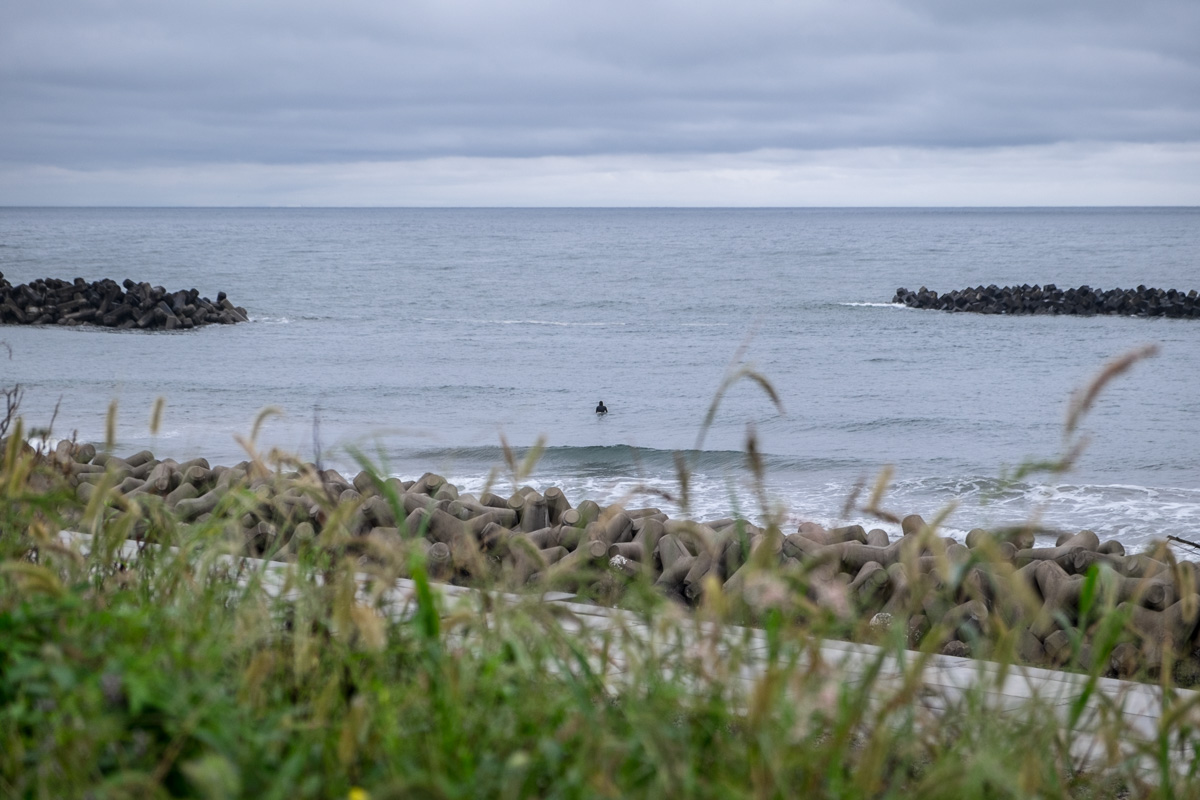
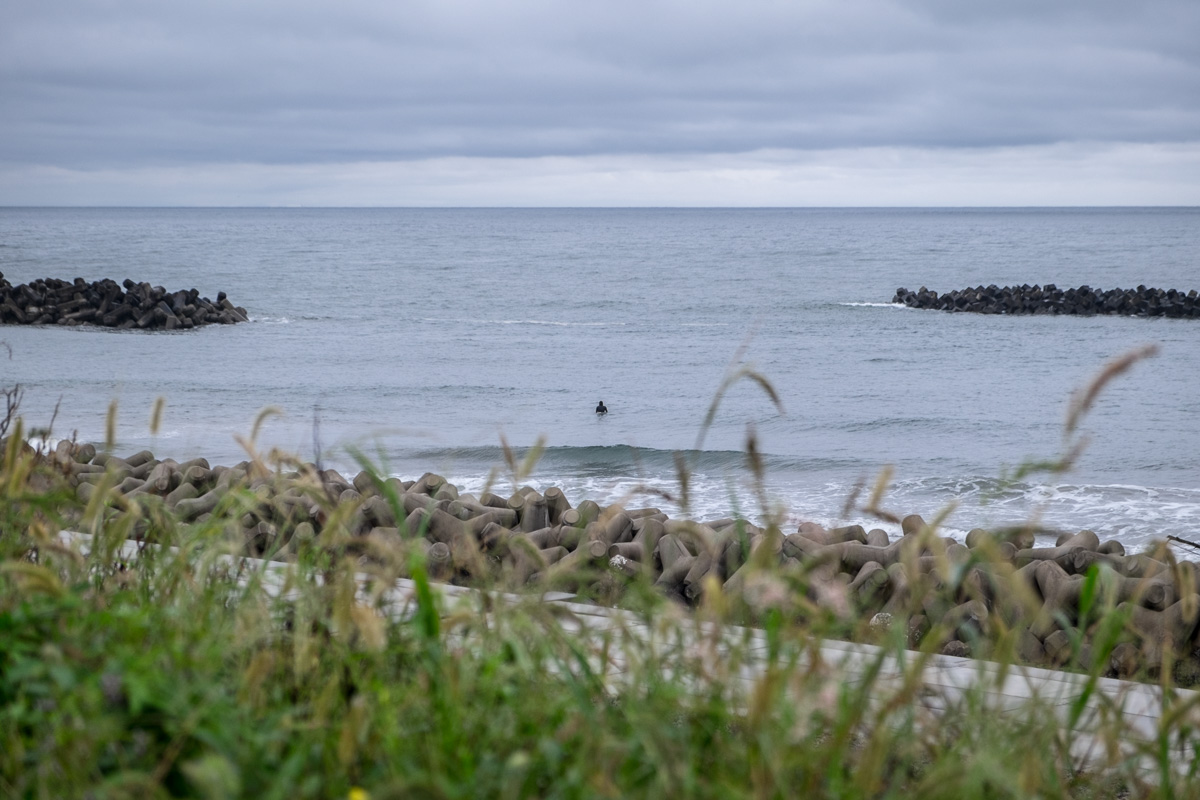
Near Watari (Japan), September 10th 2018. Even though an ordinance dating back to the immediate earthquake aftermath still forbids bathing in the ocean along the coast of Tohoku, a man swims close the newly build seawall near the town of Watari.
| Album | Rebuilding Tohoku |
Ishinomaki (Japan), September 11th 2018. A photograph of an archive photo showing the immediate aftermath of the Great East Japan Earthquake and subsequent tsunami in the town of Ishinomaki.
| Album | Tohoku: Disrupted Future |
Ishinomaki (Japan), Sept 11th 2018. The remainings of a house erased by the 2011 tsunami.
| Album | Tohoku: Disrupted Future |
Kamaishi (Japan), Sept 12th 2018. Temporary house where people displaced by the 2011 tsunami are hosted. As of September 2018, more than 7 years after the 2011 earthquake and tsunami, about 30,000 people are still living in temporary shelters.
| Album | Tohoku: Disrupted Future |
Rikuzentakata (Japan), September 13th 2018. Sato Tomoko (73, from Rikuzentakata) poses for a portrait in front of the condo complex where she resides in Rikuzentakata.
The 2011 tsunami erased Rikuzentakata, destroying 582 out of its 600 houses. With the reconstruction, the familiar 1-storey houses were replaced with condo complex like the one in the photograph. Ms. Tomoko was elected by the residents as representative person for the house complex.
| Album | Tohoku: Disrupted Future |
Near Rikuzentakata (Japan), September 11th 2018. A spider on his net hanged between two temporary shelter houses.
As of September 2018, more than 7 years after the 2011 earthquake and tsunami, about 30,000 people are still living in temporary shelters.
| Album | Tohoku: Disrupted Future |
Ishinomaki (Japan), September 11th 2018. An archive photo of the city before the tsunami, and the city nowadays.
| Album | Tohoku: Disrupted Future |
Unosumai (Japan), Sept 13th 2018. A memorial to the victims of the 2011 tsunami.
| Album | Tohoku: Disrupted Future |
Rikuzentakata (Japan), Sept 13th 2018. Trucks working on the reconstruction undergoing in the flat land that used to be Rikuzentakata’s city centre before the 2011 earthquake and tsunami.
| Album | Tohoku: Disrupted Future |
Kamaishi (Japan), September 12th 2018. Maintenance work in the brand new rugby stadium in Kamaishi, the Recovery Memorial Stadium.
Kamaishi was heavily damaged by the 2011 earthquake and tsunami, which killed 1,250 city residents. The stadium was built to host the upcoming 2019 Rugby World Cup. Both the local authorities and central government supported this infrastructure, and pushed to host the Rugby World Cup as a sign of the rebirth of Tohoku.
| Album | Tohoku: Disrupted Future |
Rikuzentakata, September 13th 2018. Reconstruction works undergoing in the flat land that used to be Rikuzentakata’s city centre before the 2011 earthquake and tsunami. In the background the newly built concrete seawall erected by the Japanese government to protect the area for potential future tsunamis.
| Album | Tohoku: Disrupted Future |
Watari (Japan), Sept 10th 2018. A stair reaching the top of the old anti-tsunami wall protecting the city. It was not enough to defend it from the 2011 tsunami.
| Album | Tohoku: Disrupted Future |
Watari (Japan), September 10th 2018. Megumi Hikichi (50, from Watari) poses for a portrait in the headquarter of Watalis, a project she founded in 2011 after the earthquake and tsunami.
Watari was heavily damaged by the 2011 catastrophe: more then half of the town was flooded and the local economy (based on fishing and agriculture) suffered huge losses. Ms. Hikichi’s project, Watalis, recycles old “kimonos” (typical dresses donated from all over Japan) to create small bags called “fuguro”.
| Album | Tohoku: Disrupted Future |
Near Sanriku (Japan), September 13th 2018. The newly built 12.5 metres high seawall constructed by the Japanese government to protect the area for a potential future Tsunami. Some 395 km of walls have been built along the cost of Tohoku, at a cost of 1.35 trillion yen ($12.74 billion).
| Album | Tohoku: Disrupted Future |
Rikuzentakata, September 13th 2018. Reconstruction works undergoing in the flat land that used to be Rikuzentakata’s city centre before the 2011 earthquake and tsunami. In the background the newly built concrete seawall erected by the Japanese government to protect the area for potential future tsunamis.
| Album | Tohoku: Disrupted Future |
| Album | Tohoku: Disrupted Future |
Kamaishi (Japan), Sept 12th 2018. A man walking near the newly built sea wall, erected by the government to protect the city from possible future tsunamis.
| Album | Tohoku: Disrupted Future |
Kamaishi (Japan), September 12th 2018. A sign placed on the wall of a local factory marks the height reached by the tsunami waves in Kamaishi on the 11th march 2011.
| Album | Tohoku: Disrupted Future |
Unosumai (Japan), September 12th 2018. The newly built 12.5 metres high seawall constructed by the Japanese government to protect the area for a potential future Tsunami. Some 395 km of walls have been built along the cost of Tohoku, at a cost of 1.35 trillion yen ($12.74 billion).
| Album | Tohoku: Disrupted Future |
Unosumai (Japan), September 12th 2018. Mr. Ryokawa (77, from Unosumai) poses for a portrait while looking at the ocean in Otsuchi bay.
The 2011 tsunami hit the building where he used to live in Unusumai, and flooded it up to the 2nd floor. His house was at the 3rd floor. He survived by reaching the rooftop and waiting 2 days for the rescuers’ helicopter to come.
| Album | Tohoku: Disrupted Future |
Near Watari (Japan), September 10th 2018. Even though an ordinance dating back to the immediate earthquake aftermath still forbids bathing in the ocean along the coast of Tohoku, a man swims close the newly build seawall near the town of Watari.
| Album | Tohoku: Disrupted Future |
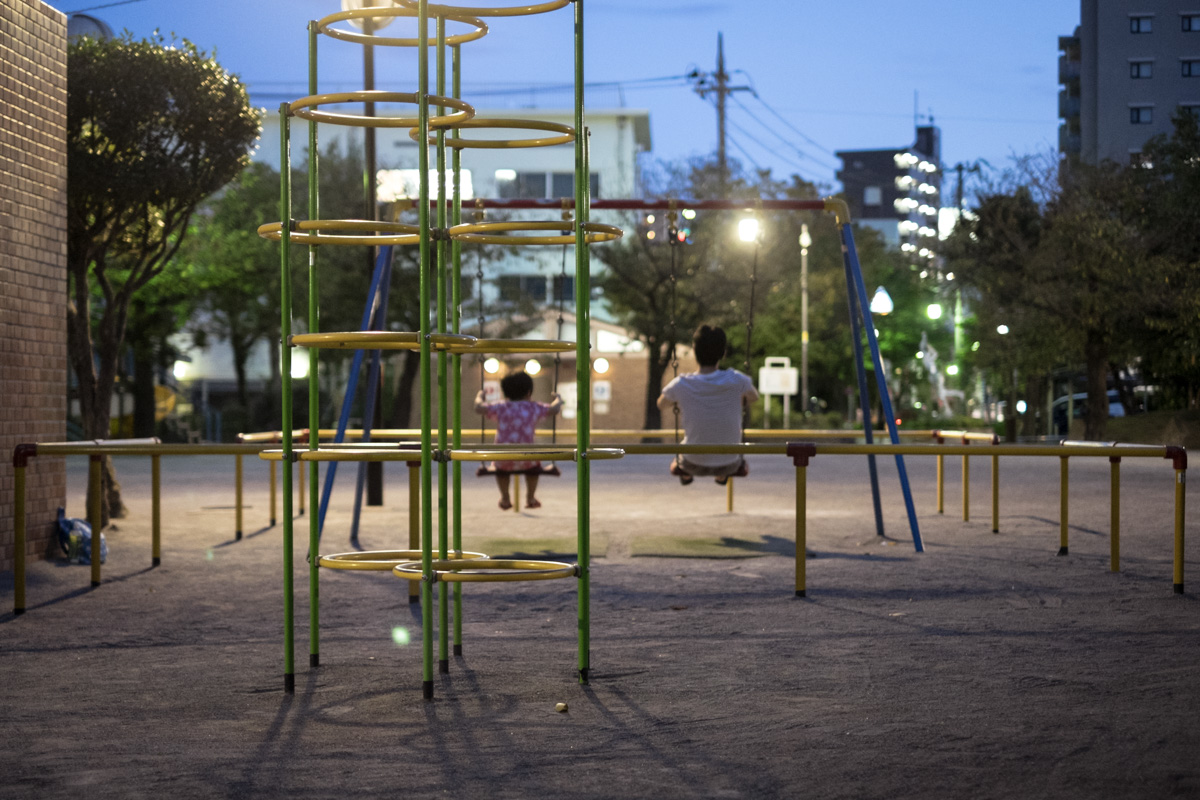
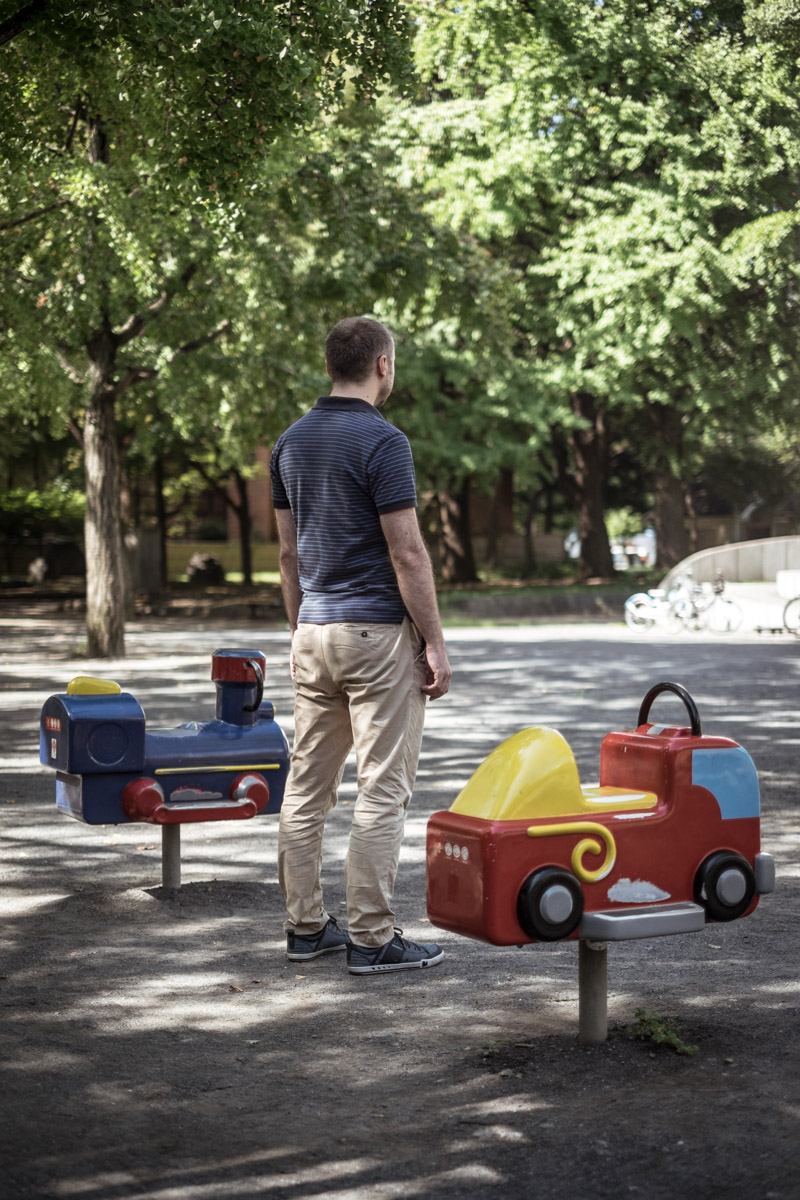
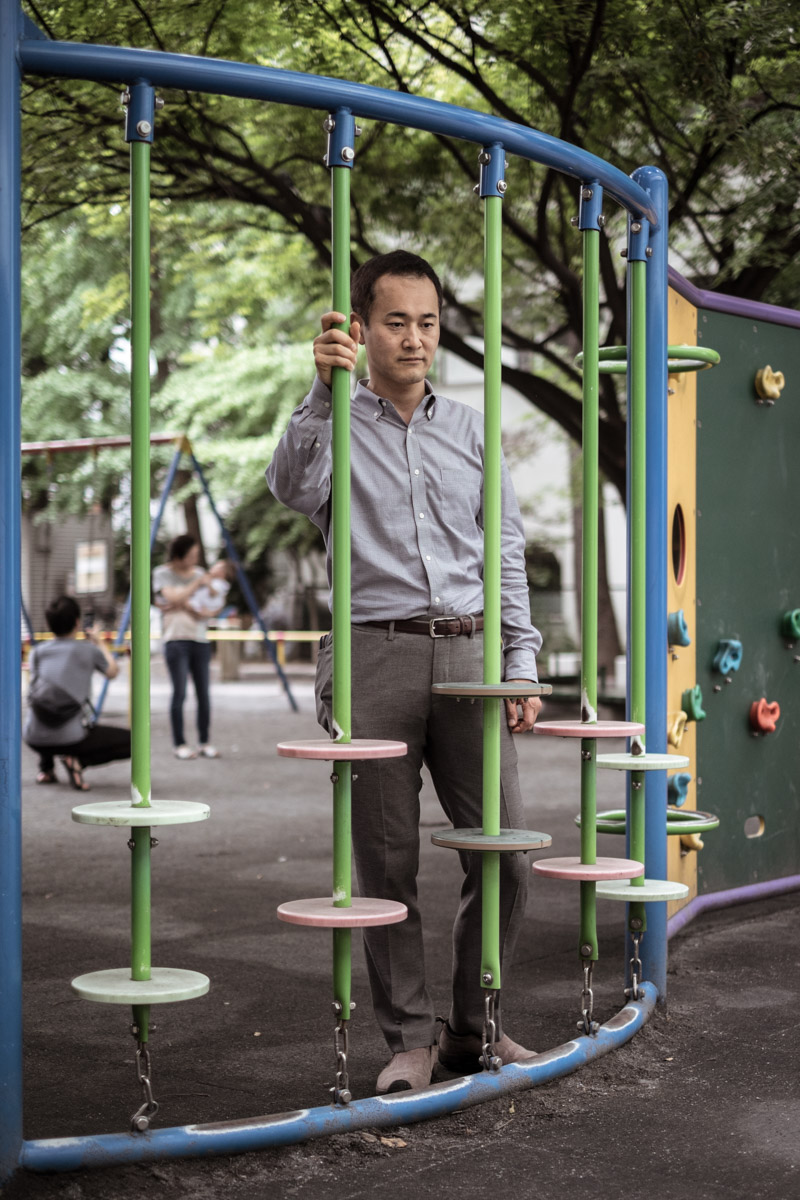
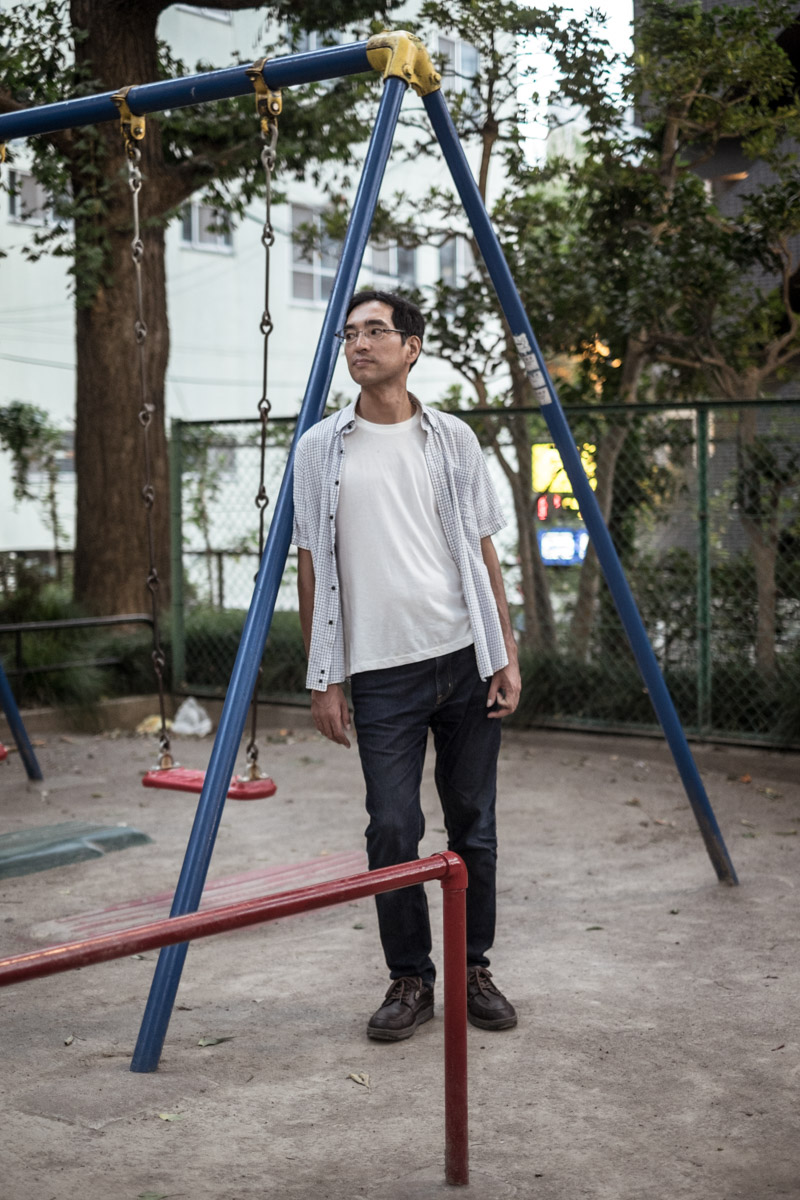
Tokyo (Japan), September 2018. At dusk, a father and his child play on a swing in a children’s playground in Tokyo. Japan is internationally considered the “black hole” of parental child abduction: in Japan, every year, an estimated 150,000* parents face the tragedy of having their children abducted by their partner. Currently, the Japanese judicial system does not contemplate the joint custody in case of separation, and most of the lawsuit eventually filed by the left-behind fathers do not lead to a result in their favour. *Data: Kizuna Child-Parent Reunion.
| Album | Unfathered |
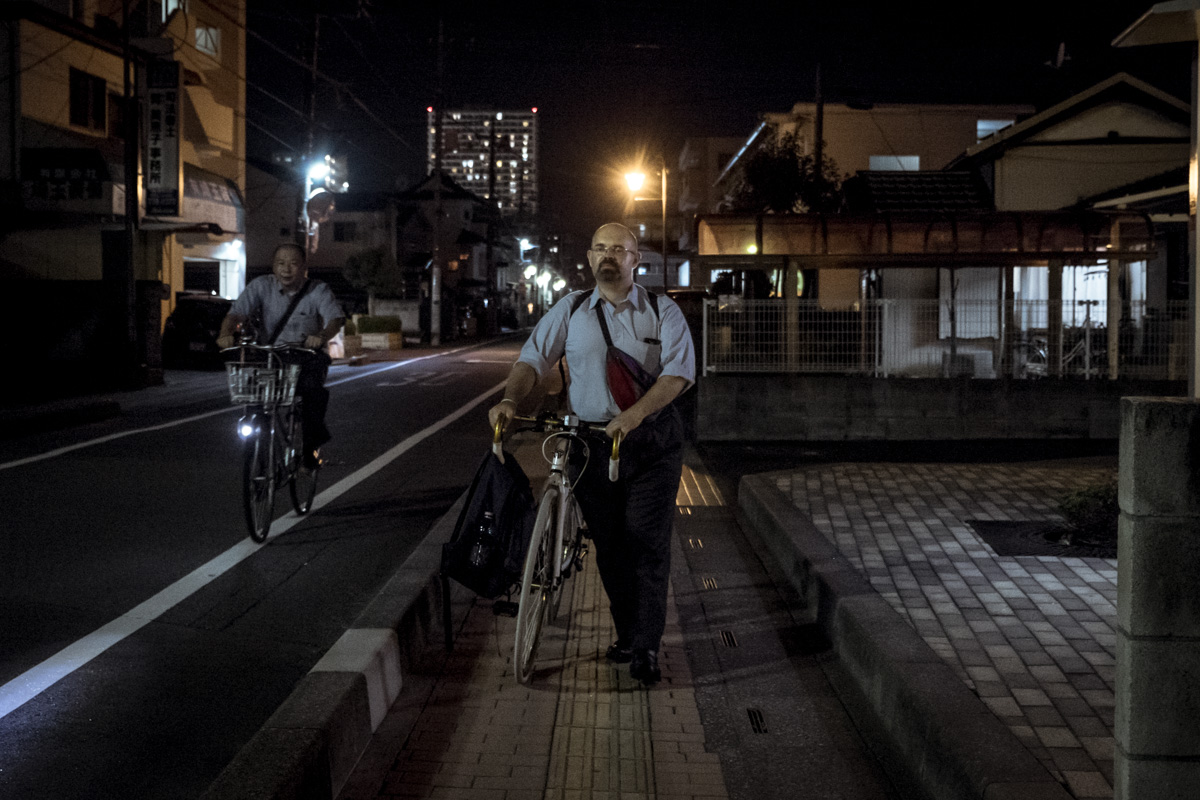
Gianluca (43, from Cagliari – Italy), walks home from work with his bike. At the end of 2014, his Japanese wife left with their baby and never came back. He last saw his son in September 2015.
| Album | Unfathered |
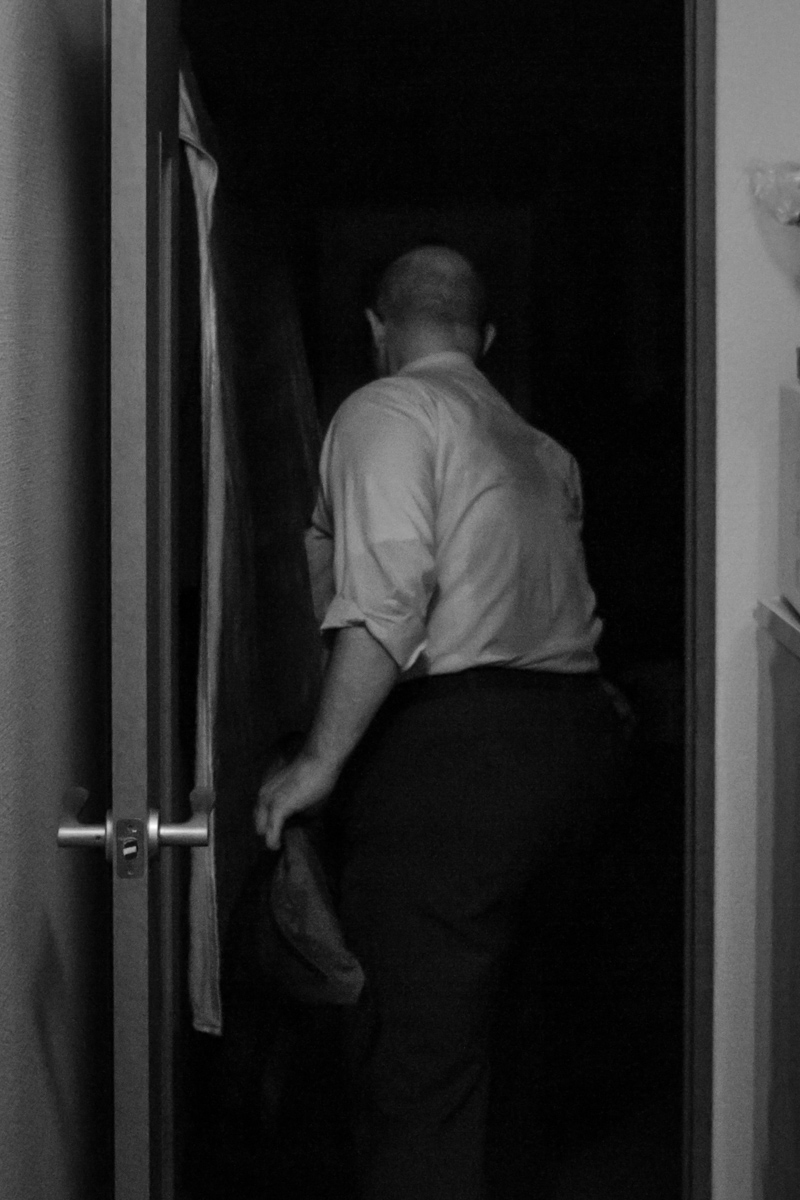
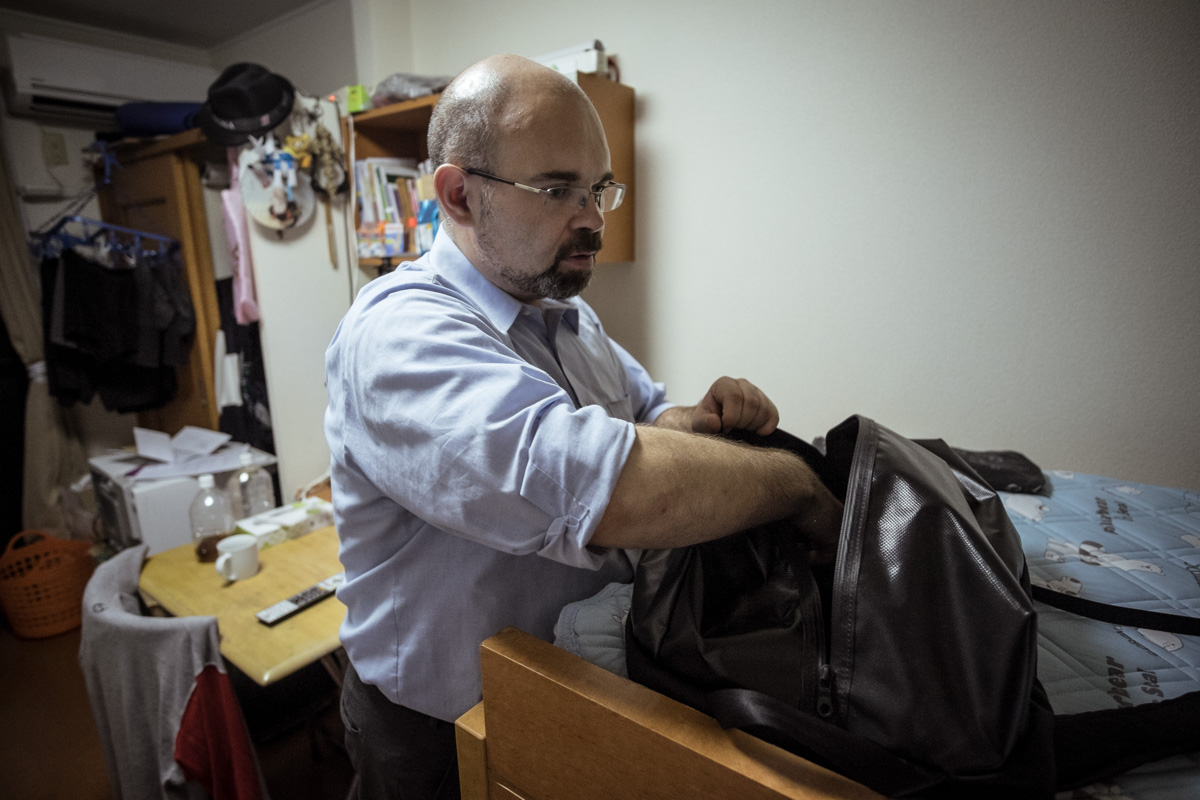
In his mini apartment in the outskirts of Tokyo, Gianluca (43, from Cagliari – Italy) packs his bag; the day after he will travel to Hokkaido (far North Japan) to attend a scheduled visit with his son. Nobody will show up, just as nobody did in the last 5 scheduled visits.
| Album | Unfathered |
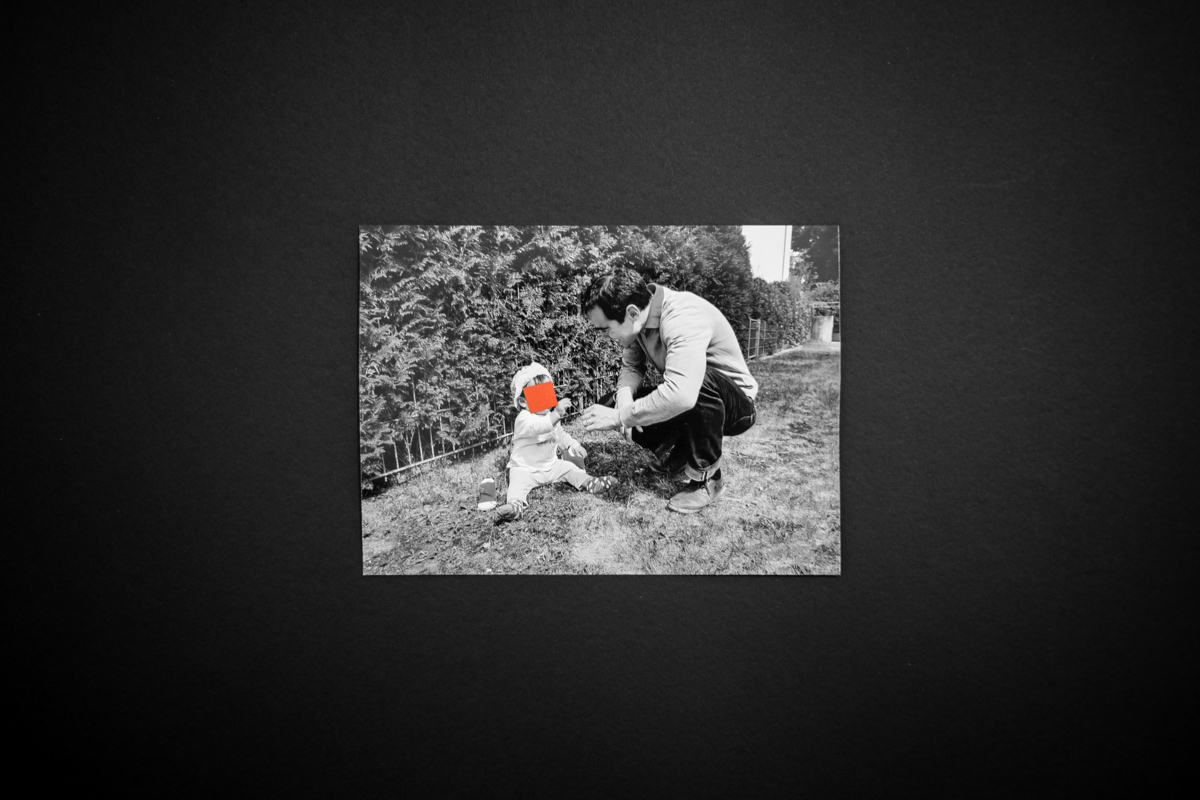
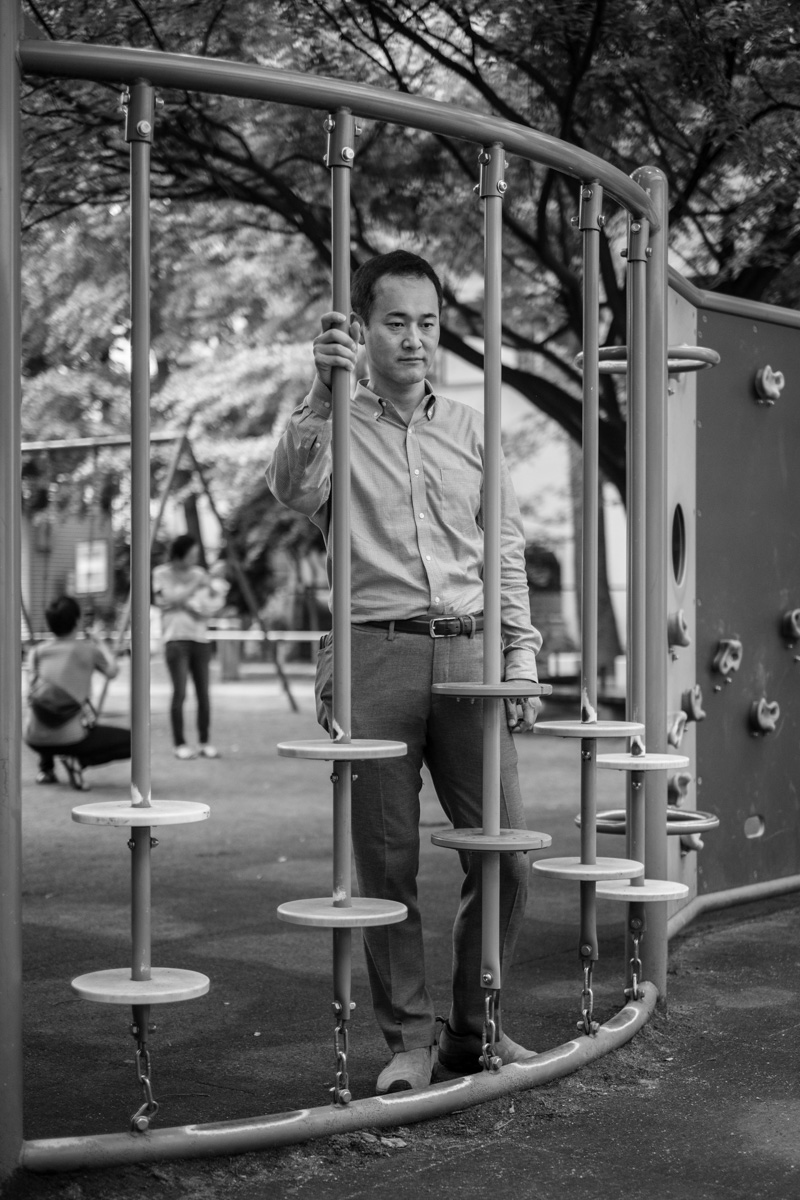
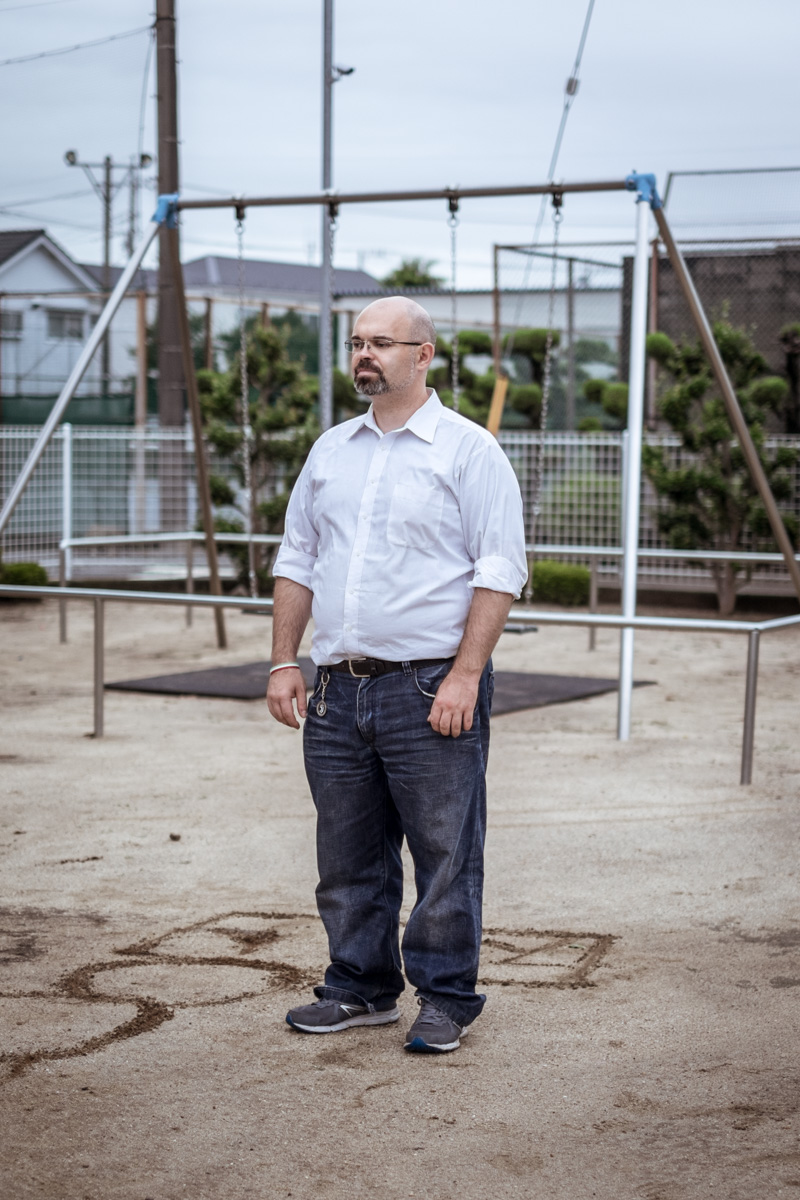
Gianluca (43, from Cagliari – Italy), poses for a portrait in a children’s playground near his house in the outskirts of Tokyo. At the end of 2014, his Japanese wife left with their baby and never came back. He last saw his son in September 2015.
| Album | Unfathered |
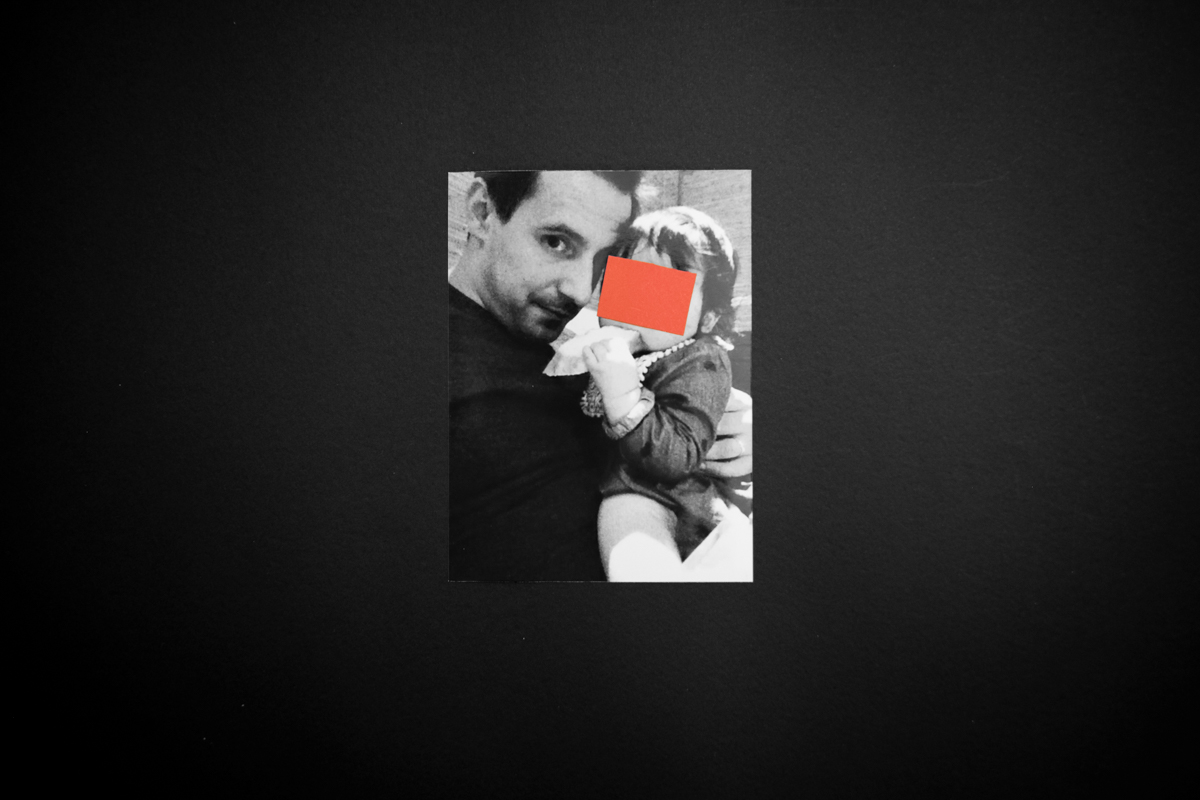
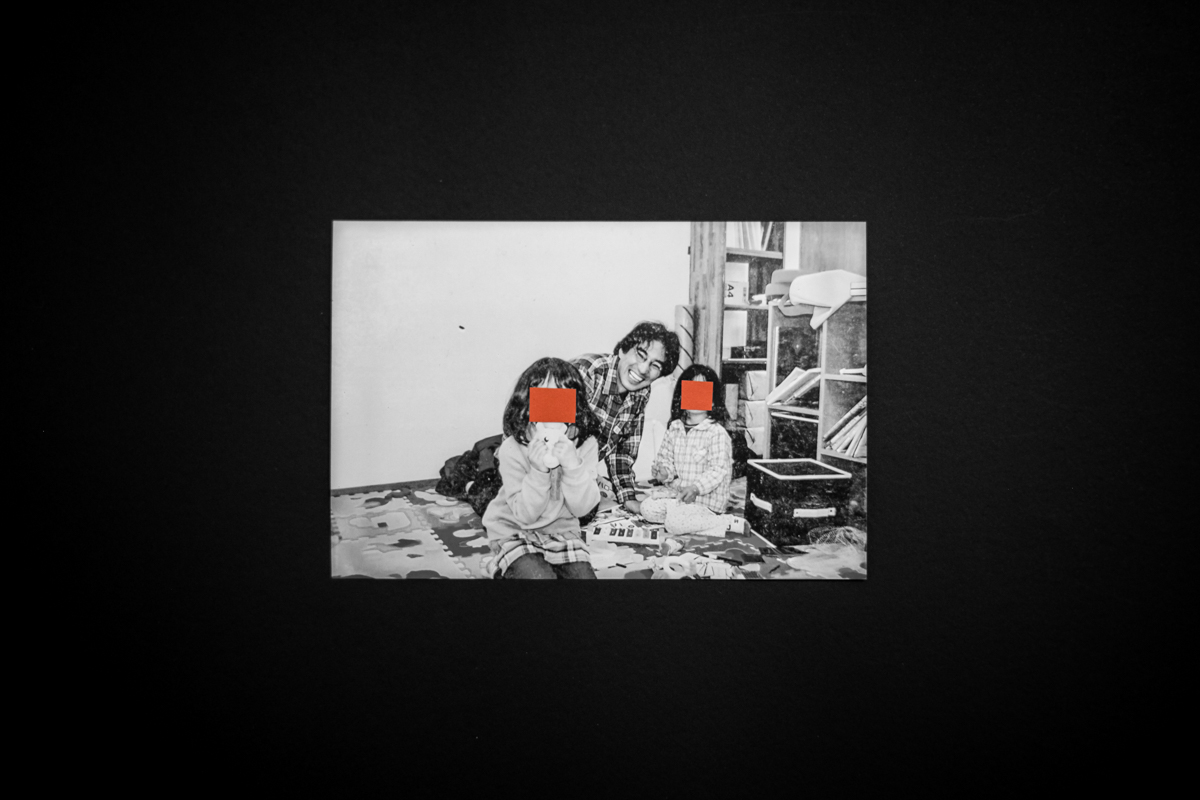
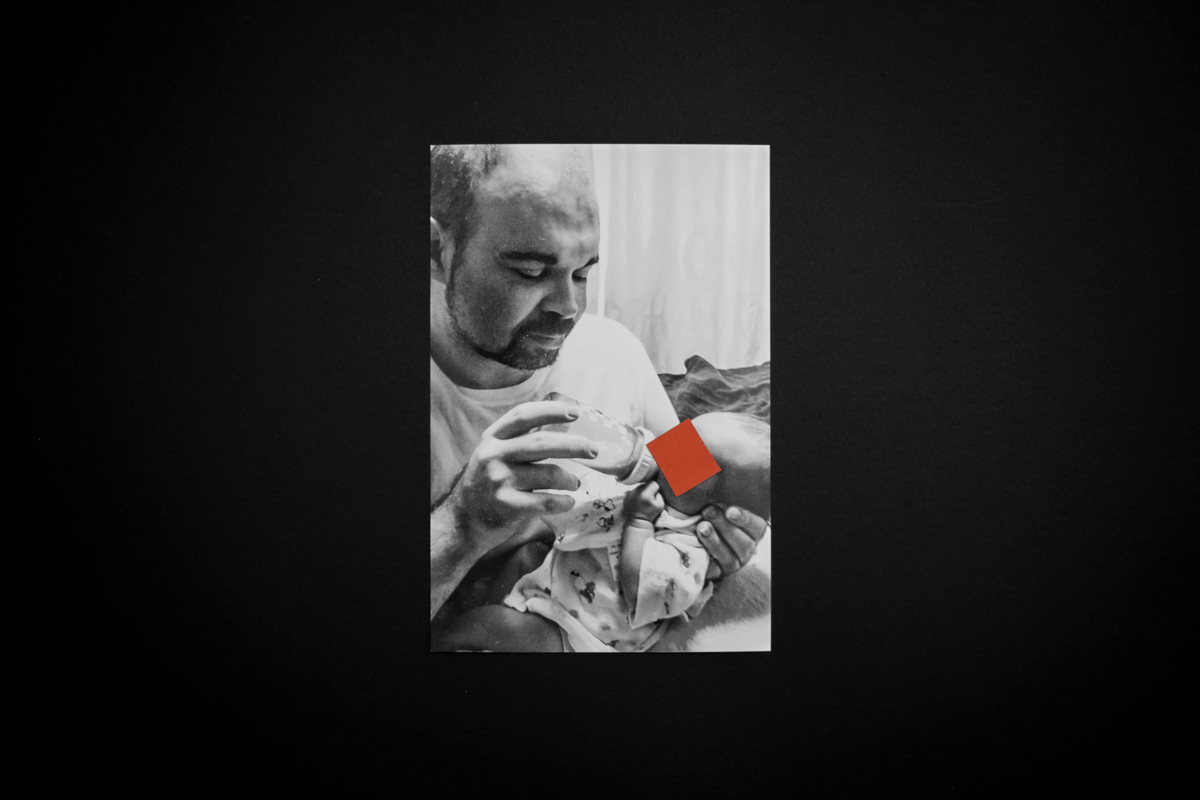
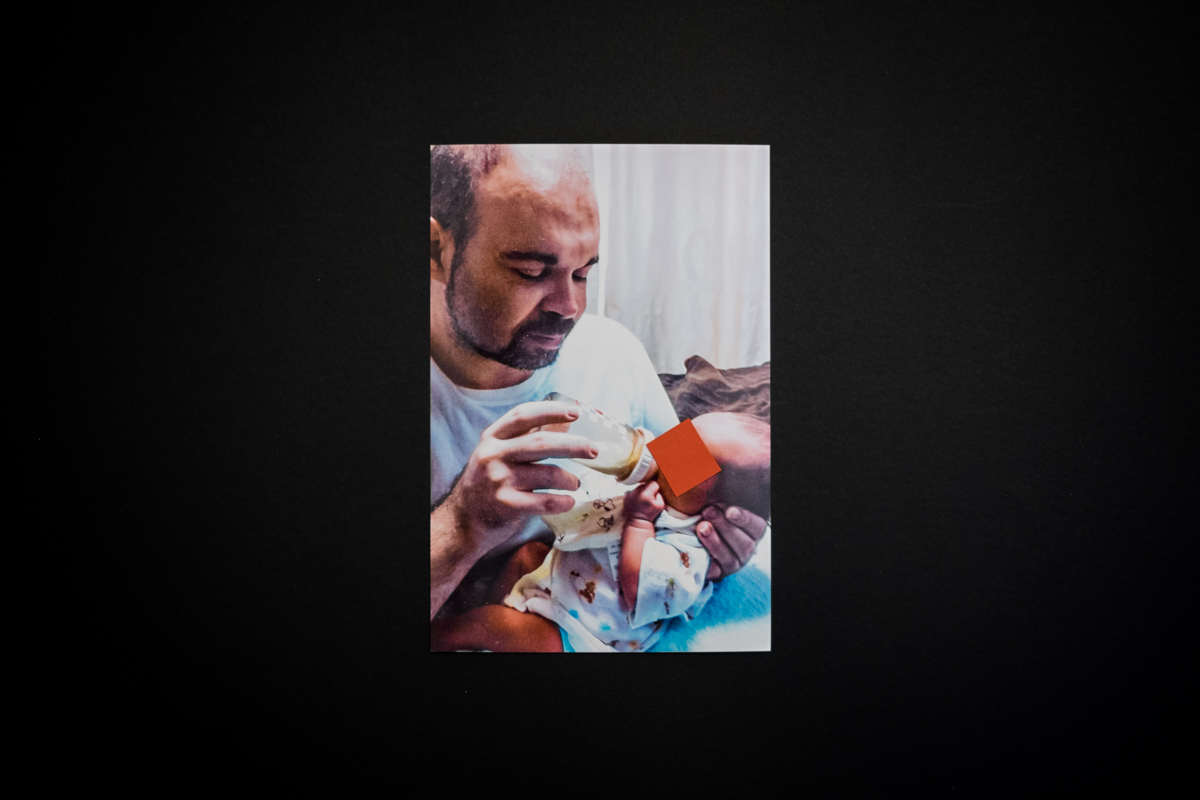
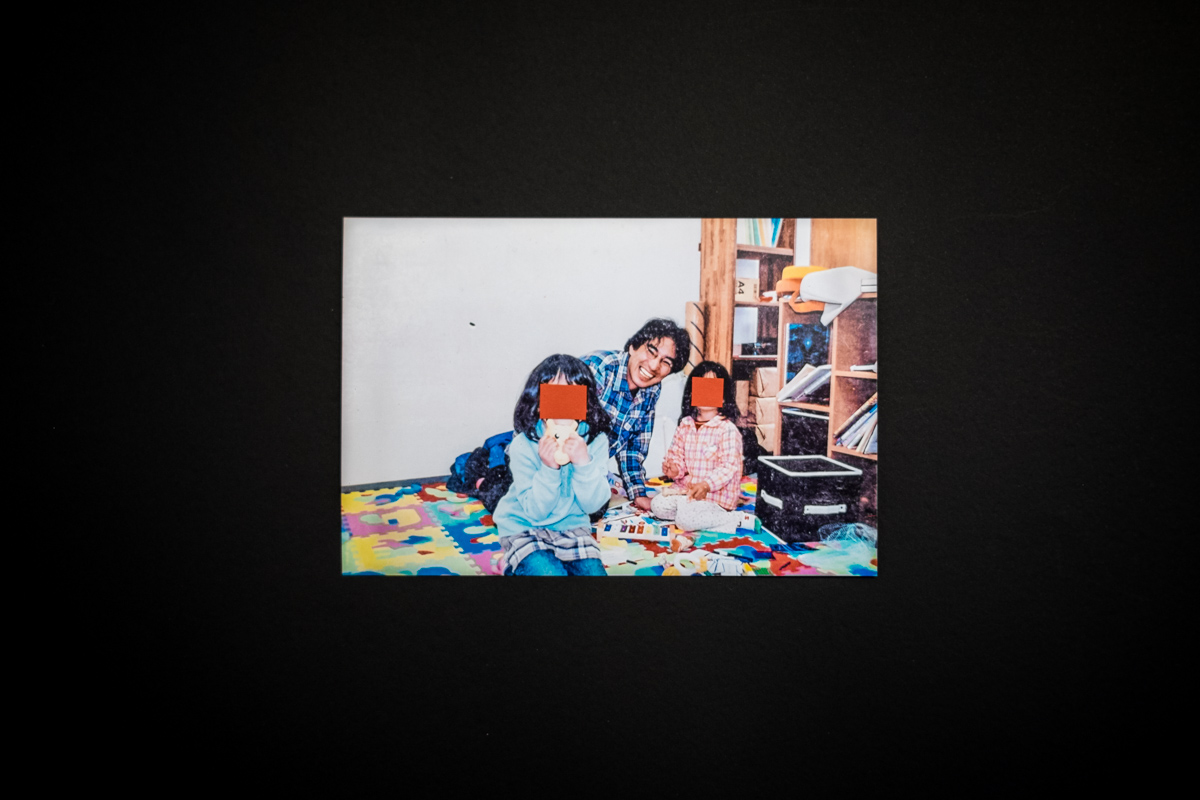
An archive family photo depicting Gianluca (43, from Cagliari – Italy) feeding his baby. The archive photo was taken just days before his Japanese wife left with the baby and completely cut him off from their lives.
| Album | Unfathered |
In his mini apartment in the outskirts of Tokyo, Gianluca (43, from Cagliari – Italy) watch the news on TV; the day after he will travel to Hokkaido (far North Japan) to attend a scheduled visit with his son. Nobody will show up, just as nobody did in the last 5 scheduled visits.
| Album | Unfathered |
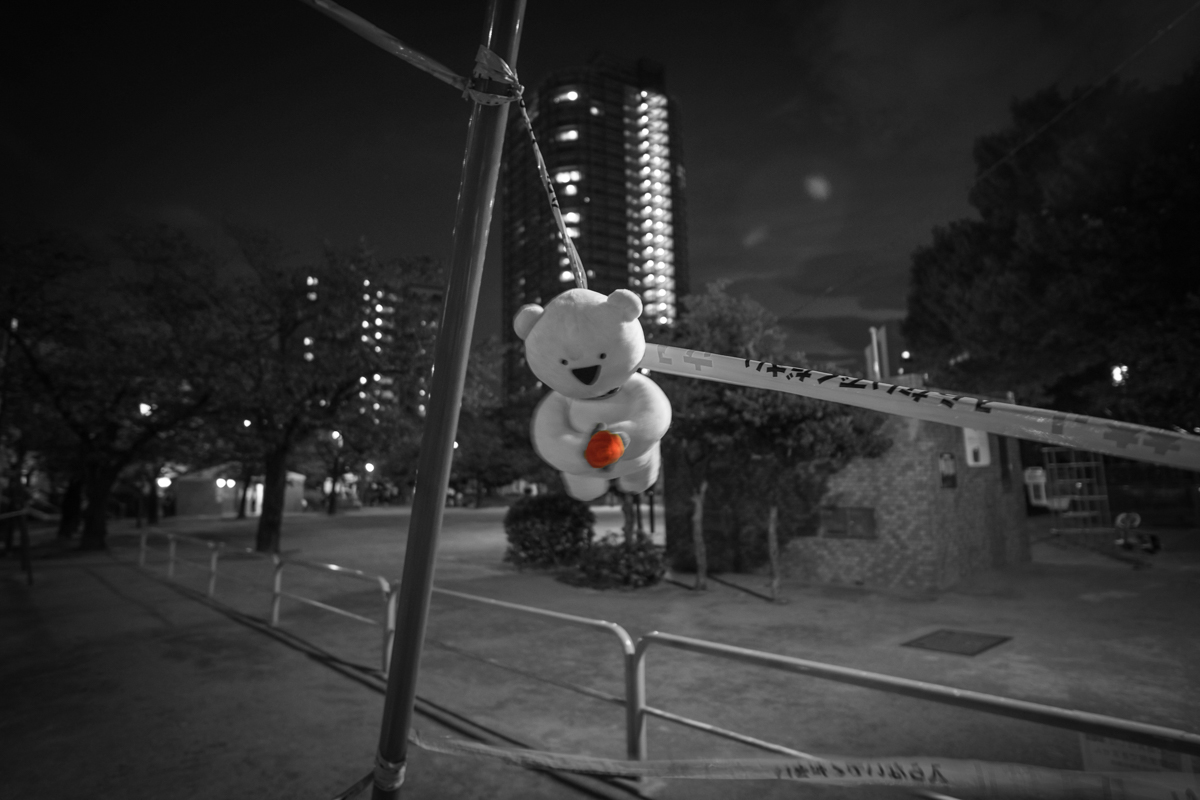
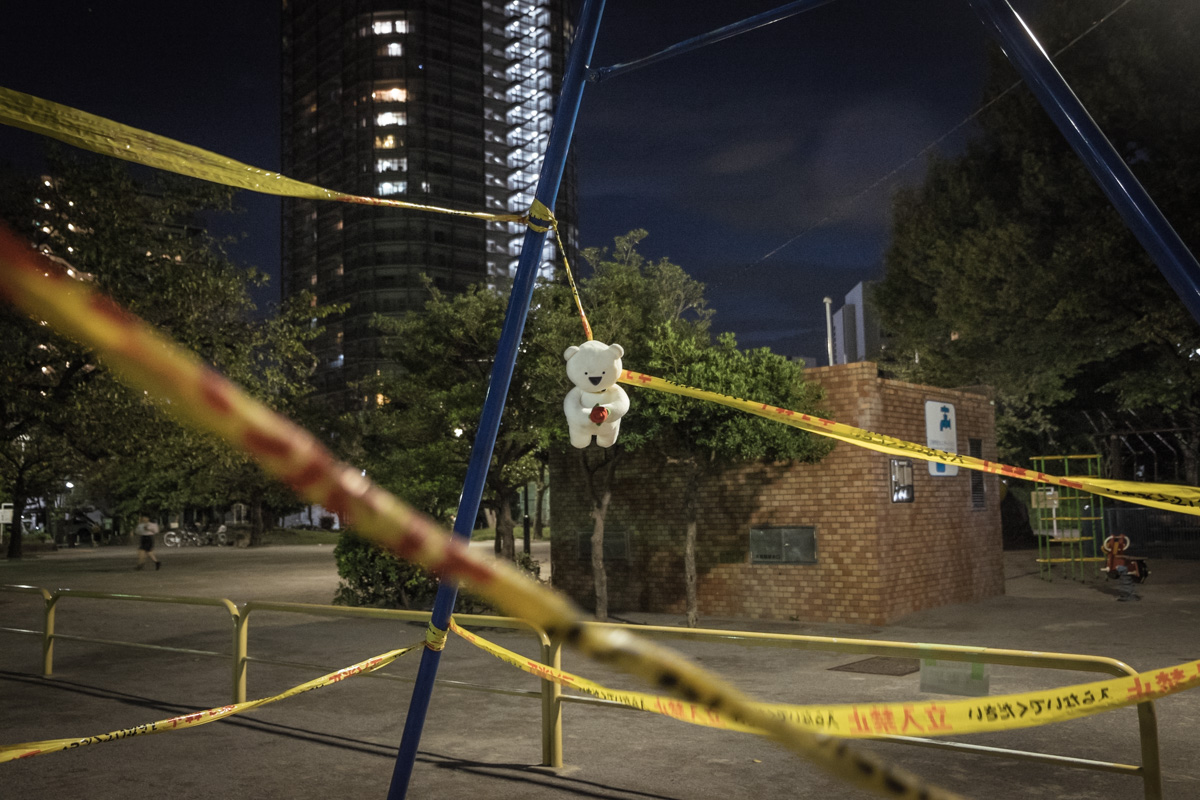
A teddy bear holding a red rose hangs by its neck from a broken swing in a children playground in central Tokyo. A group of teenagers hanged it minutes before. Japan is globally considered the “black hole” of child abduction: every year nearly 150.000 parents are pushed away from their children’s life by their partners.
| Album | Unfathered |
After seven years of life in Germany, Pierluigi (fictional name – he preferred to remain anonymous) moved to Tokyo with his Japanese wife and their two children (1 and 3 at the time). It was September 2015. Only two months after, his wife left with their children and never came back. The legal battle he started for his right to visit and custody has only led to partial results. In the last three years, Pierluigi has been forced away from his children for 17 months.
| Album | Unfathered |
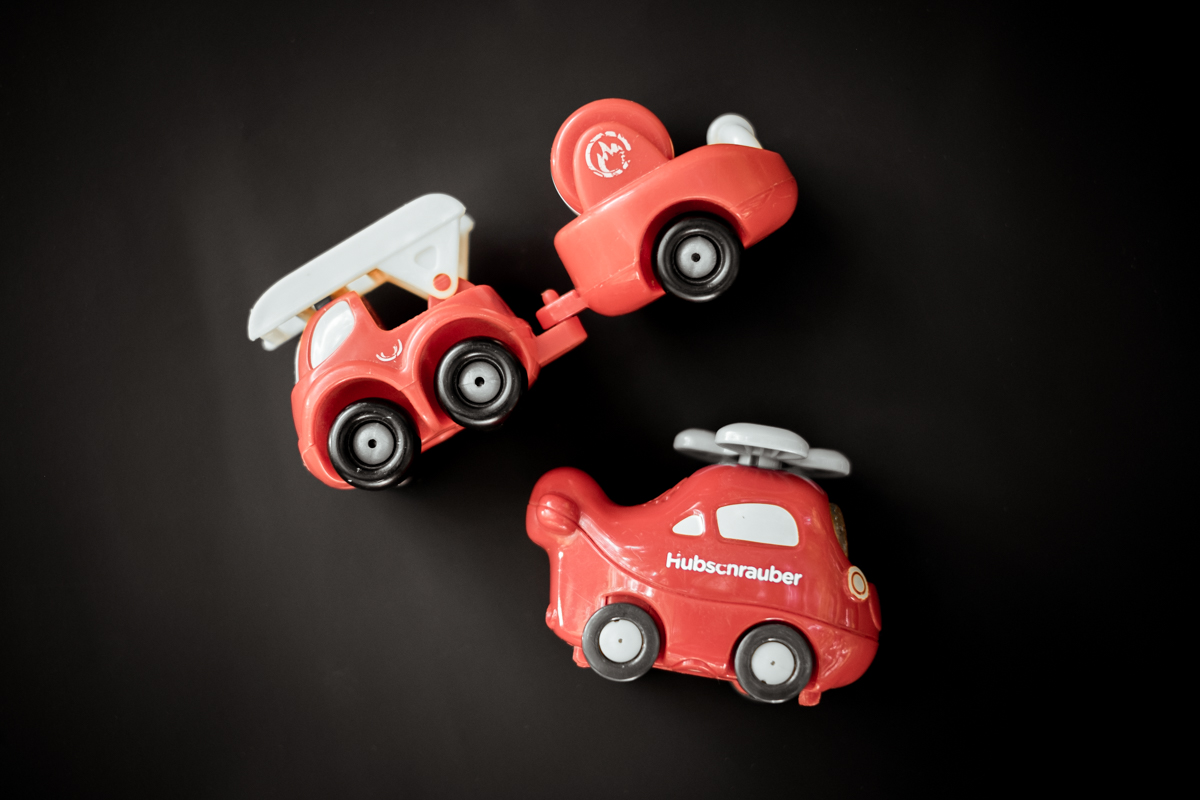
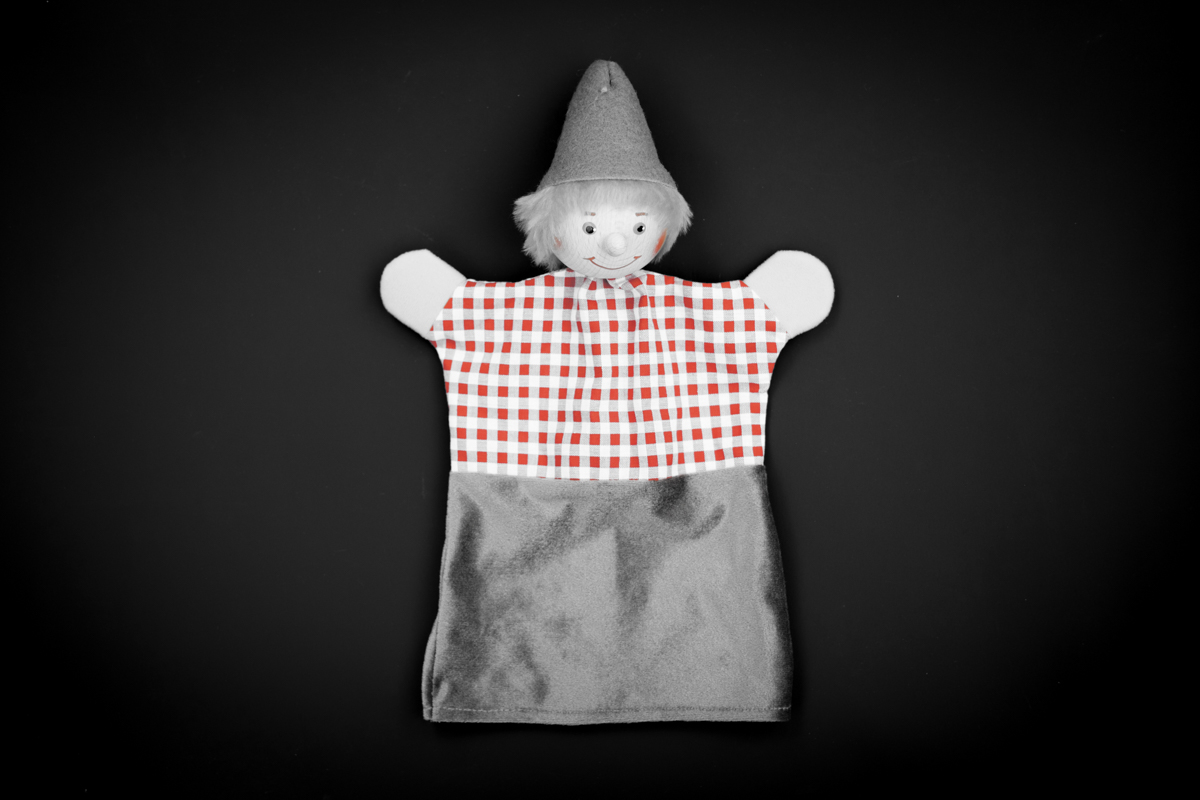
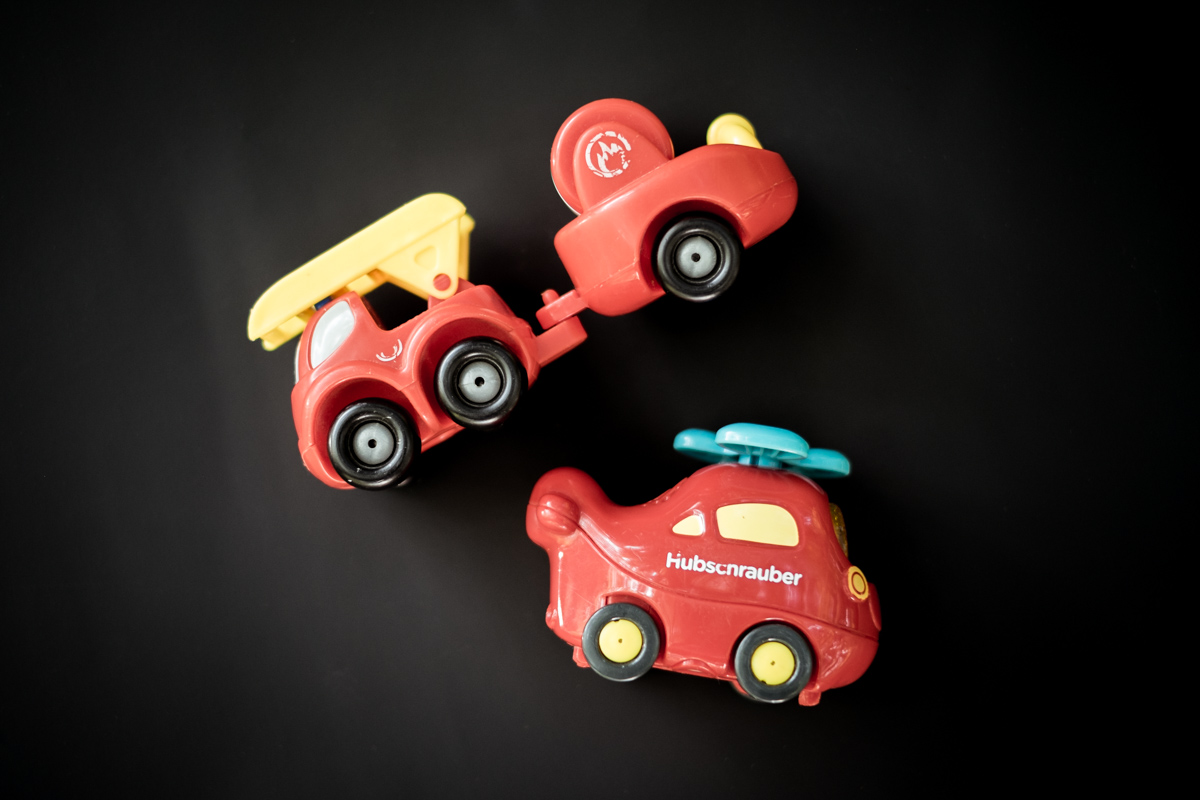
A photo of two red children toys belonging to Pierluigi (fictional name). Pierluigi bought these toys for his two children when his family was still living together, in Germany. After moving to Japan, his wife took the children away for good. He now keeps the two toys as one of the few tangibles memories he has of his children.
| Album | Unfathered |
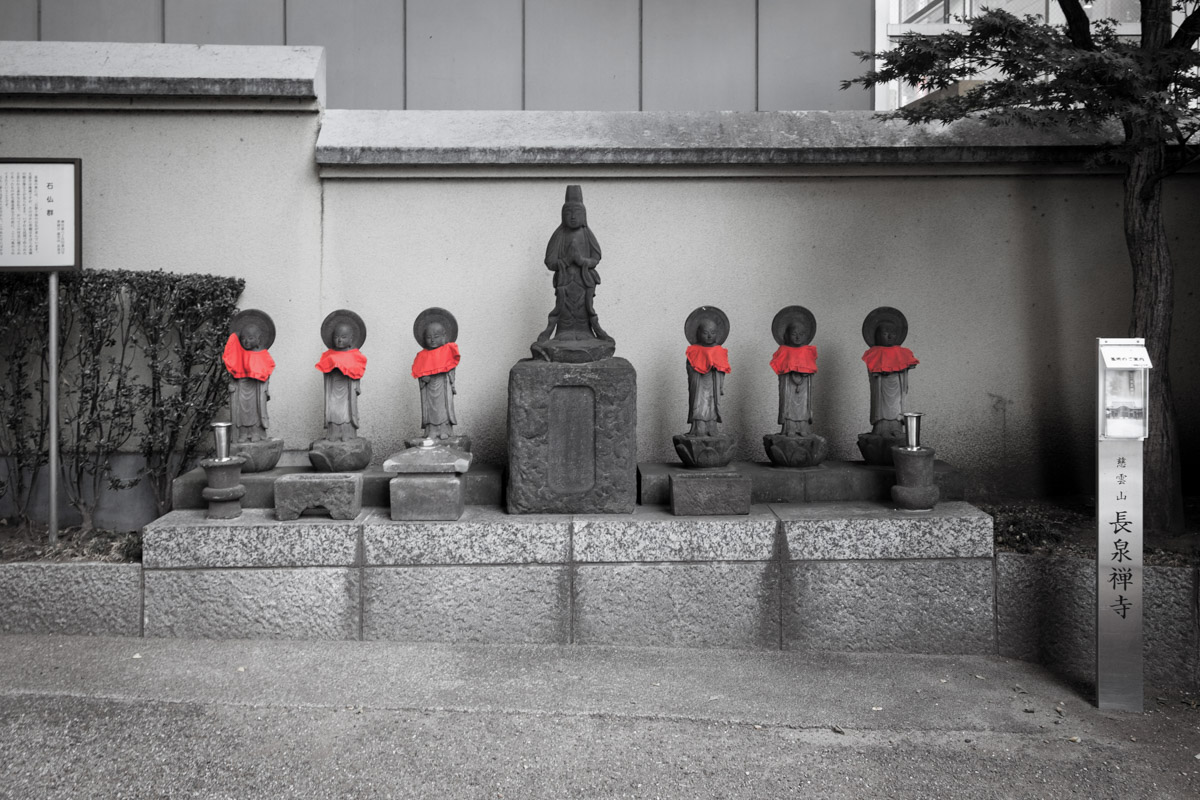
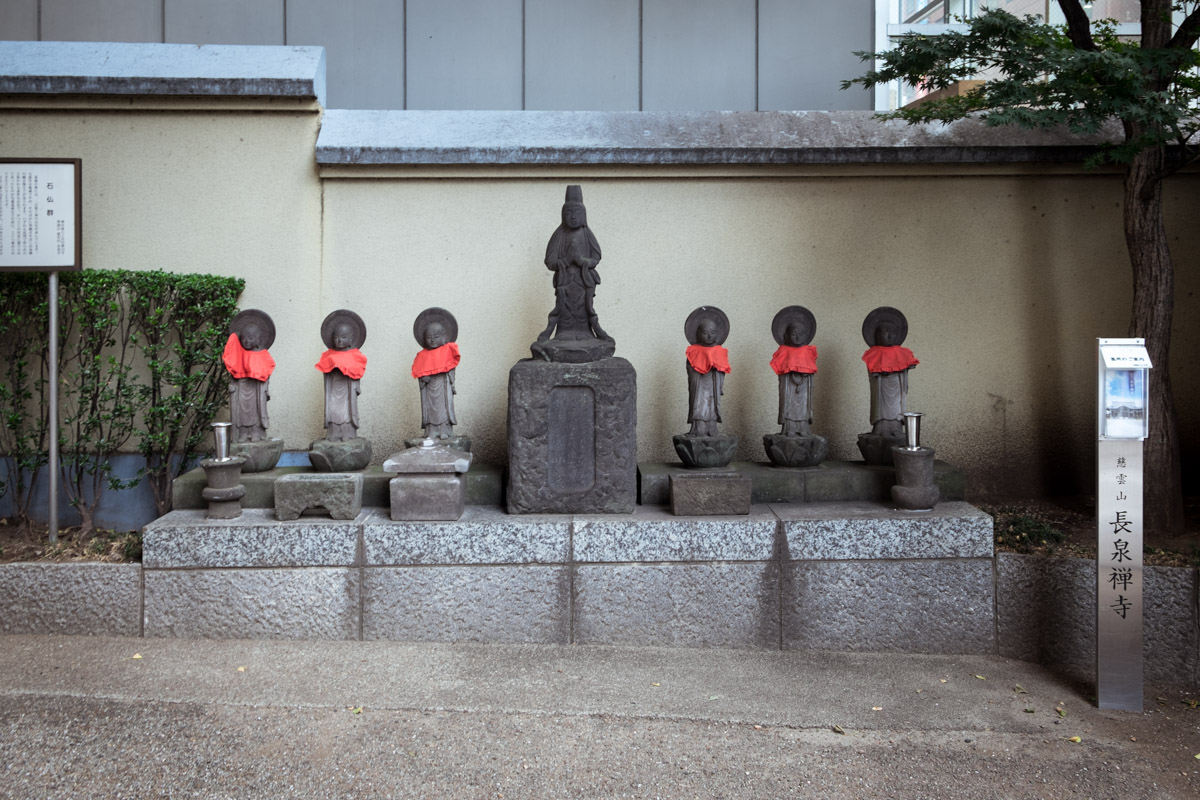
A group of statues in Tokyo, (Japan) representing Jizō, the protector of children, women and travellers.
| Album | Unfathered |
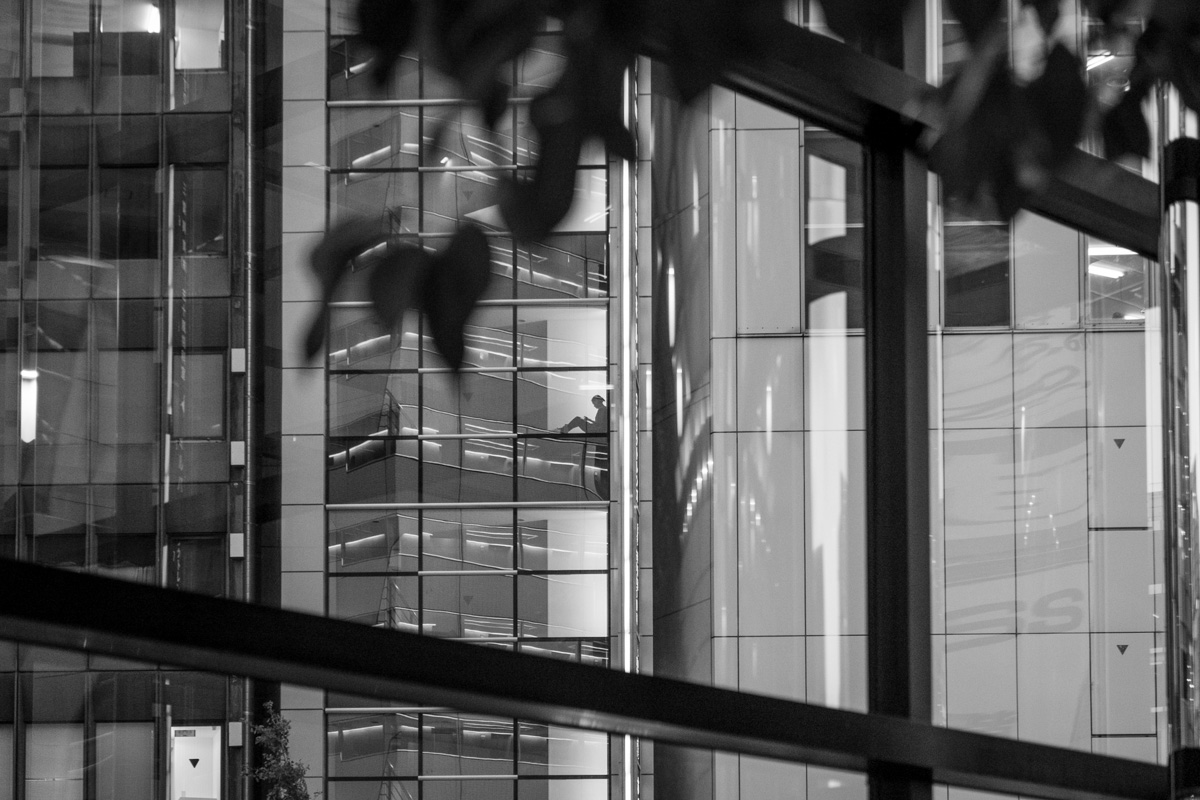
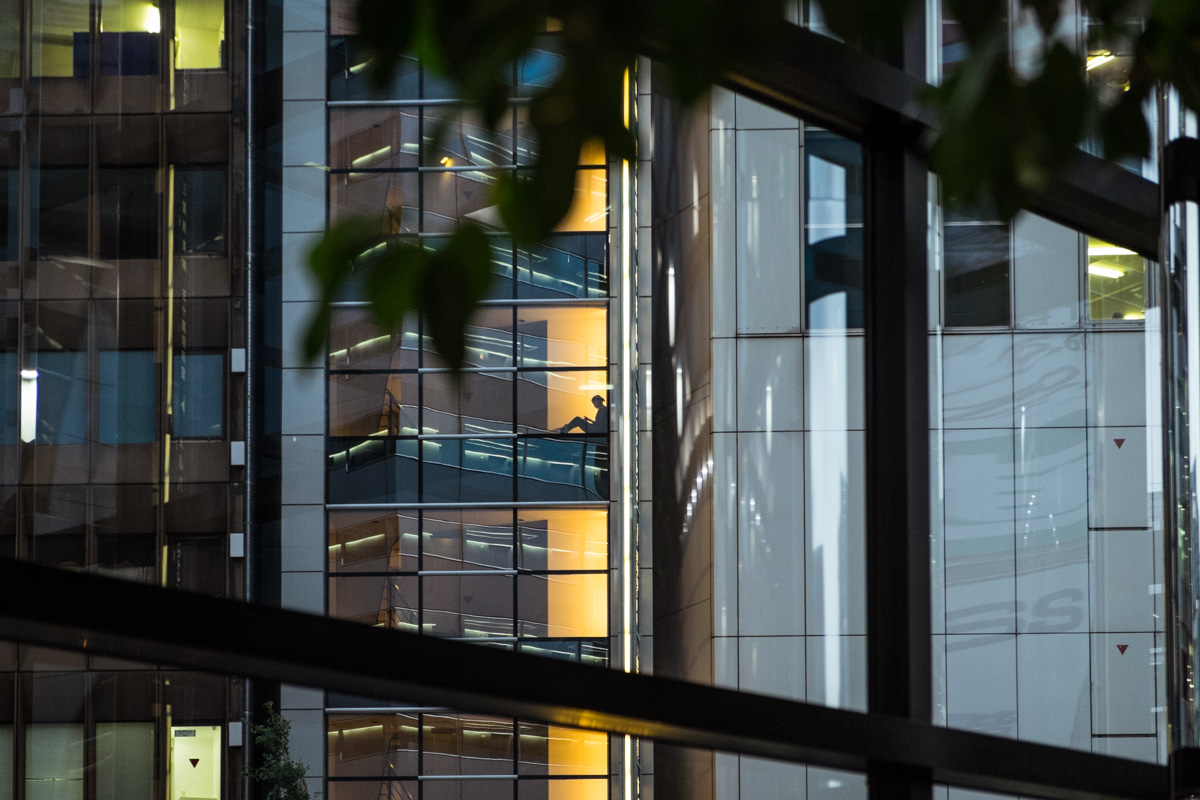
A woman sitting alone in an office building in Tokyo (Japan) at the end of her working day.
| Album | Unfathered |
Klaus (fictional name) was living in London and was married to a Japanese woman. At the end of 2015 his (then) wife left with their daughter for a visit to her family in Japan. When she came back, she was alone. She packed her stuff and left again, for good. After long legal proceedings, in December 2016 a court sentence established his right to a regular visit schedule with the daughter, but his (now) ex-wife is not complying with it. Since then, he was only allowed sporadic Skype contacts and few short visits.
| Album | Unfathered |
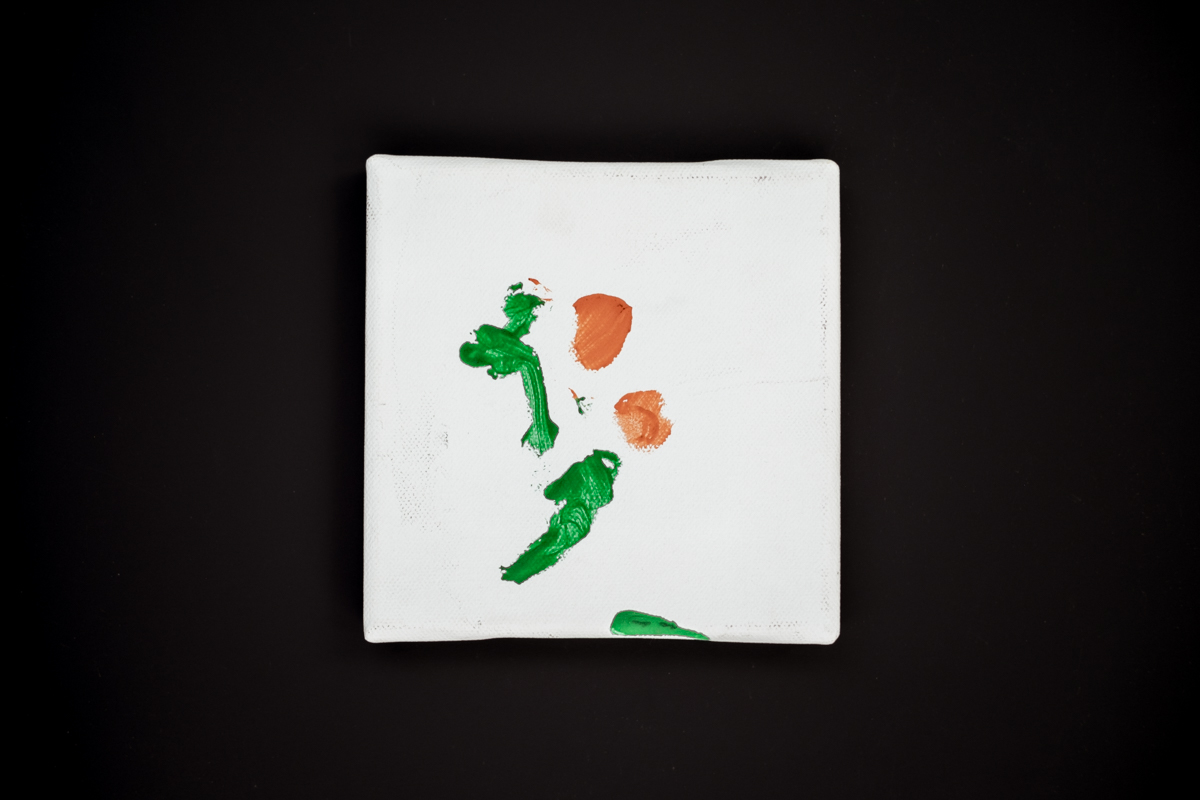
A photo of a painting made by the daughter of Klaus (fictional name). Klaus’s daughter painted it in her first months, before being abducted by his (then) wife. It is one of the few tangible memories he has got left of his daughter.
| Album | Unfathered |
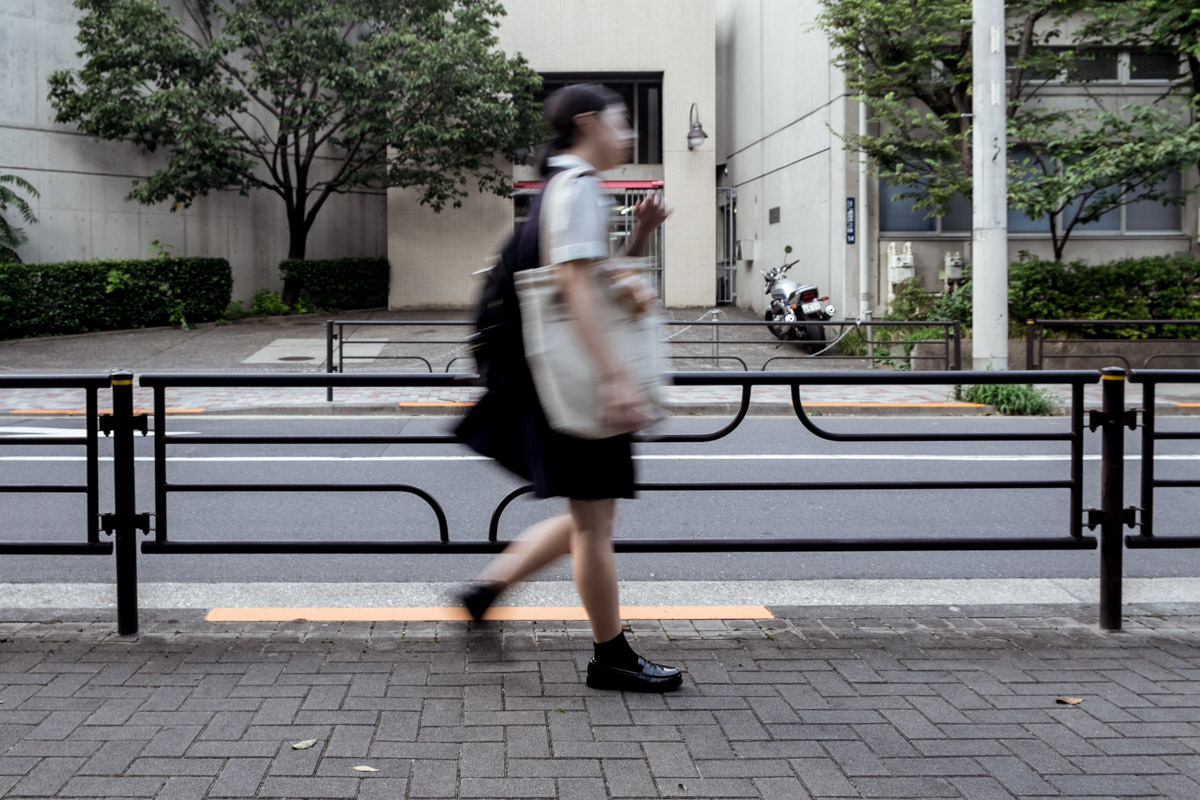
A young student in the streets of Tokyo. Japan is globally considered the “black hole” of child abduction: every year nearly 150.000 parents are pushed away from their children’s life by their partners.
| Album | Unfathered |
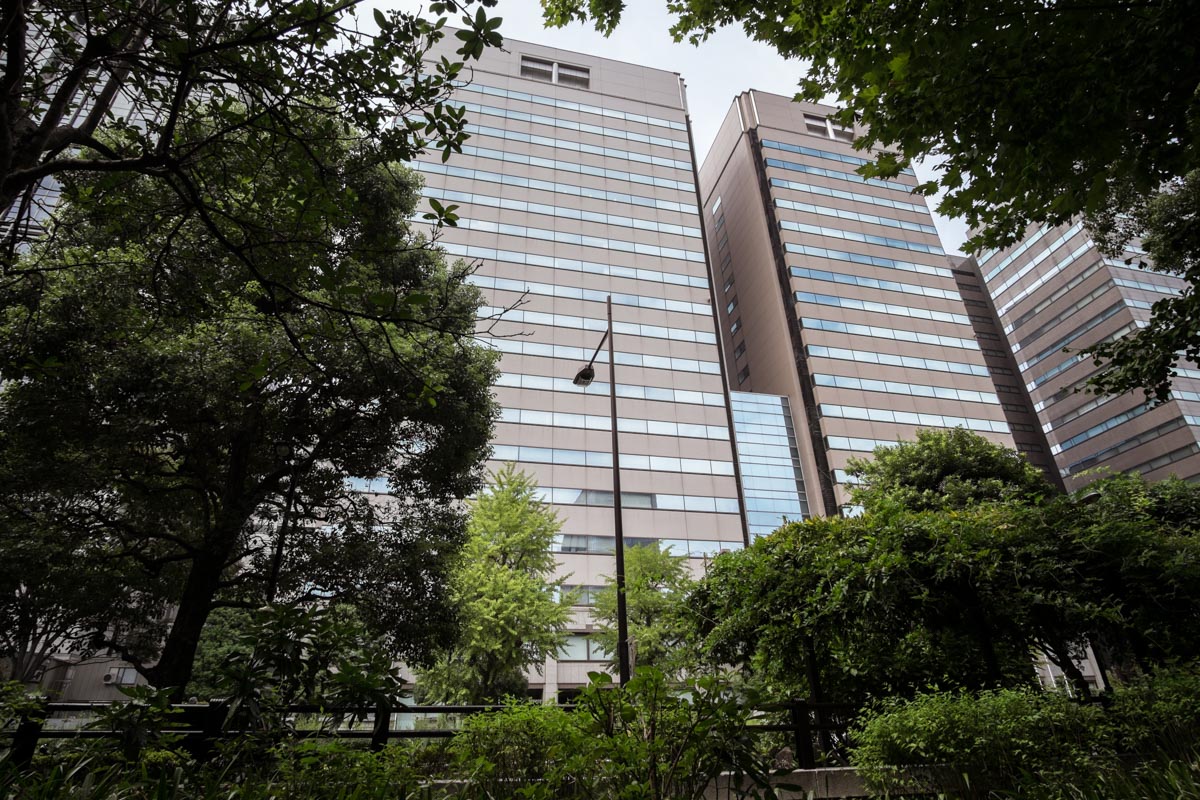
The Family Court, in Tokyo, Japan. This is the building where most of the procedings regarding child custody and family disputes take place.
| Album | Unfathered |
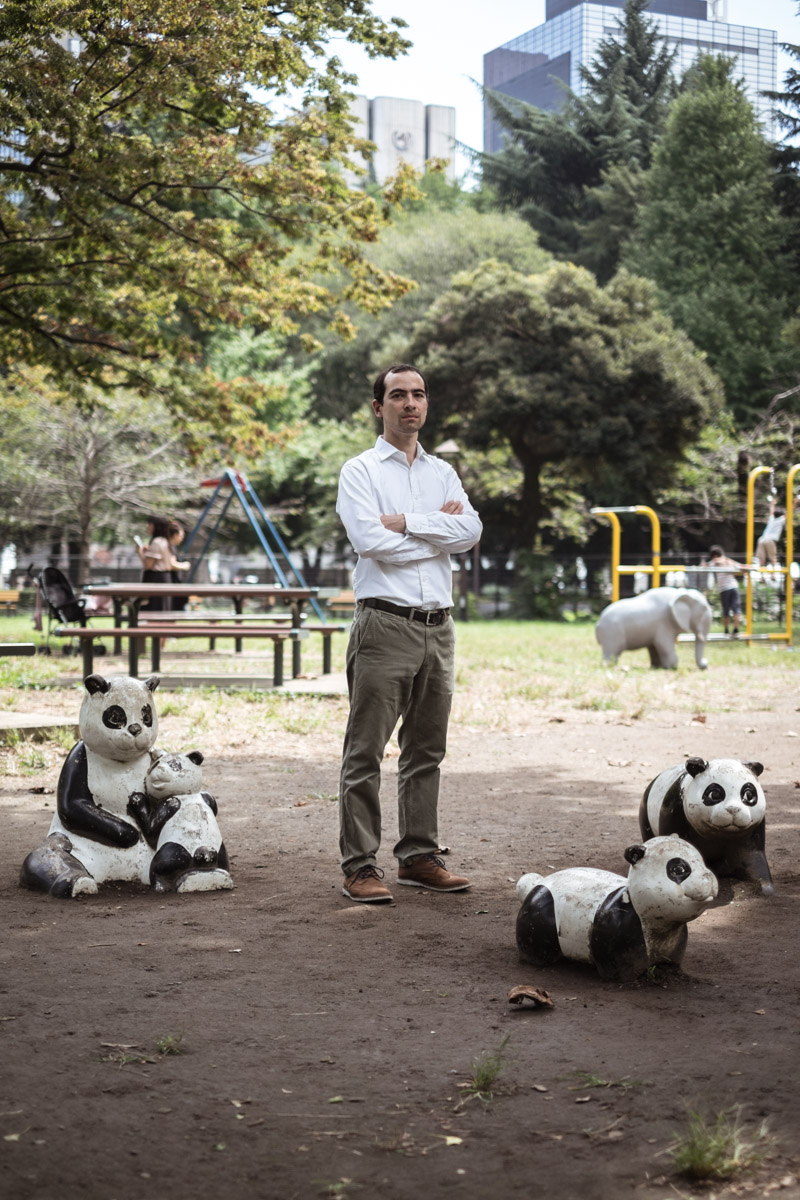
Akira poses for a portrait in a children’s playground near his office in central Tokyo. Akira’s daughter was taken away from him by his ex-wife in 2012. After having been denied any contact for two years, he is currently divorced and reached an agreement with the ex-wife to see his daughter once a month for 3 hours.
| Album | Unfathered |
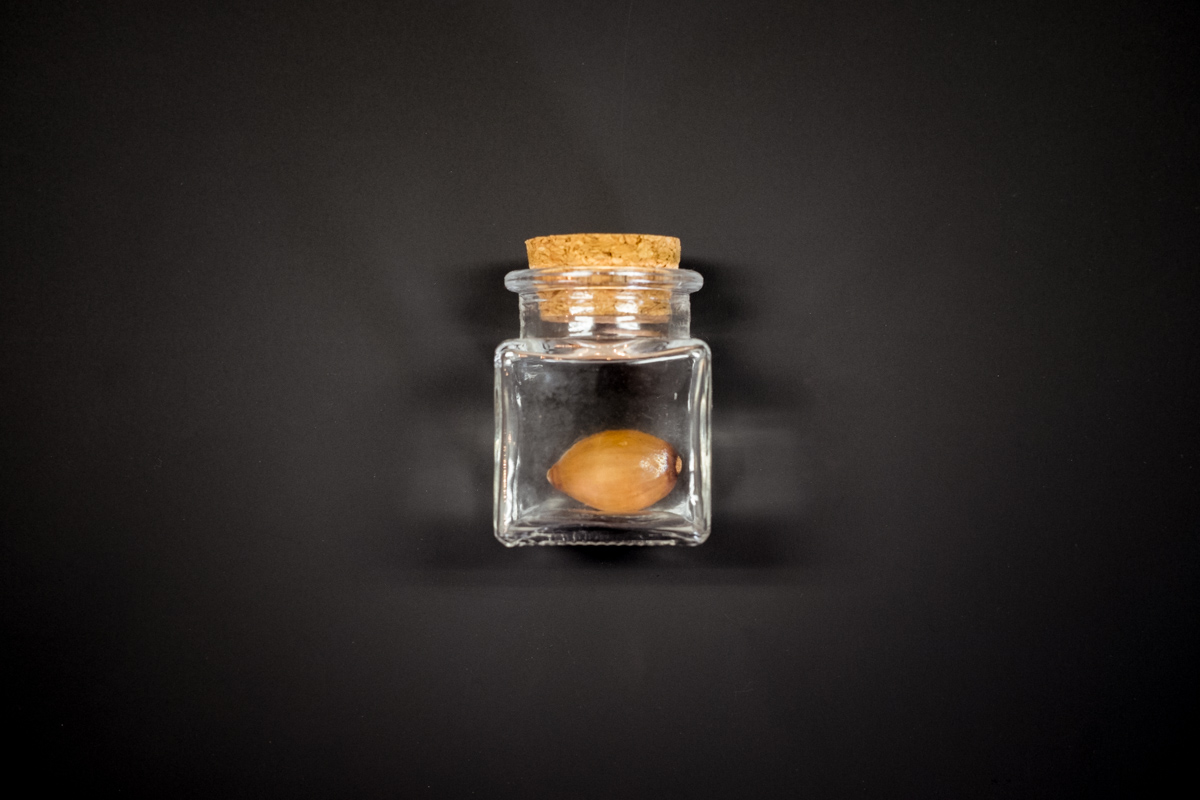
A walnut stored in a small glass bottle. The walnut belonged to Akira’s daughter. She gave it to him as a gift the first time he was able to see her, two years after she was taken away by his ex-wife. He decided to store it and keep it as a memory of that moment.
| Album | Unfathered |
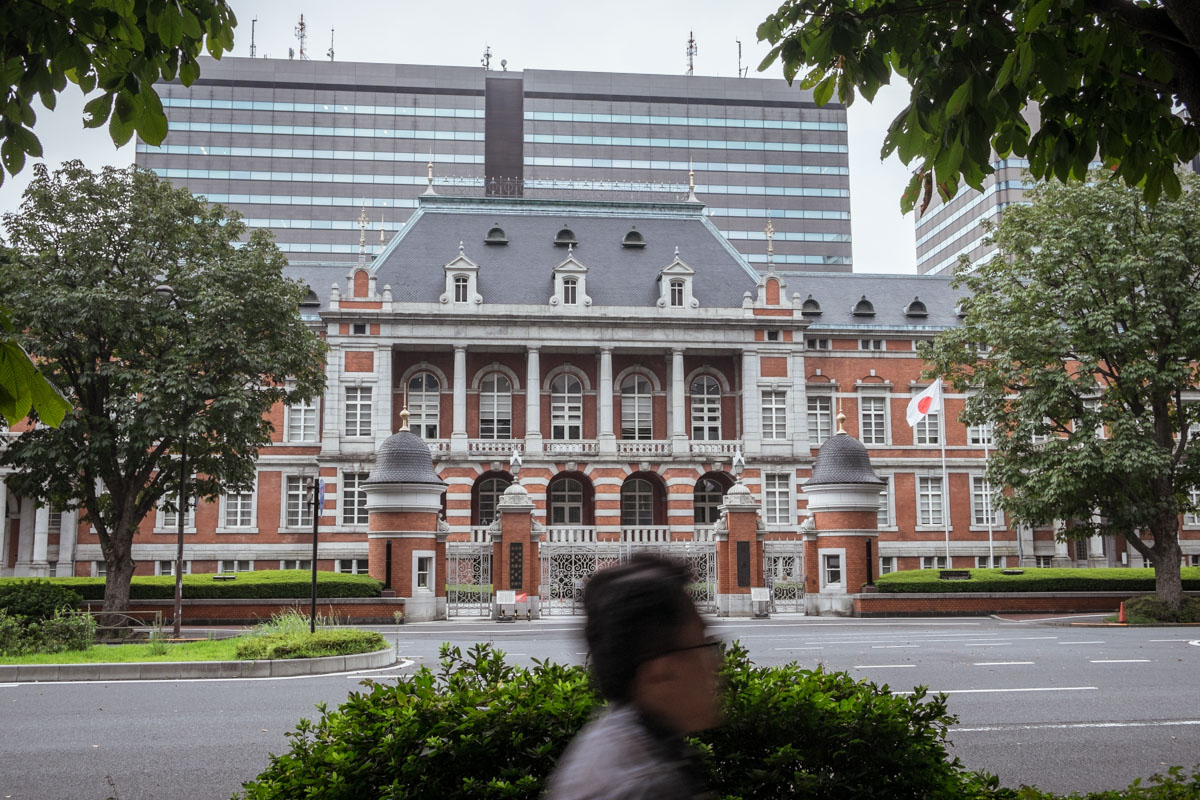
The historical building of the Ministry of Justice of Japan, and the new building in the back. The Ministry of Justice and the Japanese government were recently under international pressure to tackle the issue of child abduction in Japan.
| Album | Unfathered |
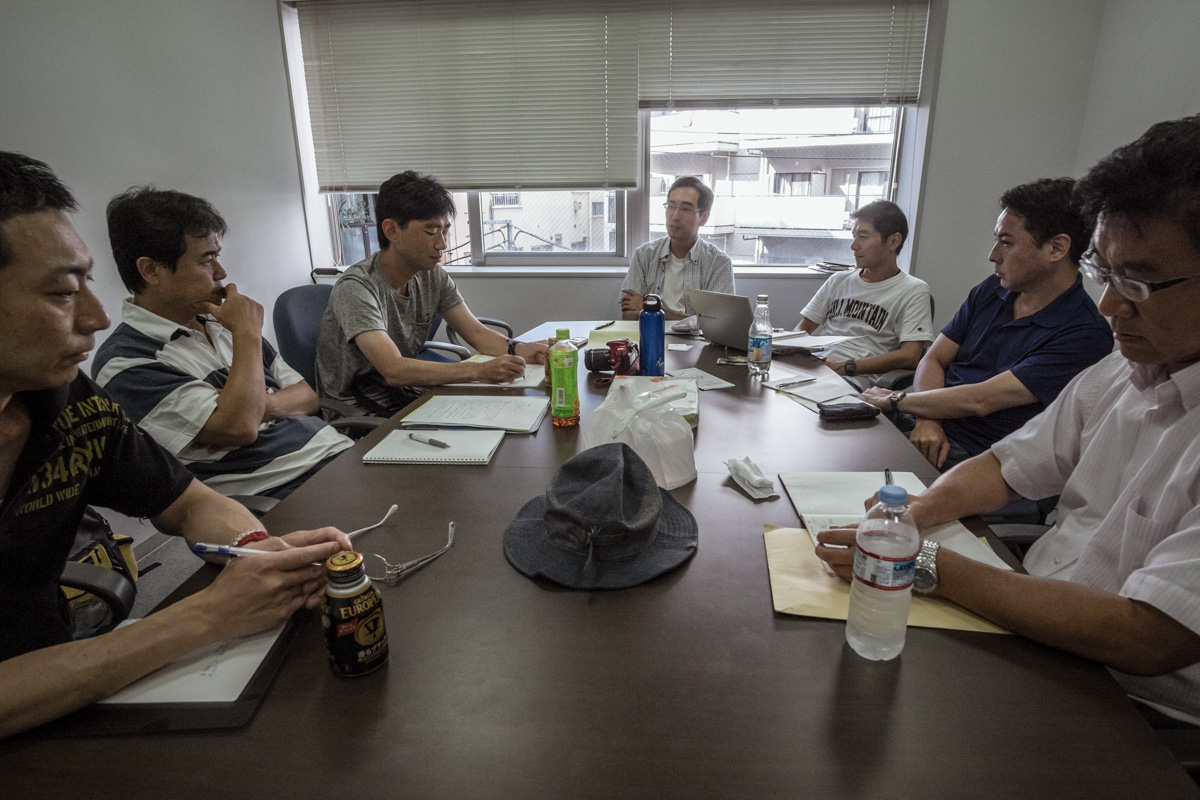
Mitsuru (43, from Inukai – Japan, at the head of the table) leads a meeting of K-Net, an association advocating for the right to joint custody in Japan. Also at the table, several fathers who had their children abducted by their partners and are looking for advice on their cases.
| Album | Unfathered |
Mitsuru (43, from Inukai – Japan), poses for a portrait in a children’s playground in central Tokyo. After his two daughters were taken away from him by his partner after their separation, Mitsuru decided to found K-Net, an association advocating for the right to joint custody in Japan.
| Album | Unfathered |
An archive family photo depicting Mitsuru (43, from Inukai – Japan) with his two daughters. The archive photo was taken in the first occasion he was able to see them again, two years and a half after his partner took them away.
| Album | Unfathered |
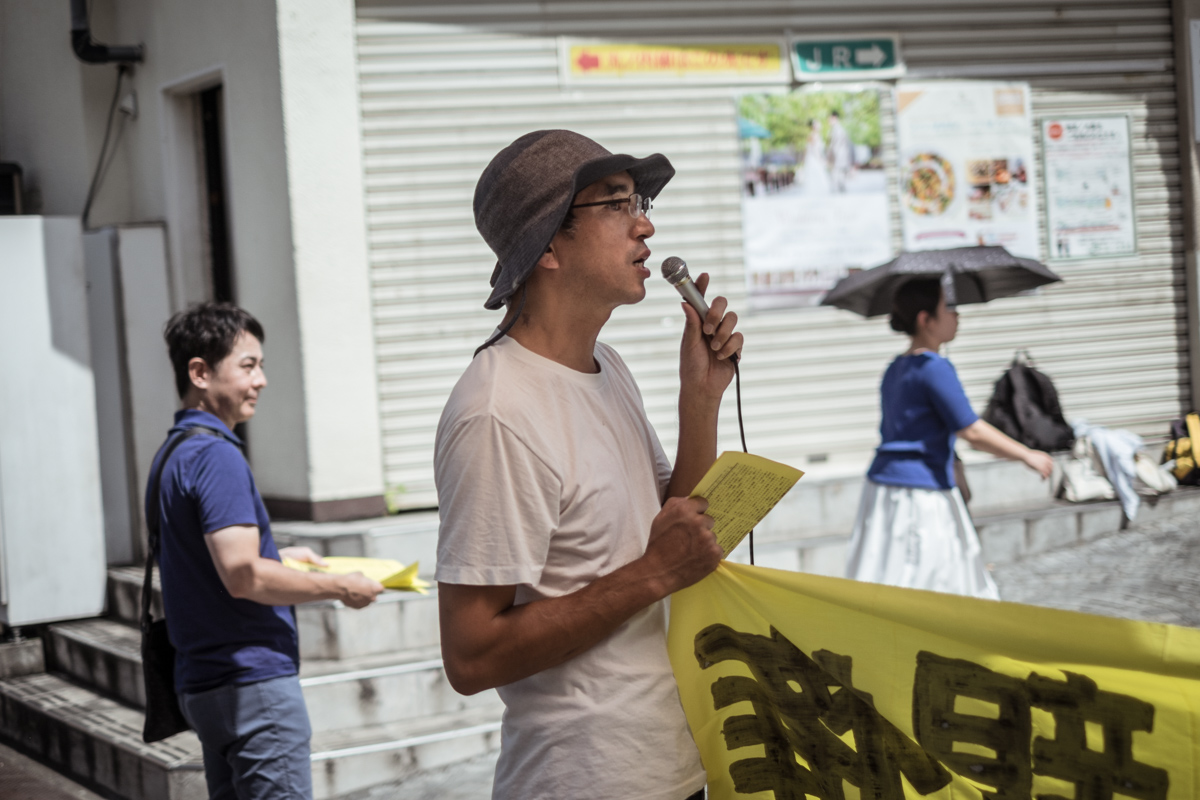
Mitsuru (43, from Inukai – Japan), on the PA speaker during a rally organized in front of a subway station in Tokyo by K-Net, an association advocating for the right to joint custody in Japan. Mitsuru founded K-Net in 2009, after his partner (also Japanese) abducted their two daughters.
| Album | Unfathered |
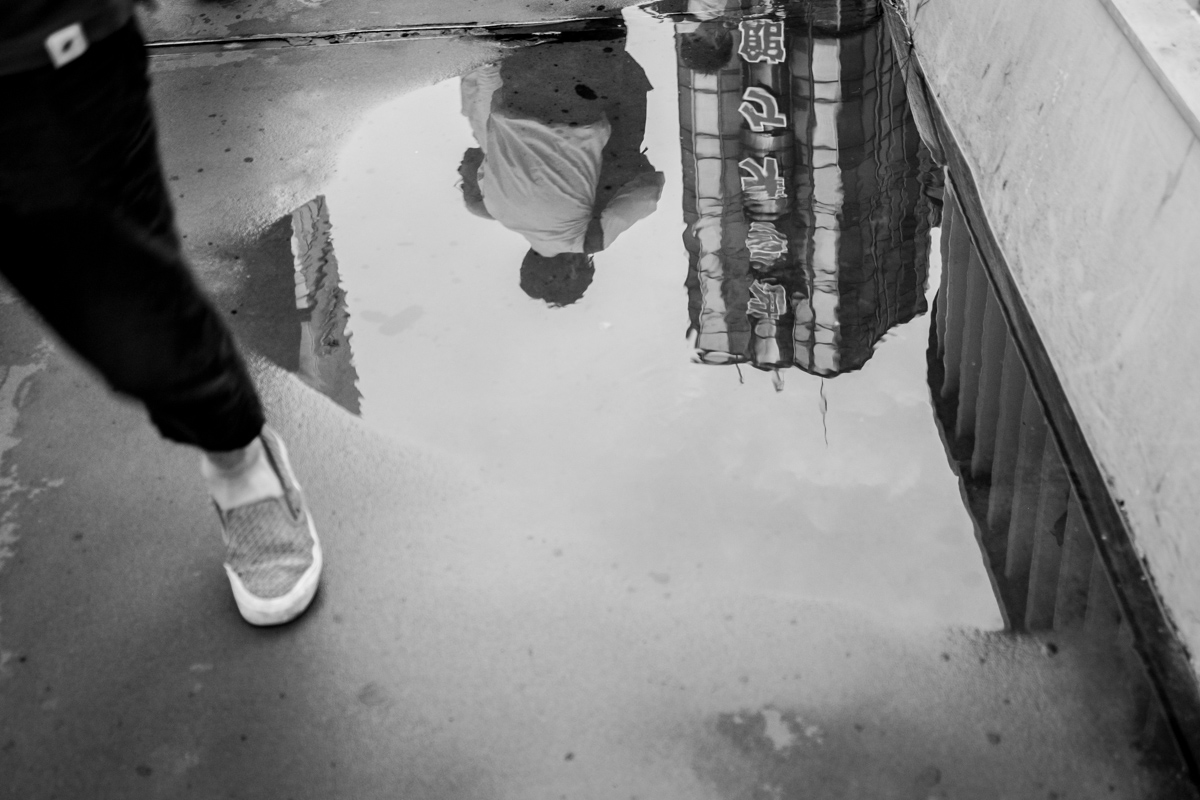
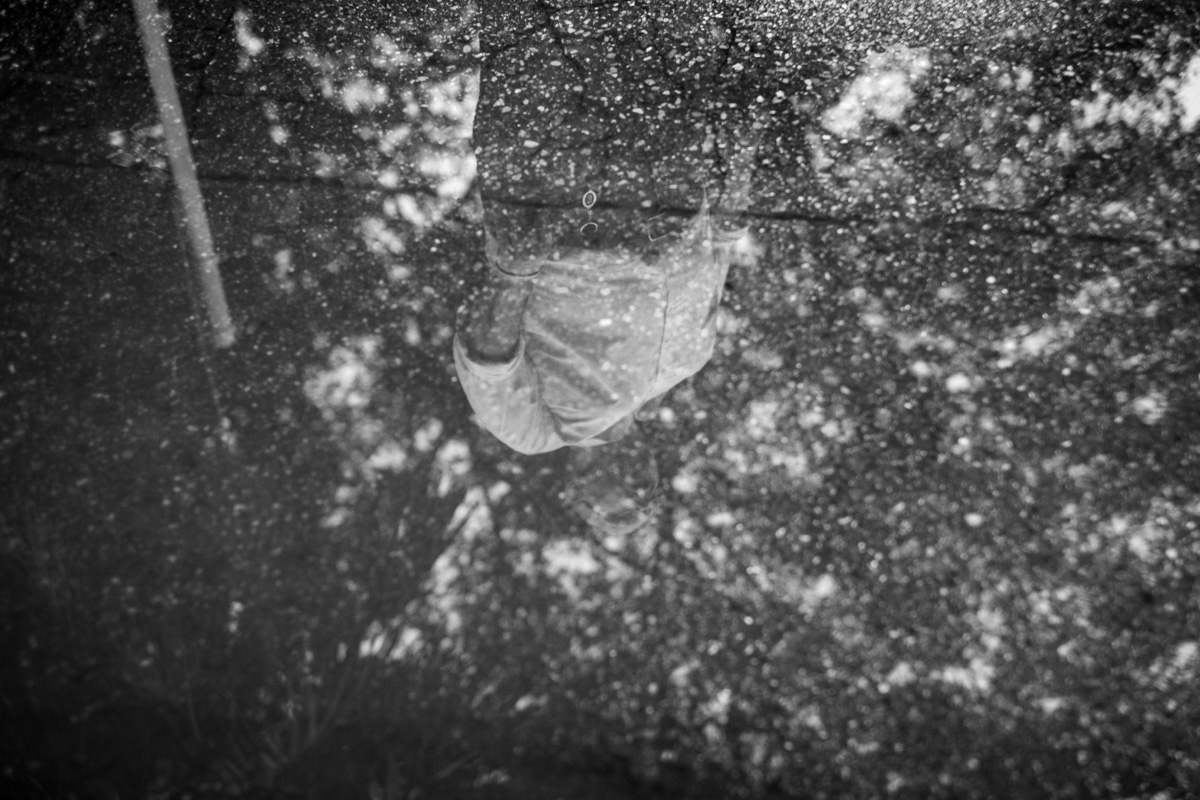
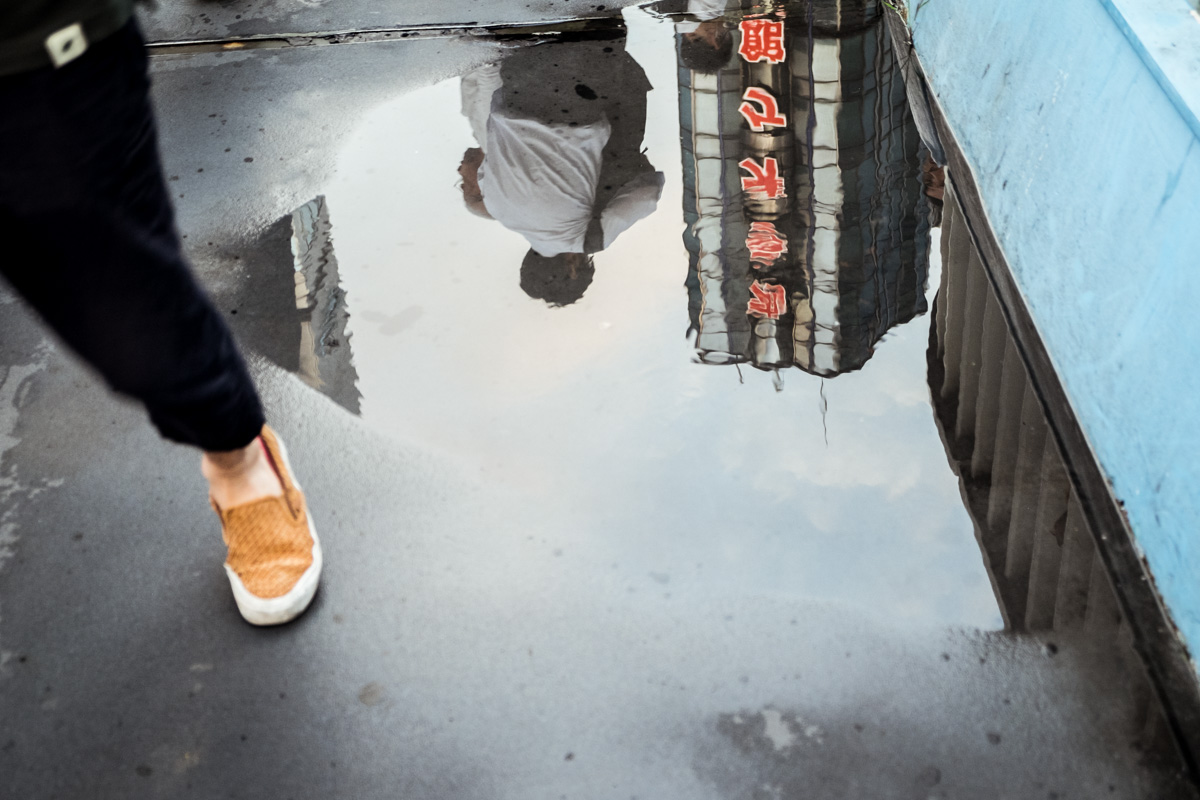
A woman and a man, reflected in a puddle, walk in opposite directions in a street of Tokyo. Japan is globally considered the “black hole” of child abduction in case of separation: every year nearly 150,000 parents are cut off from their children’s life by their partners.
| Album | Unfathered |
Taro (51, from Tokyo – Japan) poses for a portrait in a children’s playground in Tokyo. It was a spring evening of 2015 when Taro was preparing dinner at home, waiting for his (then) wife to come home with their son. They never did. Since then, he was able to see his son once, in a room with one-way mirrors.
| Album | Unfathered |
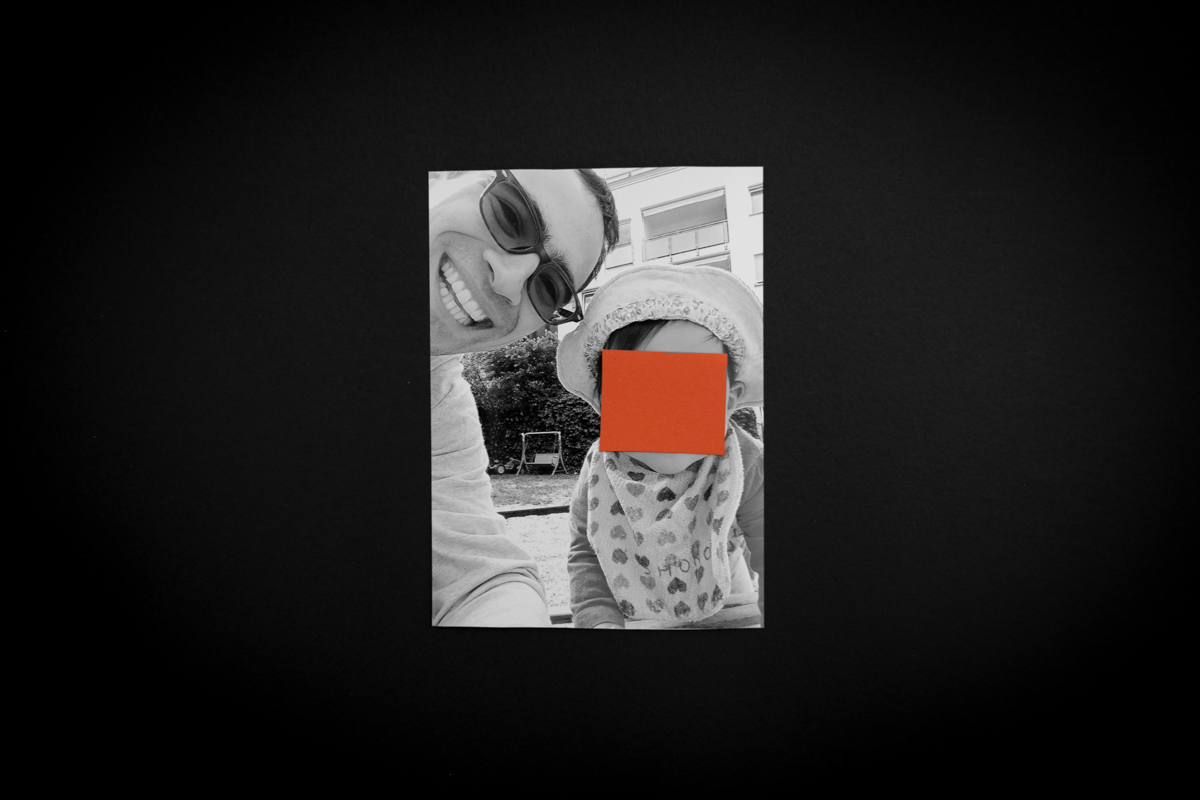
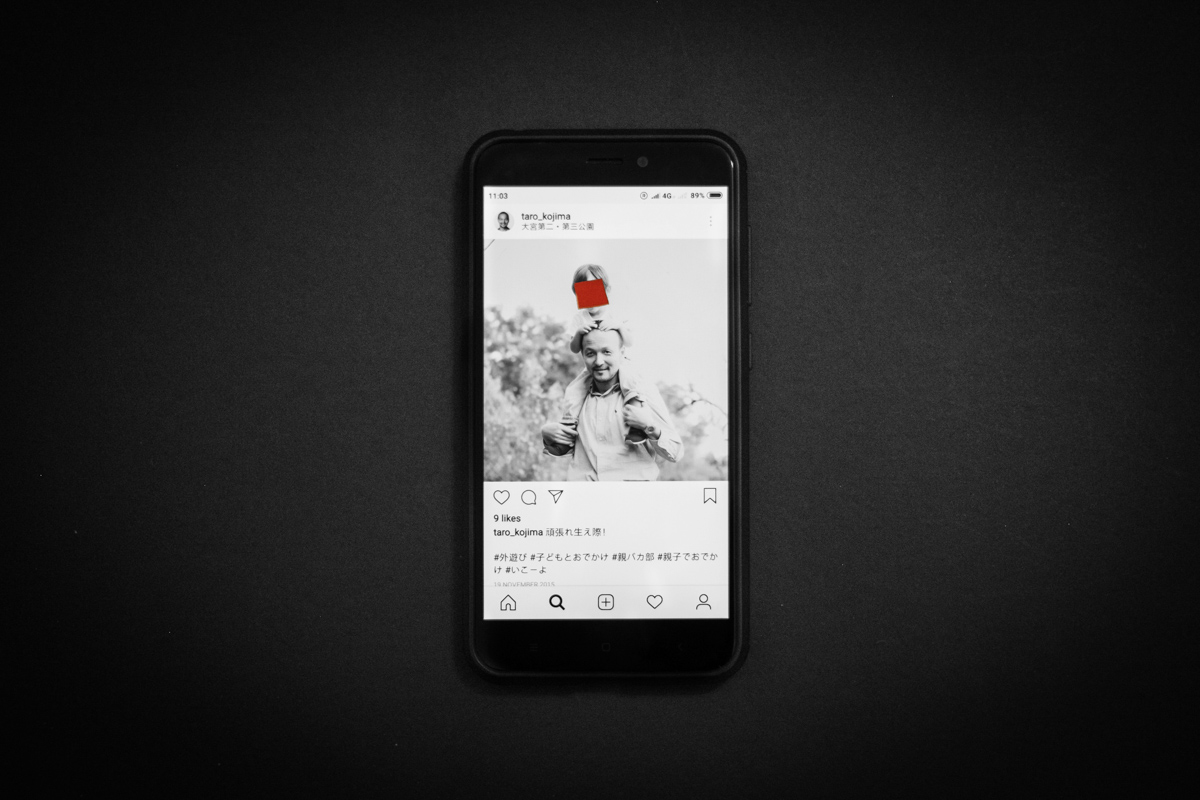
A mobile phone with an archive family photo depicting Taro (51, from Tokyo – Japan) with his child in a park in Tokyo. His wife took the photo and he posted it on his Instagram account. In 2015, his wife (also Japanese) left with their children and never came back.
| Album | Unfathered |
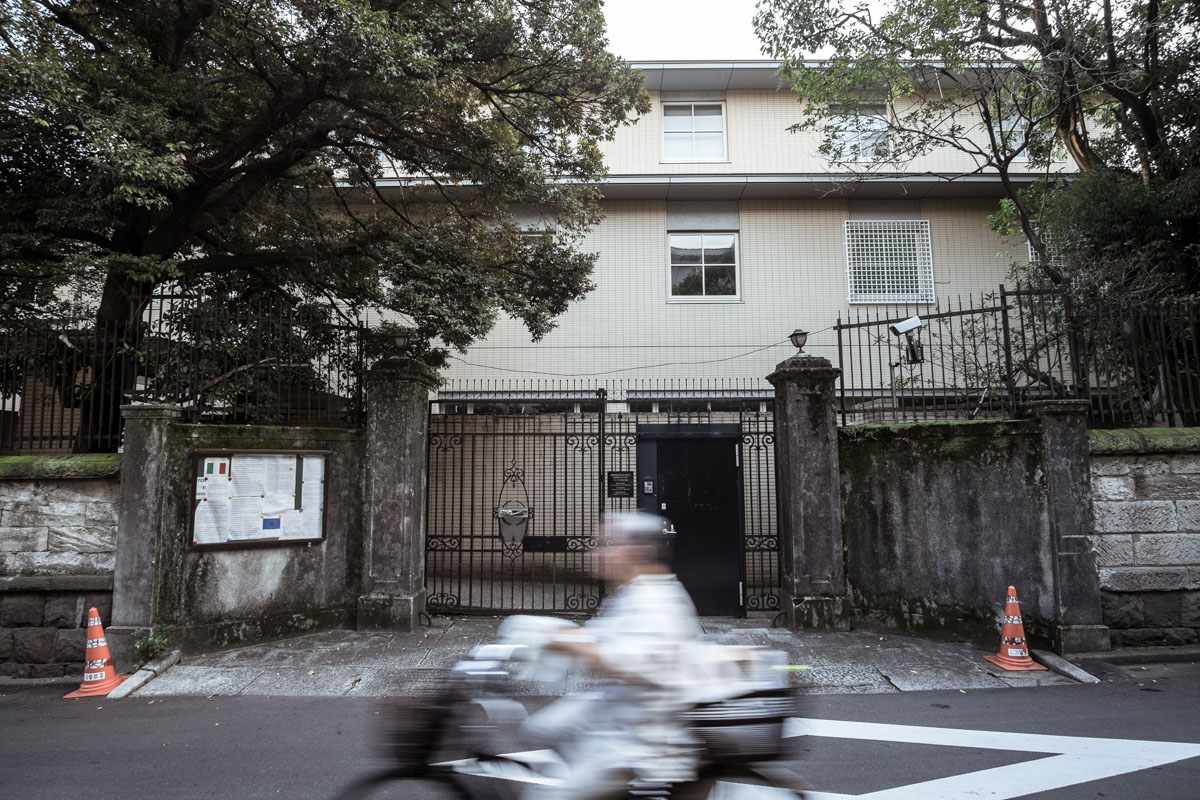
The Italian Embassy in Tokyo. In March 2018, The Italian ambassador, supported by the other EU ambassadors in Japan, issued a formal letter to the Japanese government, to put pressure and force it to tackle the issue of parental child abductions.
| Album | Unfathered |
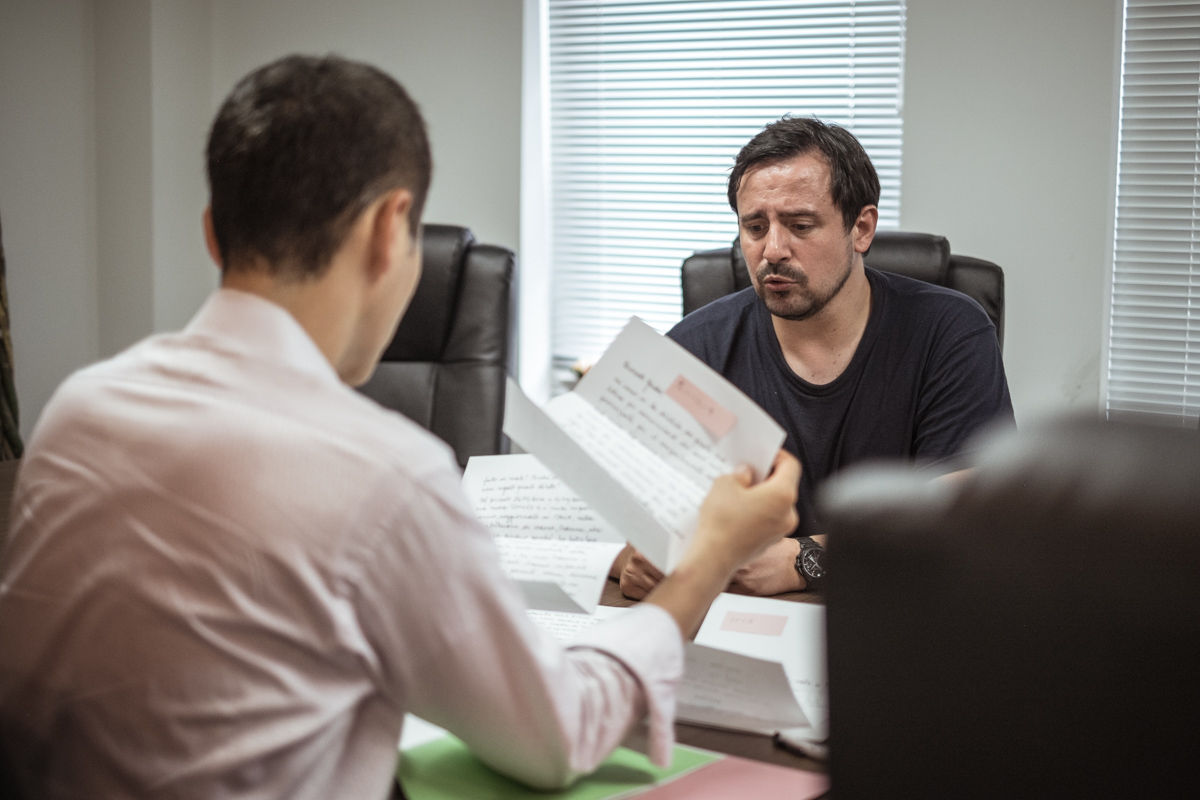
Tommaso (40, from Verona – Italy) during an appointment with his lawyer. They are discussing the next legal steps to take in the 2 civil suits he filed against his Japanese wife for abducting his children in December 2016.
| Album | Unfathered |
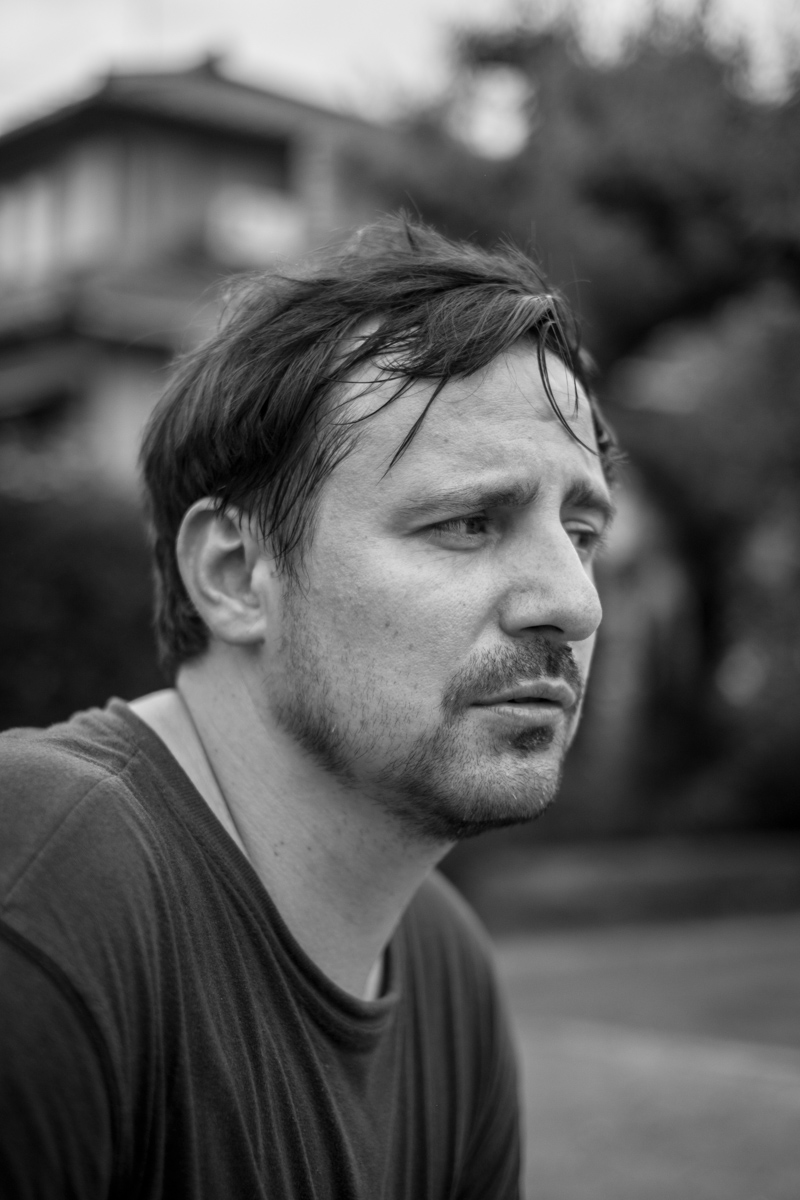
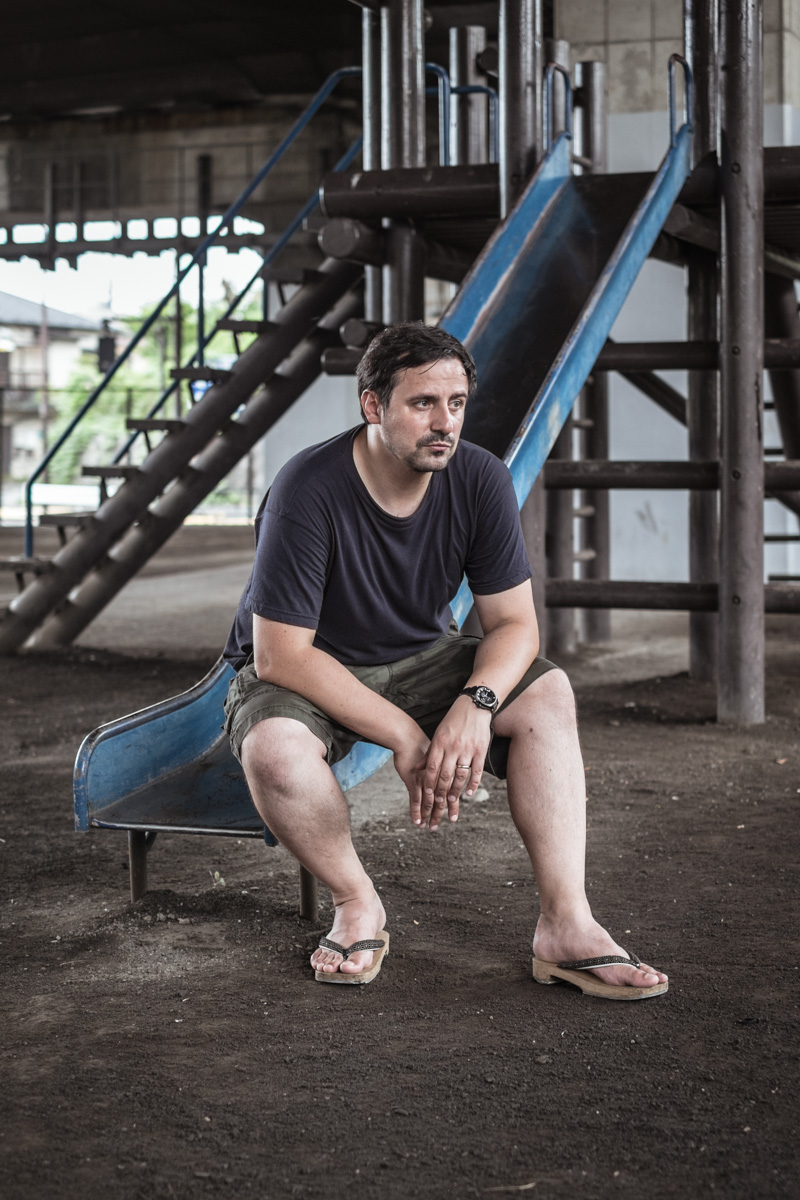
Tommaso (40, from Verona – Italy), poses for a portrait in a children’s playground near his house in suburban Tokyo. In December 2016, his Japanese wife left with their two children and never came back. Since then, he has been able to see them in total for 5 hours in the first 6 months, and not a single time in the last year.
| Album | Unfathered |
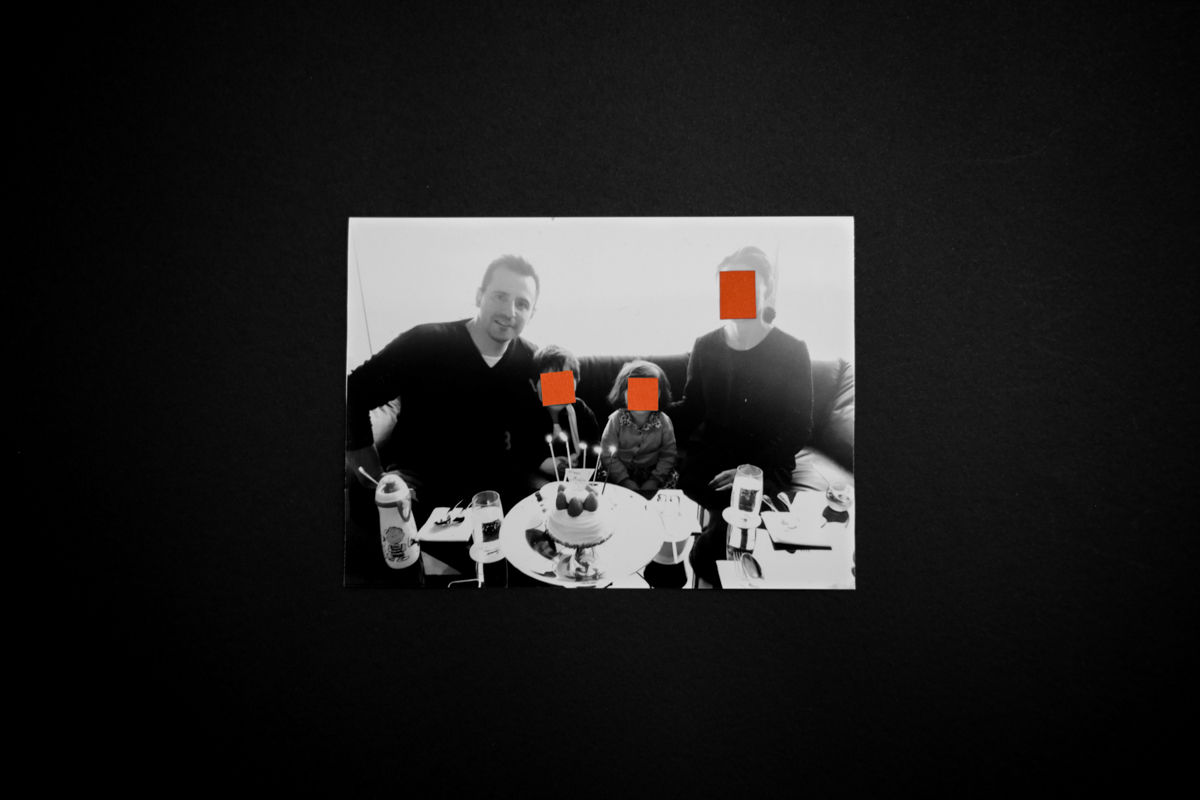
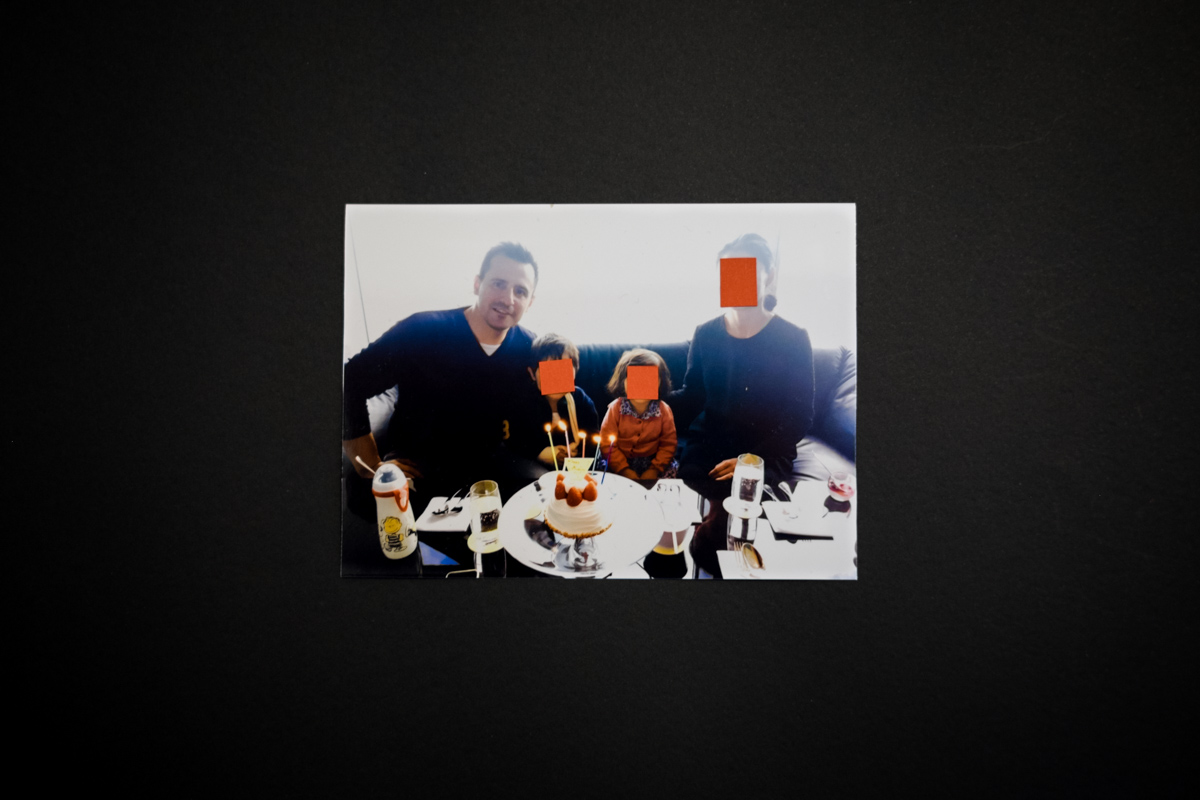
An archive family photo depicting Tommaso (40, from Verona – Italy) with his wife and two children. The archive photo was taken in December 2016 in a restaurant in Tokyo, just days before his Japanese wife left with the children and completely cut him off from their lives.
| Album | Unfathered |
Tommaso (40, from Verona – Italy), is one of the estimated 150,000 fathers per year who, in Japan, face the tragedy of having their children abducted by their partner.
| Album | Unfathered |
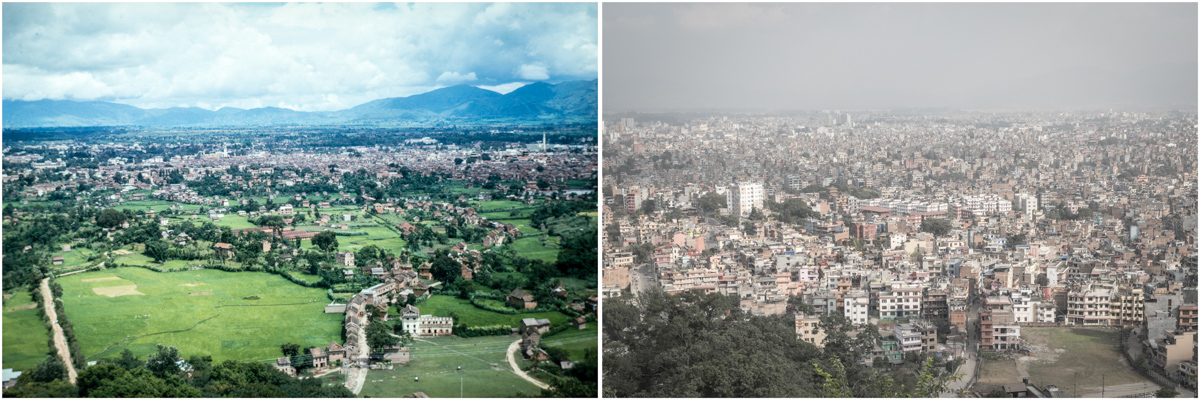
Left: 1967, Right: 2018.
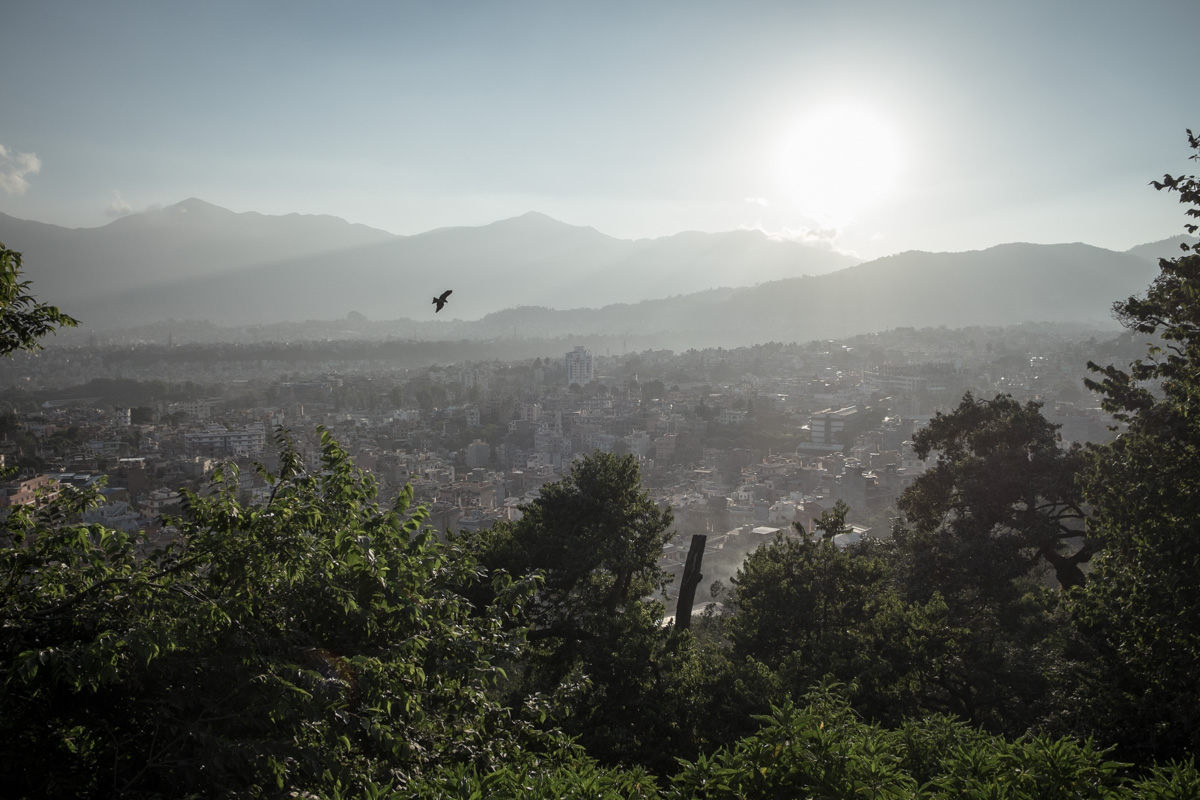
An aerial view of Kathmandu from Swayambhu temple.
| Album | Before/After Kathmandu |
Left: 1975, Right: 2018.
Kathmandu, along Kanti Path avenue.
| Album | Before/After Kathmandu |
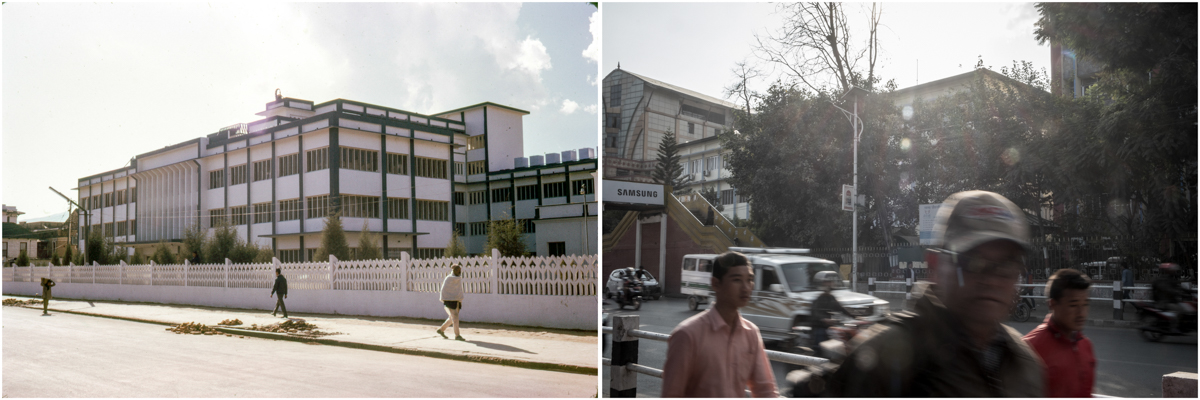
Left: 1975, Right: 2018.
A view of the Bir Hospital building.
| Album | Before/After Kathmandu |
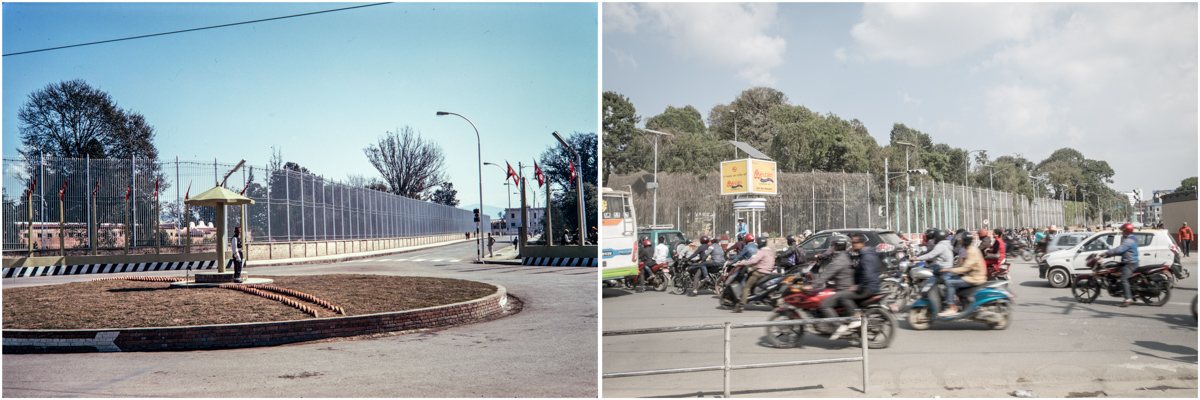
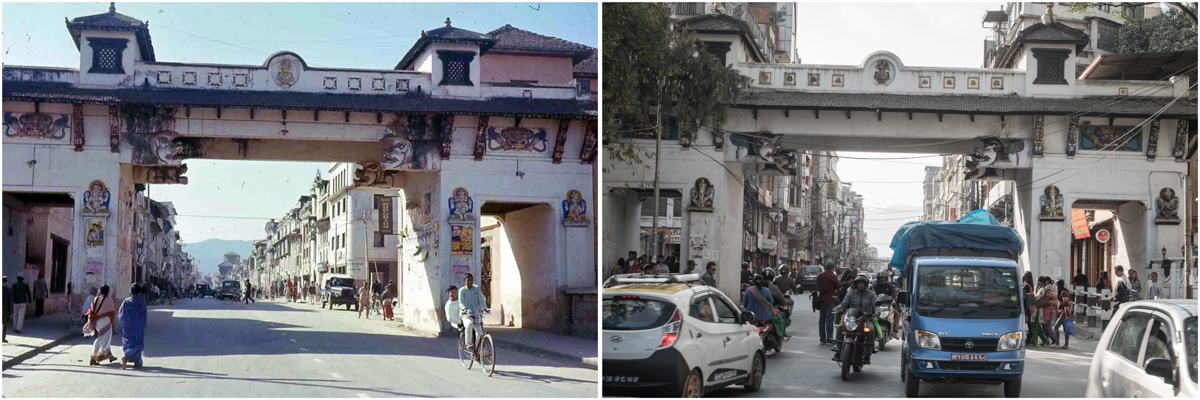
Left: 1965, Right: 2018.
New Road Gate in Kathmandu.
| Album | Before/After Kathmandu |
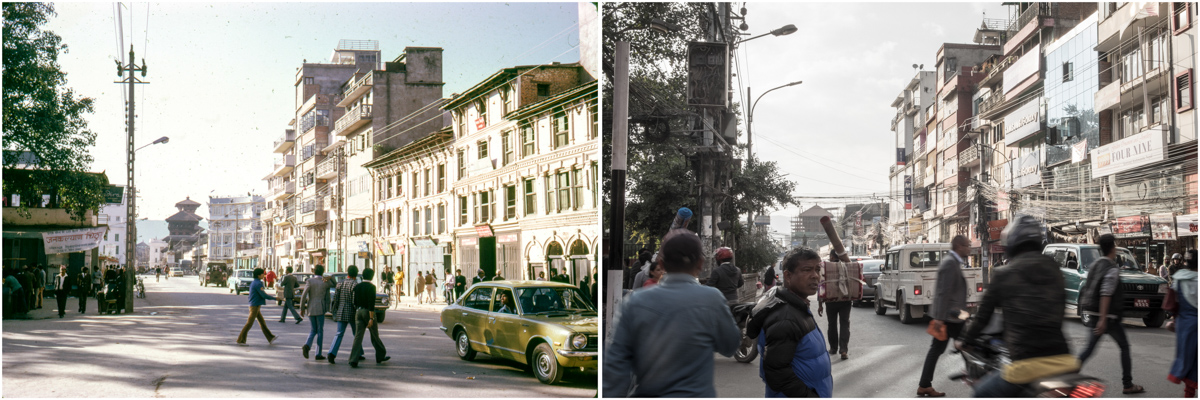
Left: 1974, Right: 2018.
Along New Road in Kathmandu.
| Album | Before/After Kathmandu |
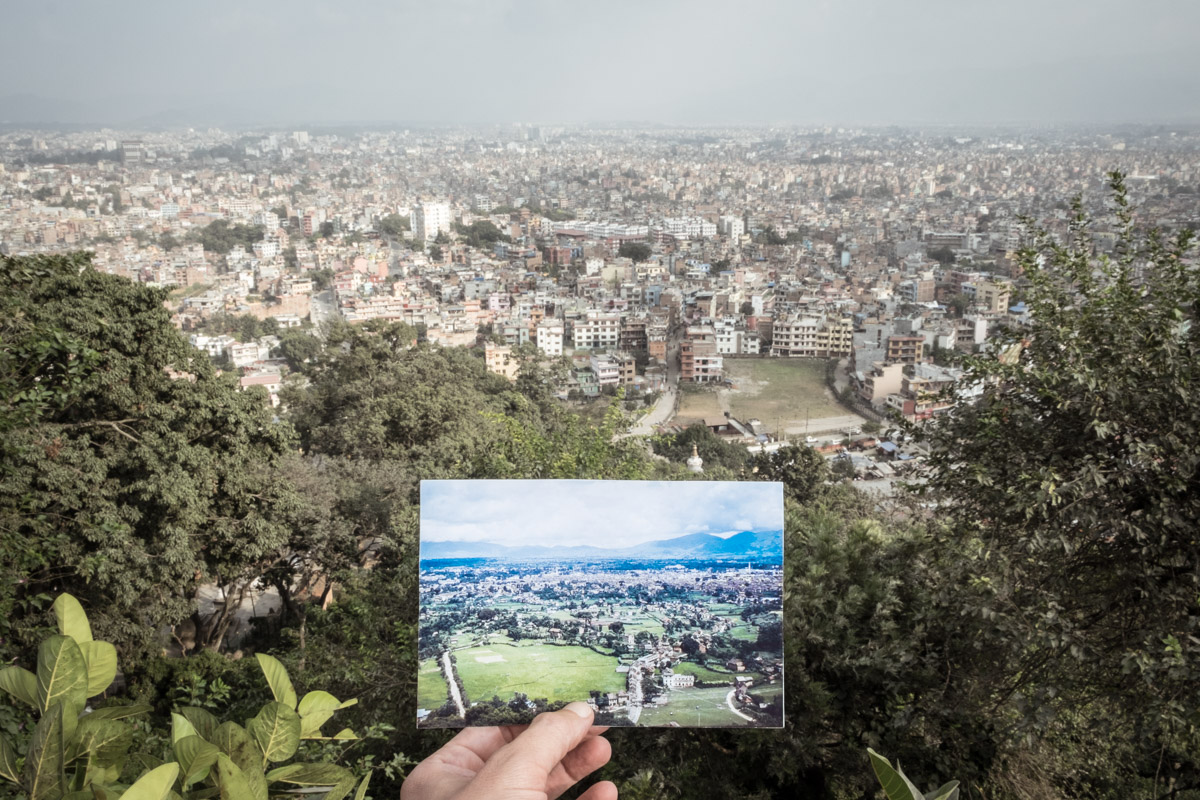
Kathmandu (Nepal), October 21st 2018. An aerial view of Kathmandu from Swayambhu temple, compared with the exact same view on an archive photo from 1967 (courtesy of PC Nepal Photo Project / Nepal Picture Library).
Green spaces have been urbanized, and mountains are no longer visible due to the smog covering the city.
| Album | Out of Thin Air |
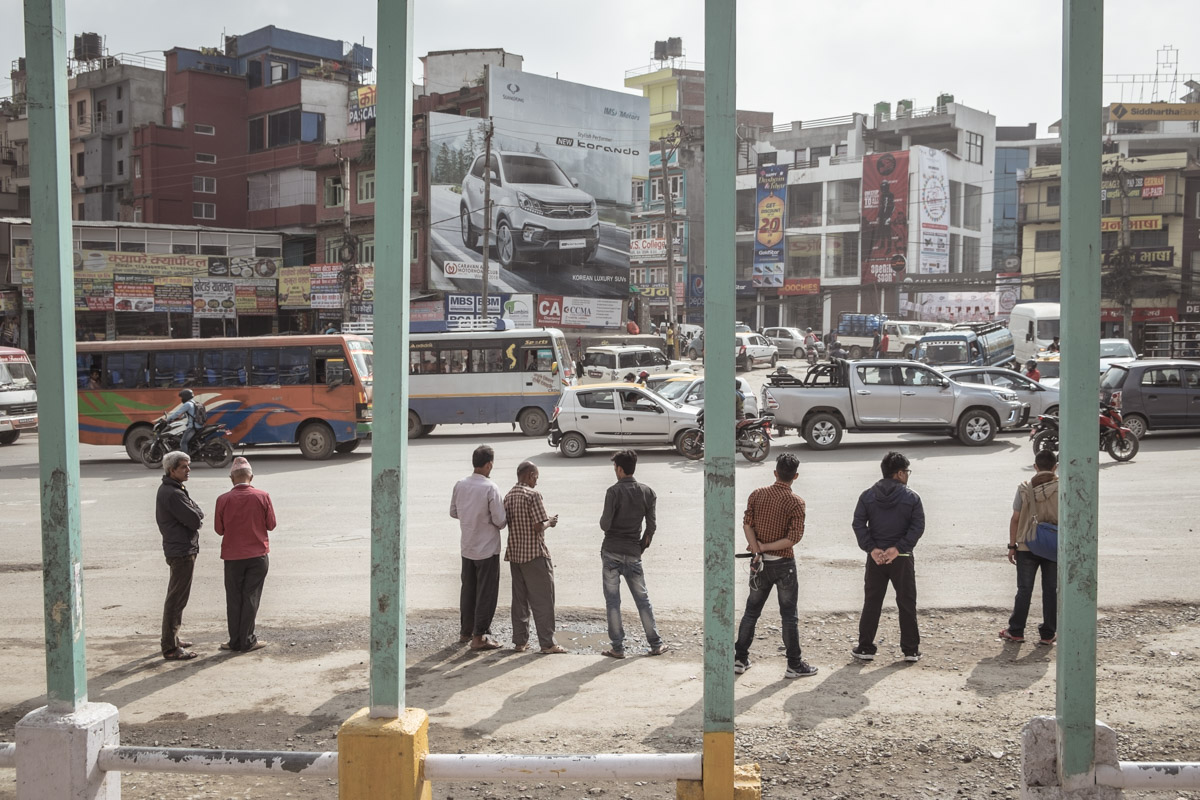
Kathmandu (Nepal), October 12th 2018. An informal bus stop in one of the busiest areas of Kathmandu, Chabahil.
| Album | Out of Thin Air |
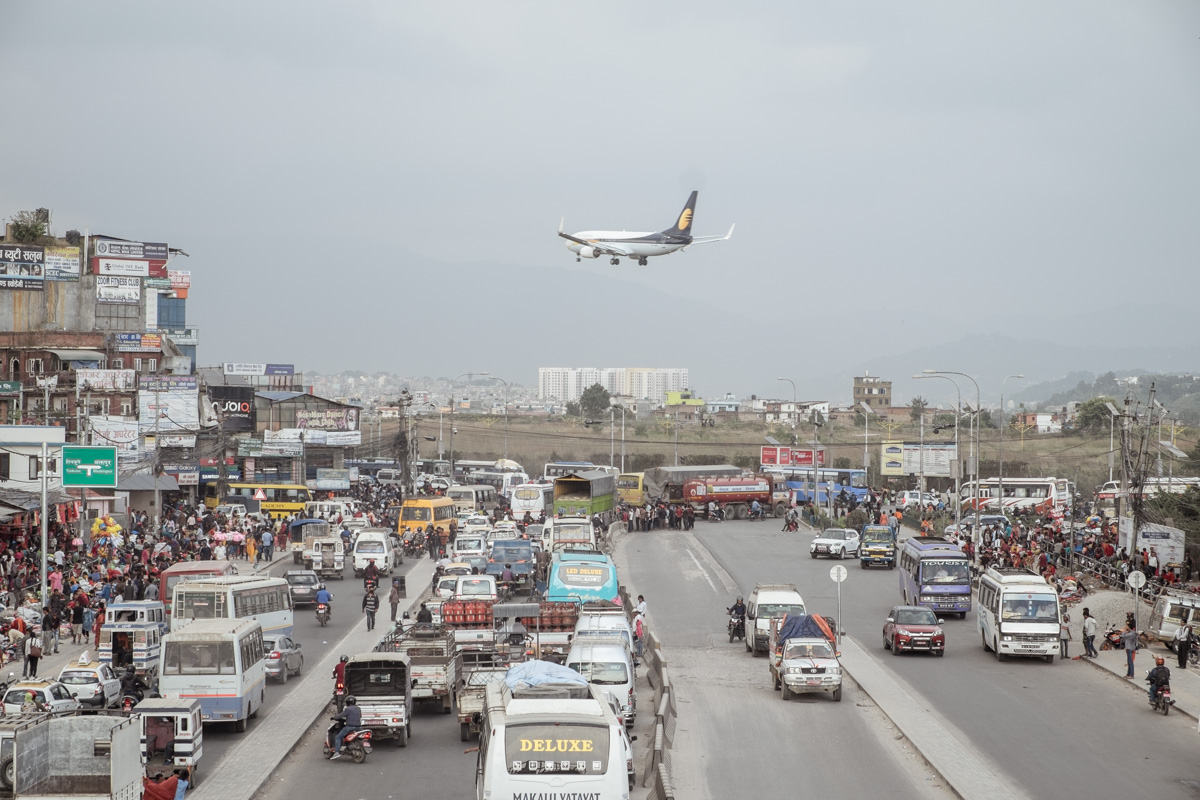
Kathmandu (Nepal), October 12th 2018. Heavy traffic at the Koteshwor junction, one of the main crossroads of Kathmandu. In the background, an airplane prepares for landing at the nearby international airport.
| Album | Out of Thin Air |
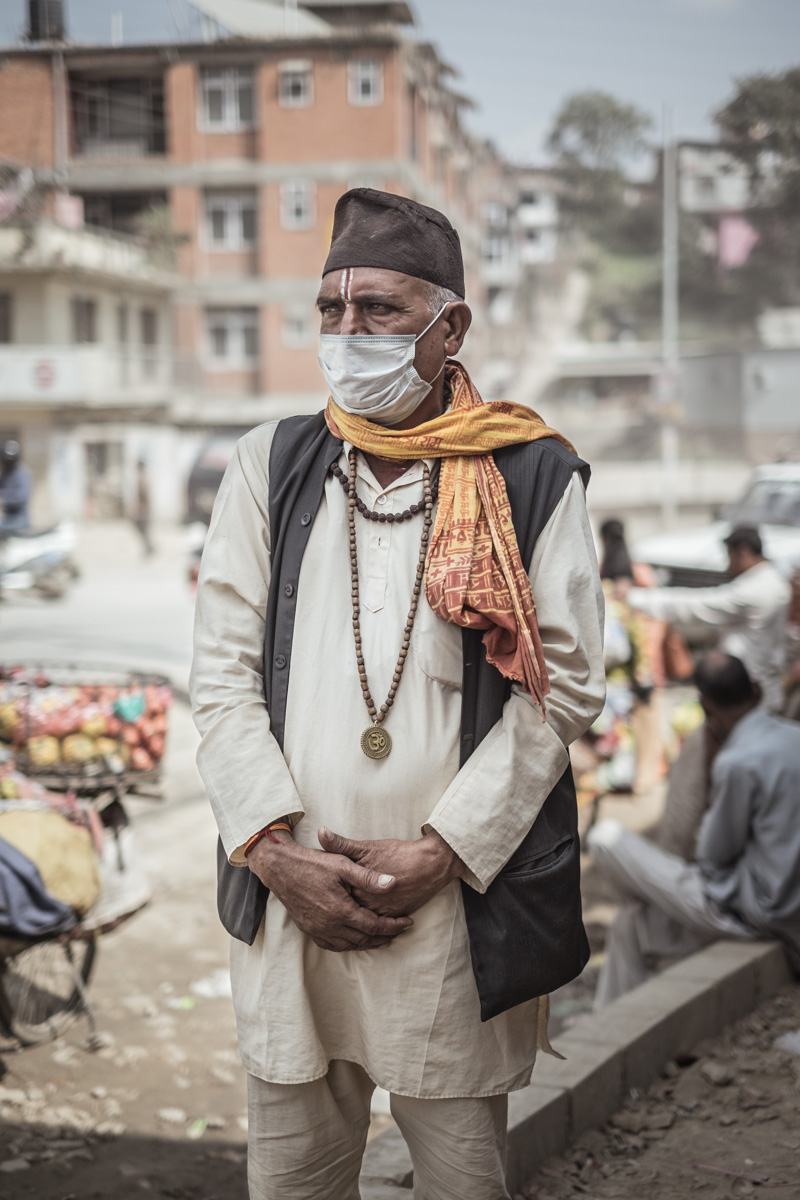
Kathmandu (Nepal), October 14th 2018. Wearing a mask to prevent his nose and mouth to breathe polluted air, Narayan Dahal (63) poses for a portrait in the busy Kalanki area of Kathmandu.
“I have a health problem caused by the pollution. My nose is dry, I suffer from headaches and my lungs are not well. So I am using a mask to protect myself from dust.” Says Mr. Dahal.
| Album | Out of Thin Air |
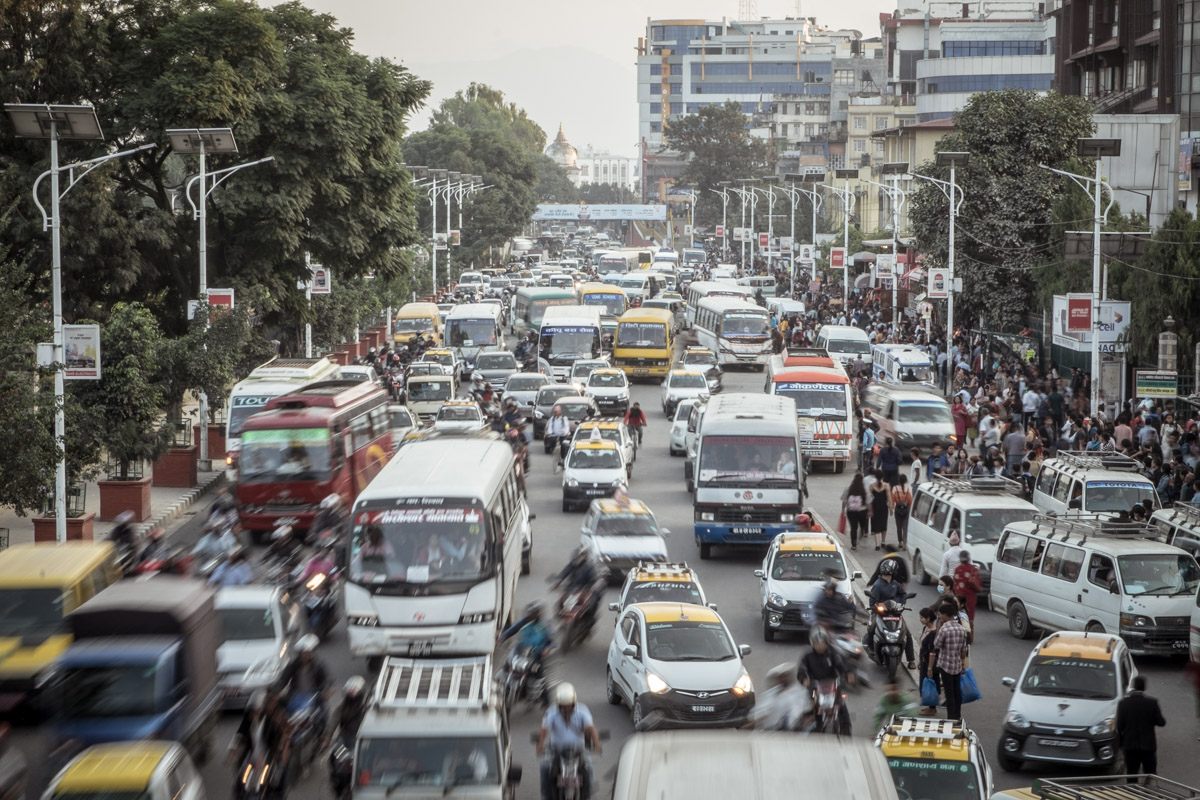
Kathmandu (Nepal), October 8th 2018. Heavy traffic on Kanti Path, one of the main avenues of Kathmandu.
| Album | Out of Thin Air |
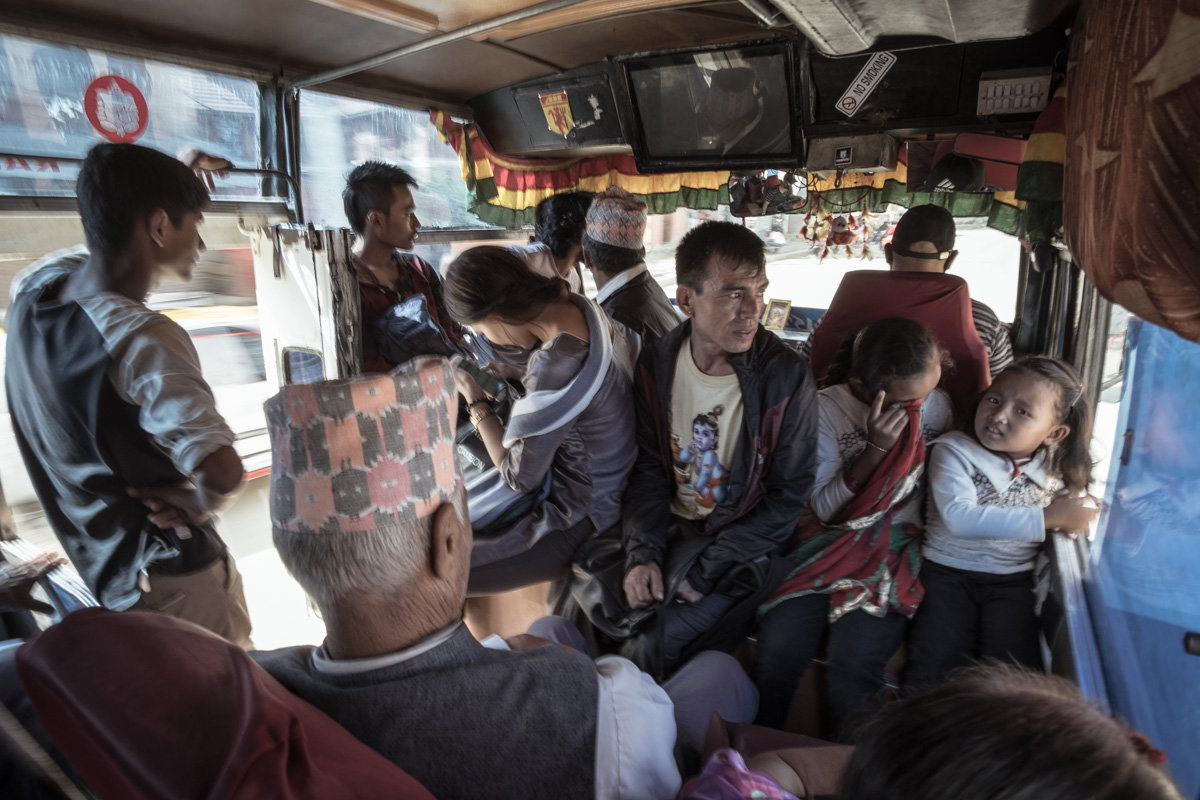
Kathmandu (Nepal), October 18th 2018. Inside a local bus providing service in the metropolitan area of Kathmandu.
Costing as little as 10-20 US$ cents, public and informal mass transportation in Kathmandu is as affordable in price as very inefficient and unreliable in terms of coverage and punctuality.
| Album | Out of Thin Air |
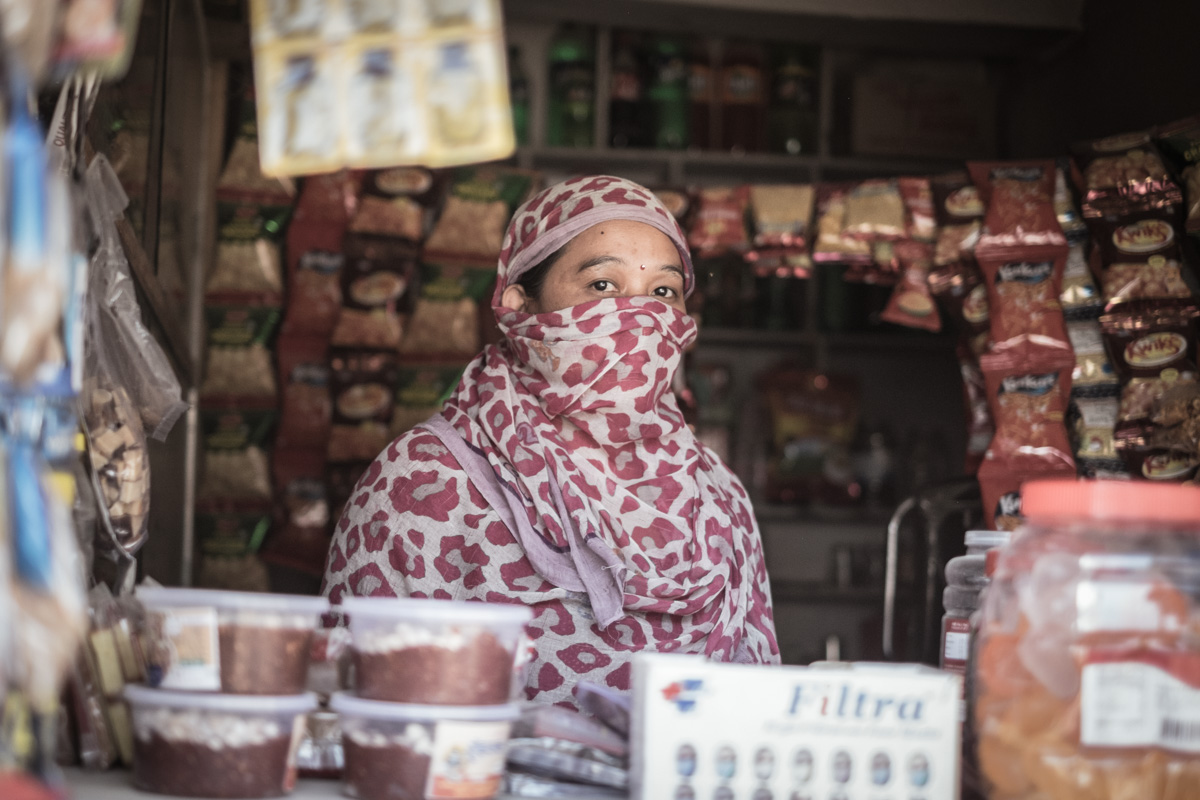
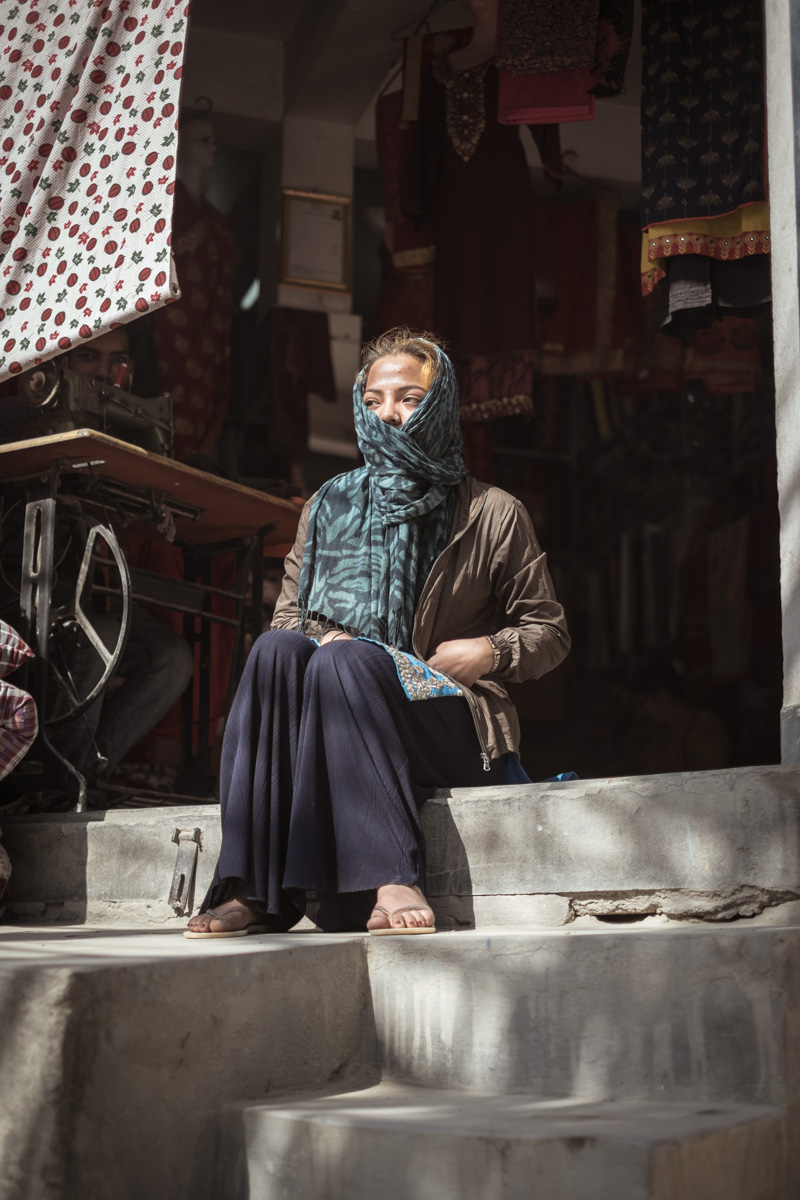
Kathmandu (Nepal), October 14th 2018. Using a scarf to prevent her nose and mouth to breathe polluted air, Sunita Tamang (35) poses for a portrait while attending a shop in the busy Kalanki area of Kathmandu.
“The air quality here is not good. I’ve been in this shop for two years now, and my health is suffering: I’m constantly getting colds and sore throat. And who knows what problems I’ll suffer in the future.”, says Ms. Tamang.
| Album | Out of Thin Air |
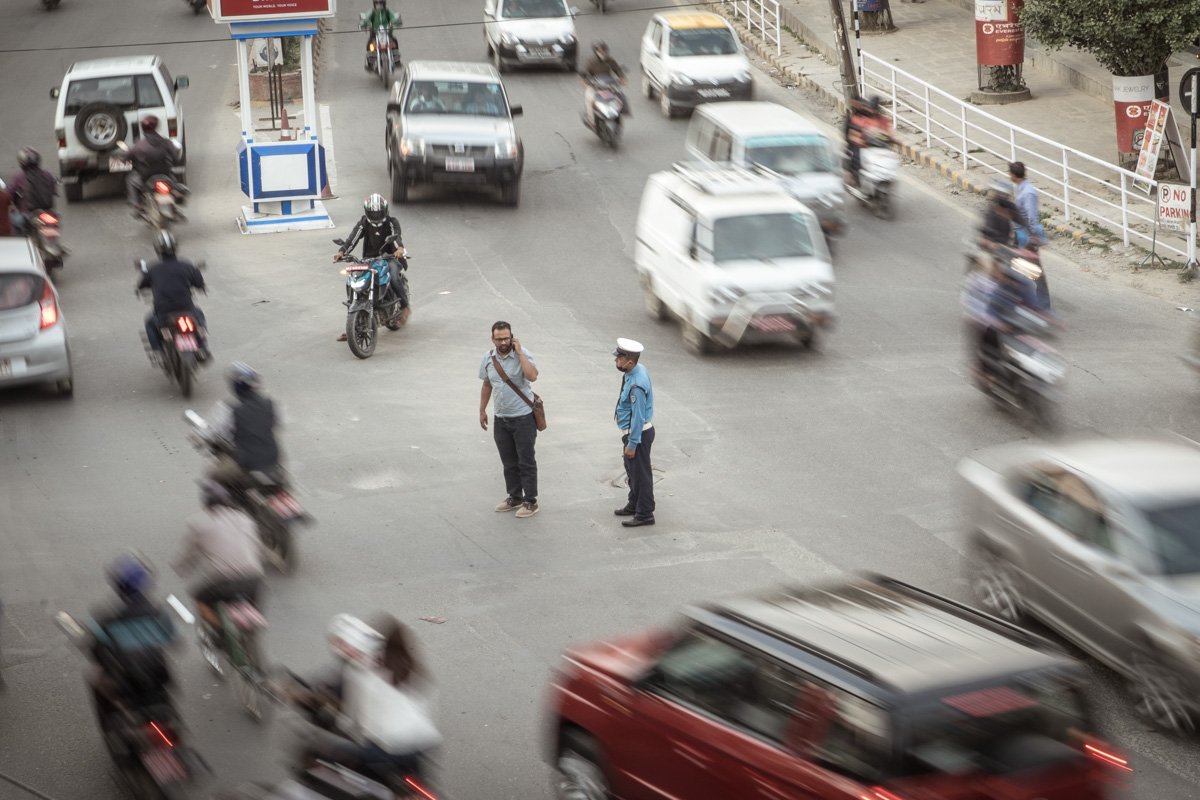
Patan, greater Kathmandu (Nepal), October 1st 2018. A pedestrian and a traffic policeman in the middle of a busy avenue in the metropolitan area of Kathmandu.
| Album | Out of Thin Air |
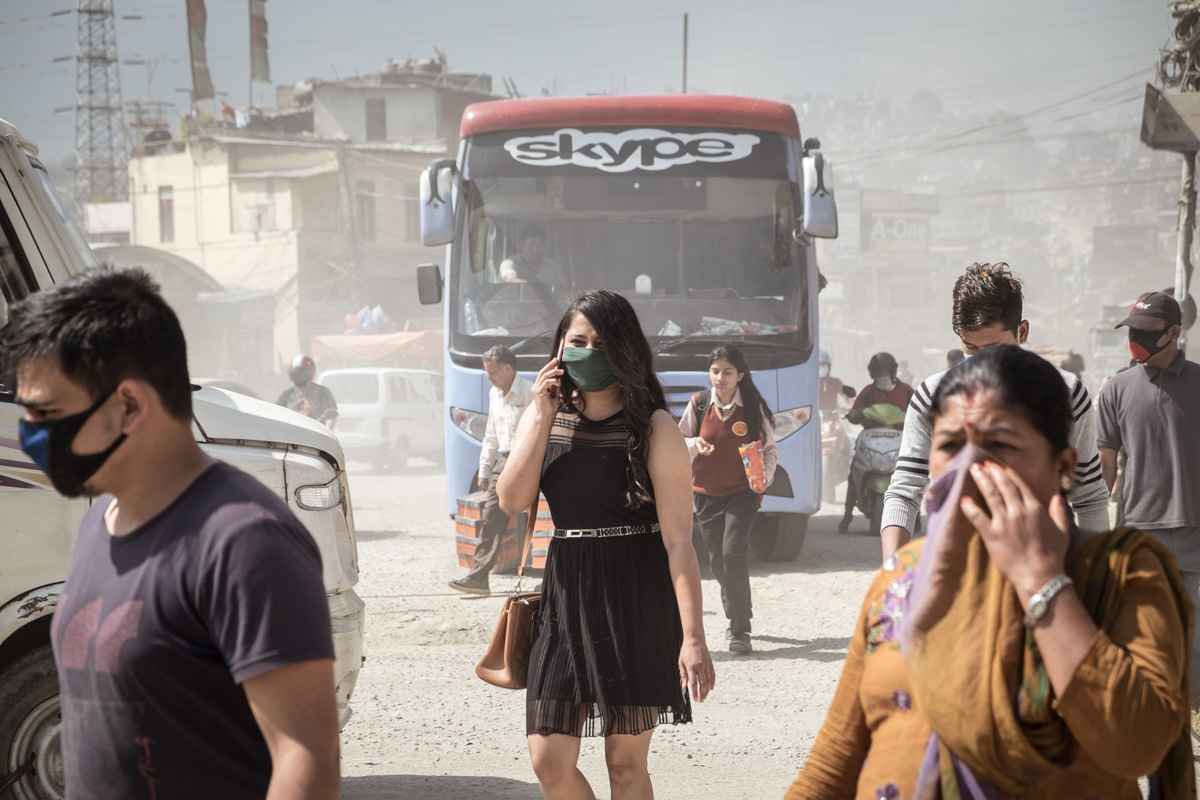
Kathmandu (Nepal), October 14th 2018. People walking through one of the busiest crossing in Kathmandu, in the Kalanki area. Dust and smoke are clearly visible in the air, and most of the people are covering their mouth with masks or scarfs.
| Album | Out of Thin Air |
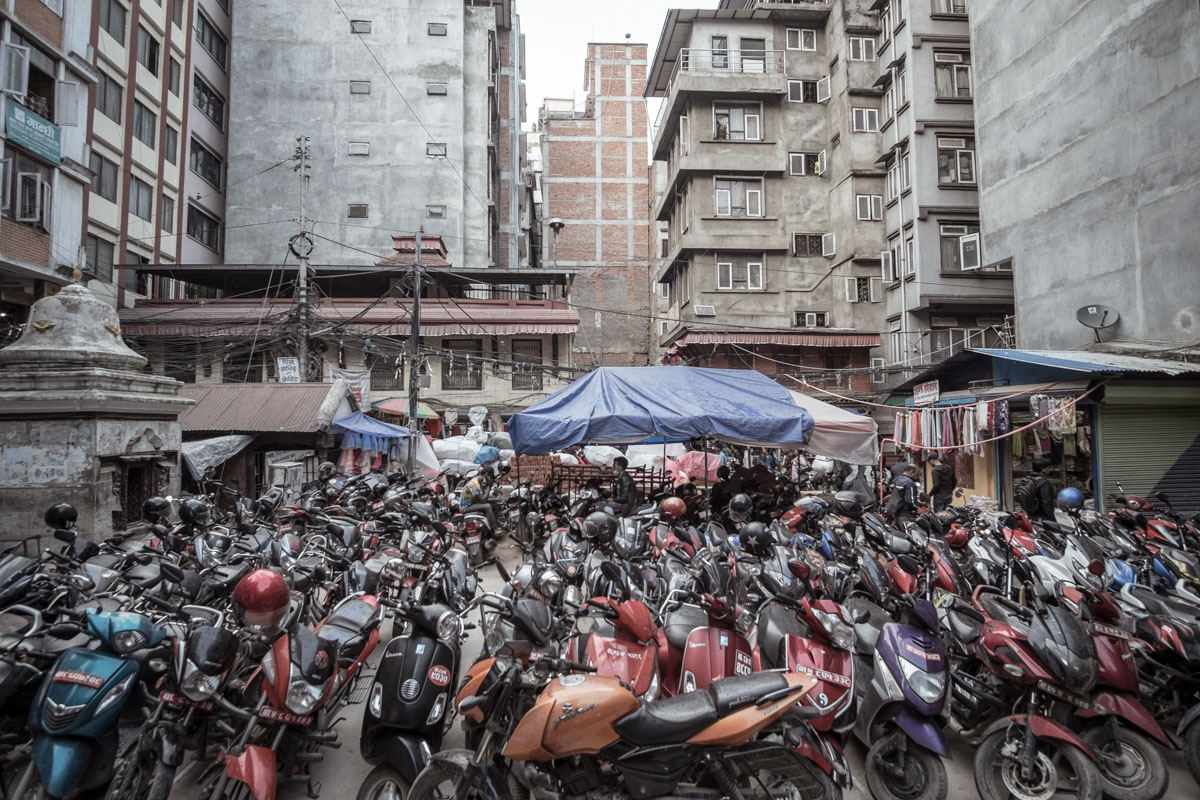
Kathmandu (Nepal), October 7th 2018. A courtyard in the centre of Kathmandu, surrounded by tall buildings and filled by motorbikes.
The fast urbanization process undergone in Kathmandu in the last 5 decades has eaten up free spaces in the city and the surrounding valley.
| Album | Out of Thin Air |
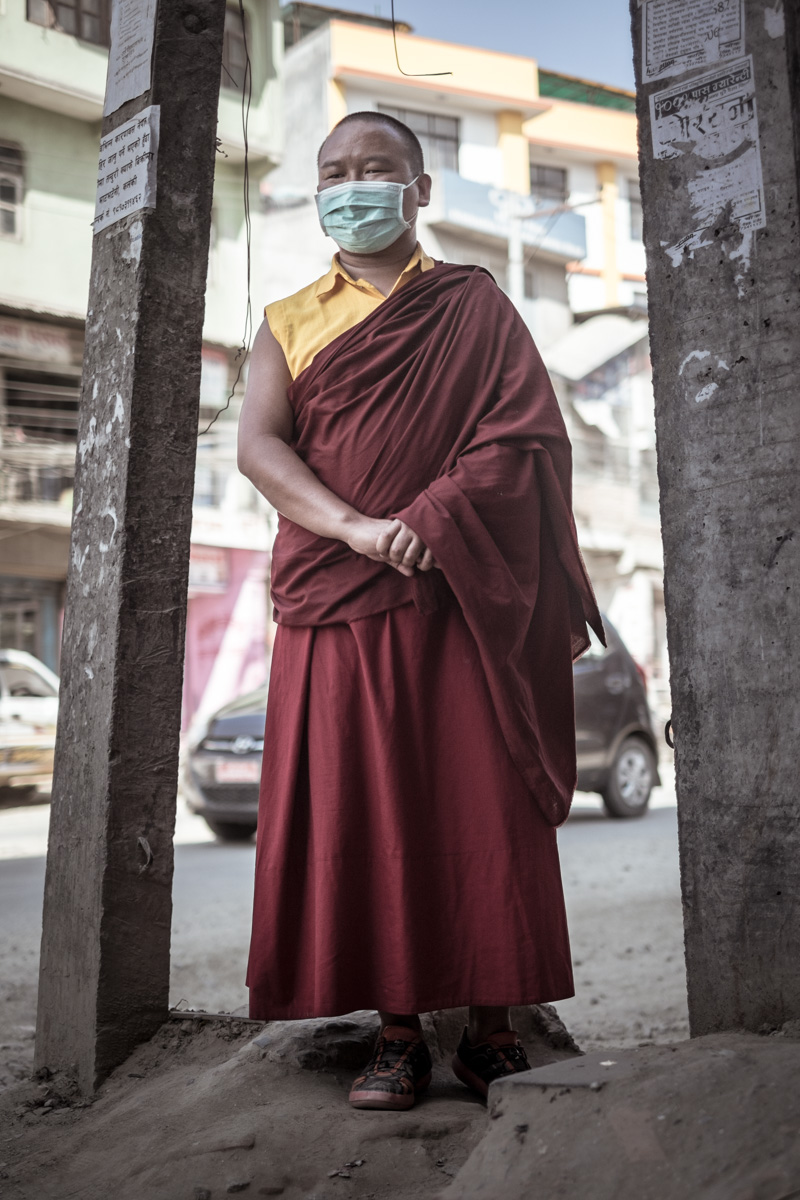
Kathmandu (Nepal), October 14th 2018. Wearing a mask to prevent his nose and mouth to breath polluted air, the Buddhist monk Pasang Thunglu (29) poses for a portrait in the busy Kalanki area of Kathmandu.
“When I used to come to Kathmandu as a kid, the air quality was not bad. But when I came back after a long time, in 2015, the air was unbreathable, very dusty. The earthquake made things worse, because now there are lots of construction sites in town, which are also creating a lot of dust.”, says Mr. Thunglu.
| Album | Out of Thin Air |
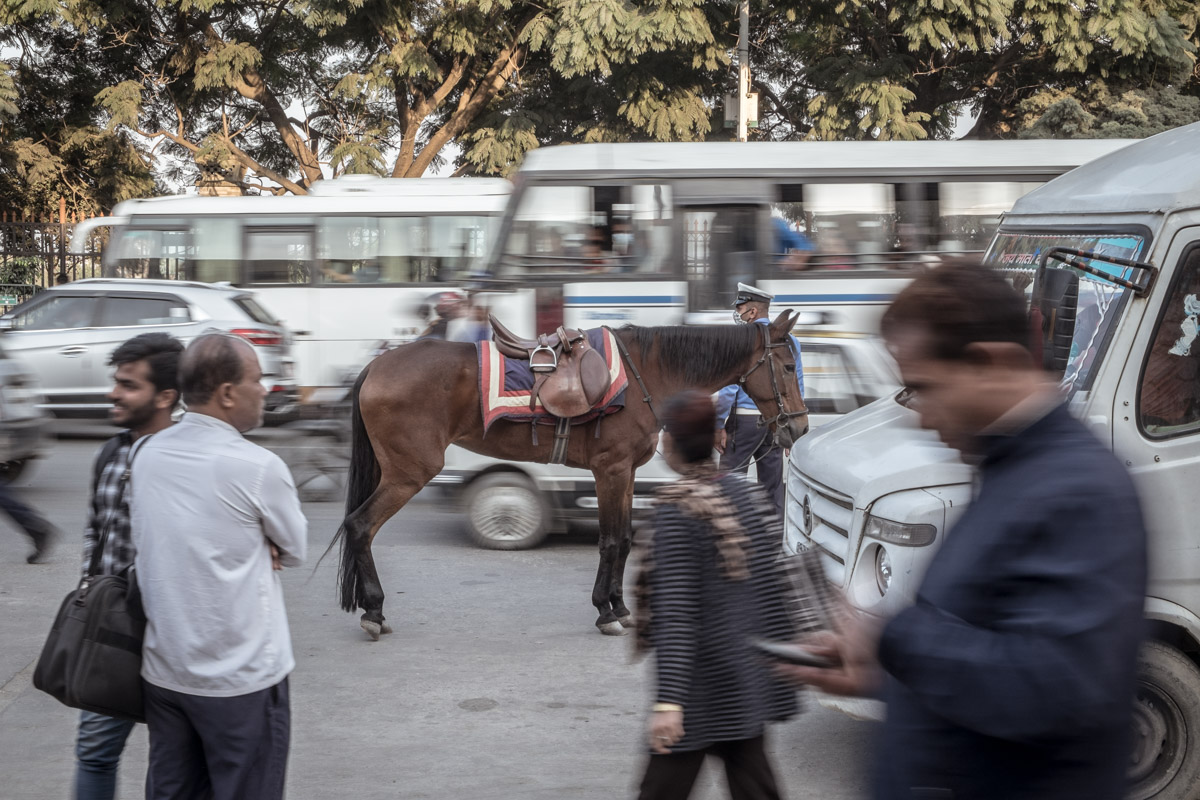
Kathmandu (Nepal), October 8th 2018. A horse belonging to the metropolitan traffic police of Kathmandu surrounded by heavy traffic on Kanti Path, one of the busiest traffic avenues in Nepal’s capital city.
| Album | Out of Thin Air |
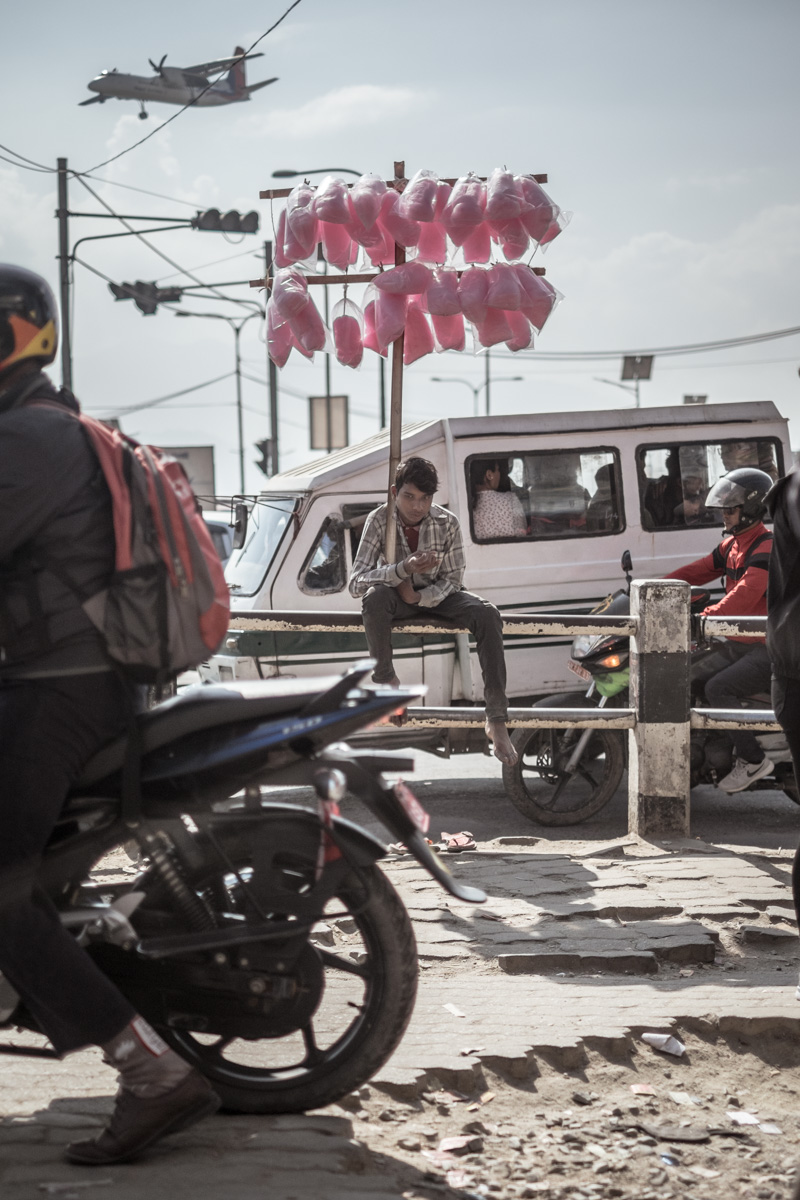
Kathmandu (Nepal), October 24th 2018. A young boy selling cotton candy sits surrounded by heavy traffic at one of the busiest crossings in Kathmandu: Koteshwor. In the background, an aircraft prepares for landing at the nearby international airport.
| Album | Out of Thin Air |
Kathmandu (Nepal), October 14th 2018. Using a scarf to prevent her nose and mouth to breath polluted air, Shamiskha Karki (18) poses for a portrait inside her family’ shop in the busy Kalanki area of Kathmandu.
“Not protecting your lungs is dangerous here. If we don’t do that, in one or two years we will get sick. After the [2015] earthquake things got worse due to the dust provoked by the reconstruction works”, says Ms. Karki.
| Album | Out of Thin Air |
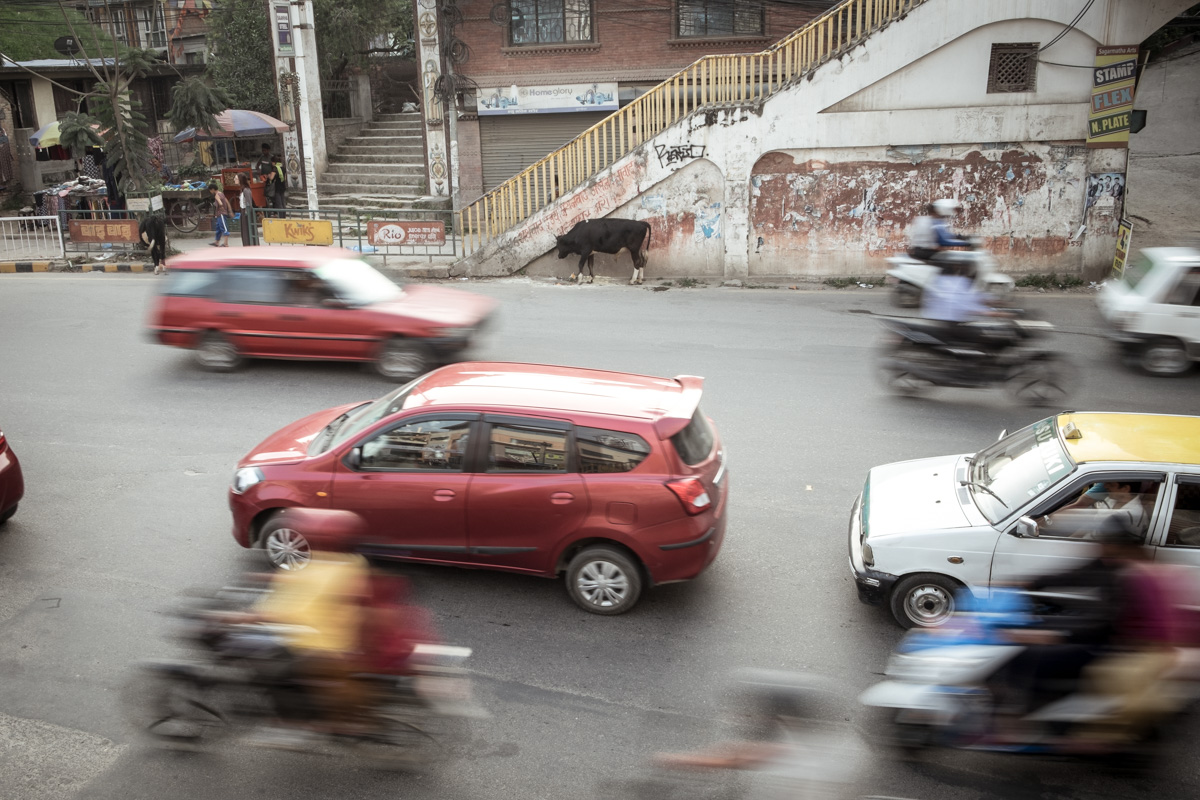
Patan, greater Kathmandu (Nepal), October 1st 2018. A cow at the edge of a busy avenue in the metropolitan area of Kathmandu.
| Album | Out of Thin Air |
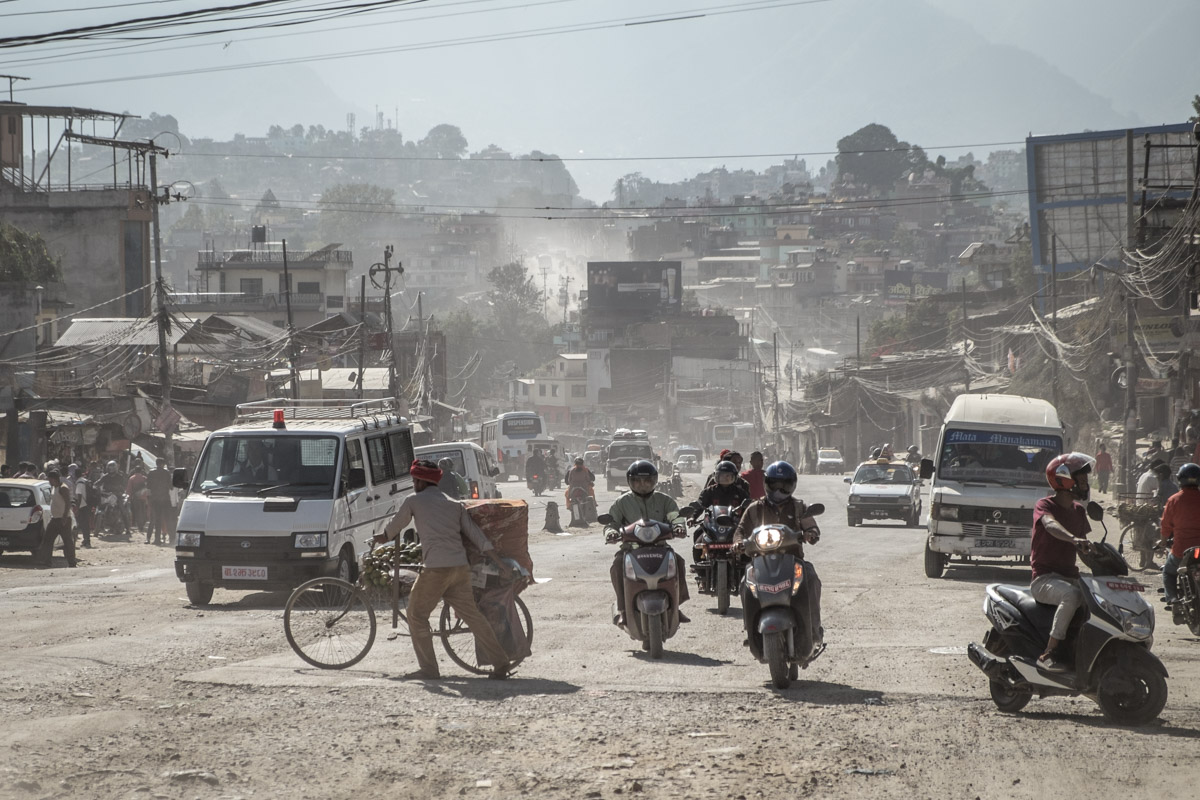
Kathmandu (Nepal), October 14th 2018. One of the main highways connecting Kathmandu to the rest of Nepal at Kalanki junction. The road dust, caused by the vehicles as a result of the poor road conditions, is clearly visible along the highway path.
| Album | Out of Thin Air |
Kathmandu (Nepal), October 24th 2018. Wearing a mask to prevent her nose and mouth to breath polluted air, Sarswati Karki (41) poses for a portrait in the busy Koteshwor area of Kathmandu.
“I’m wearing a mask to protect me from dust and potential infections. I’m already suffering from frequent colds, my eyes burn and I’m afraid of getting lung diseases in the future.”, says Ms. Karki.
| Album | Out of Thin Air |
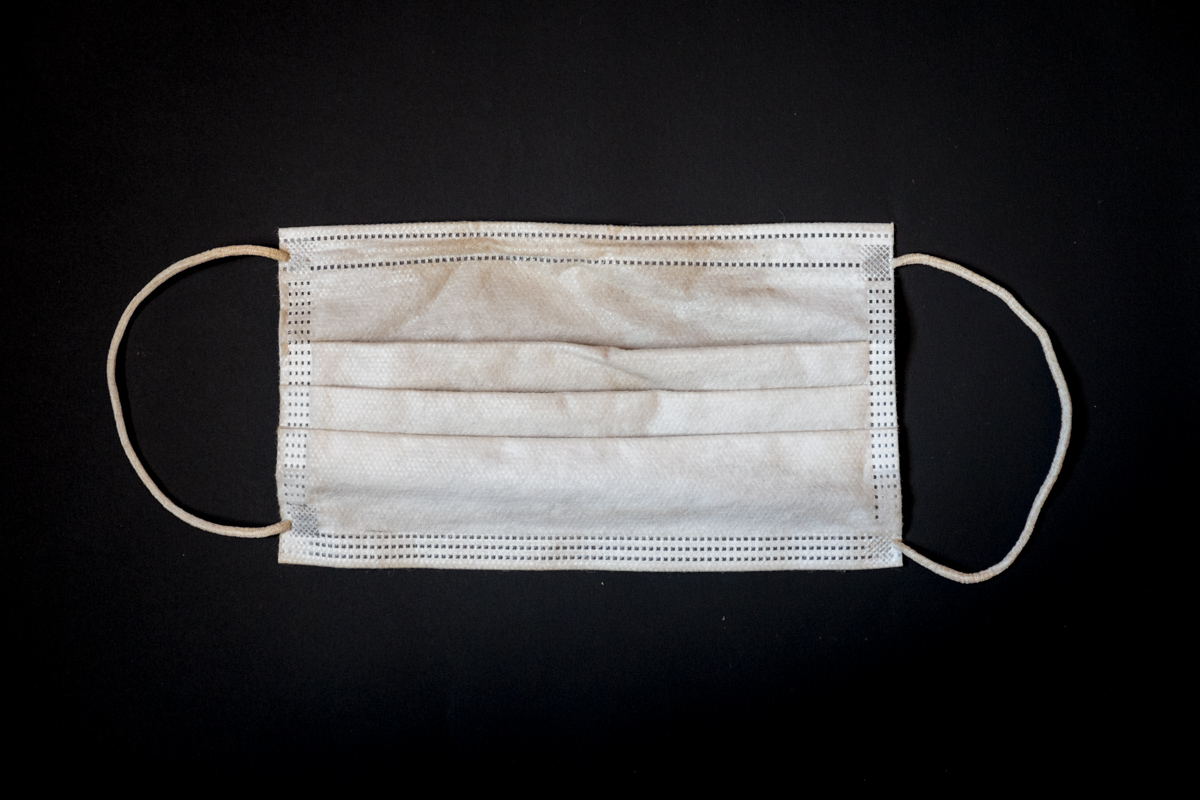
A photograph of a pollution mask used in Kathmandu (Nepal) during two days in October 2018. The dirt caused by dust and smoke is clearly visible in the upper-left part of the mask.
| Album | Out of Thin Air |
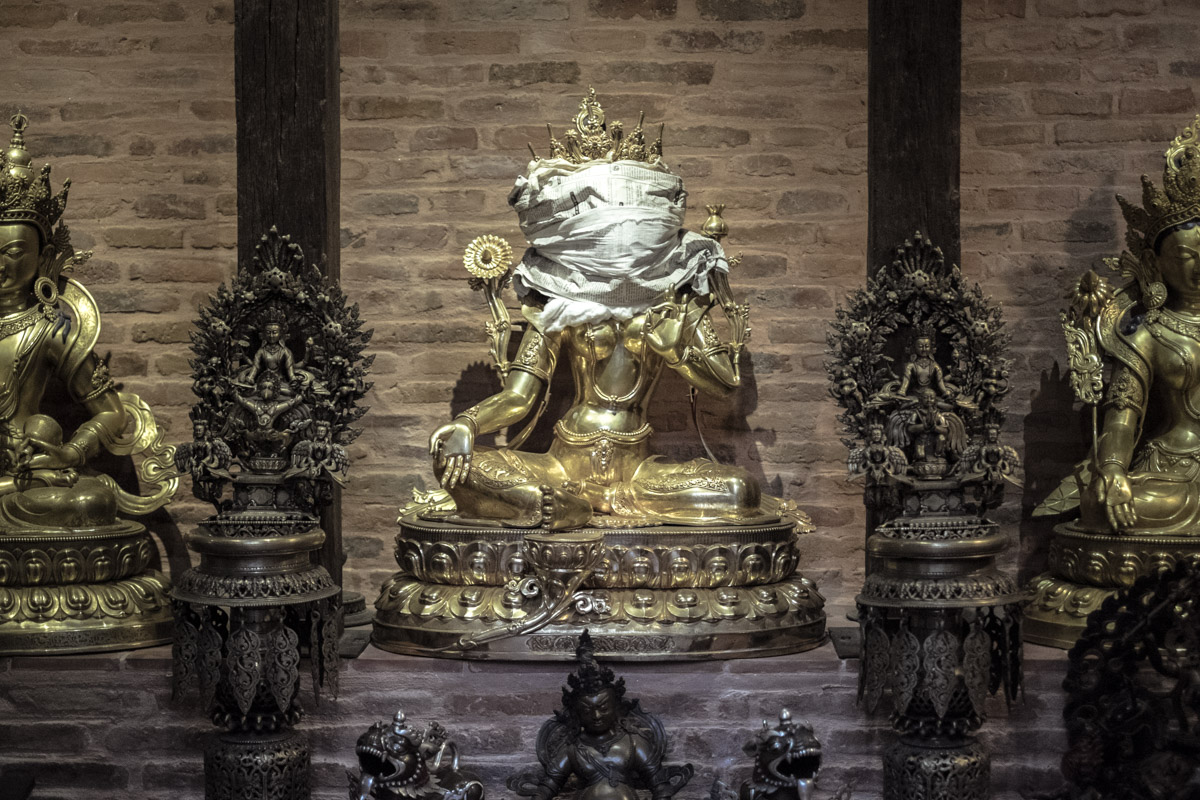
Patan, greater Kathmandu (Nepal), October 5th 2018. In a craftsman’ showroom, the face of Goddess Tara’ statue is wrapped with newspapers to prevent dust from ruining the freshly painted details.
| Album | Out of Thin Air |
Kathmandu (Nepal), October 14th 2018. An aerial view of Kathmandu from Swayambhu temple. The smog covering the city is clearly visible.
| Album | Out of Thin Air |